
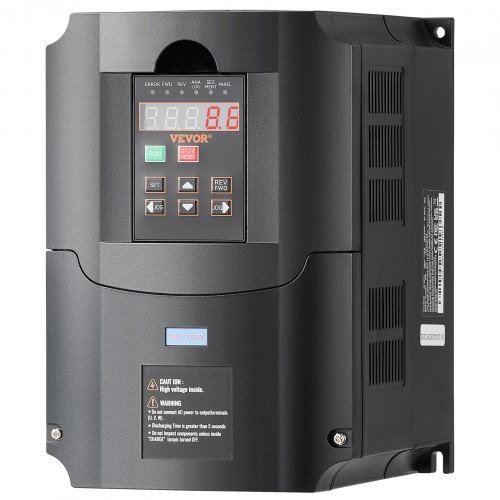
VEVOR VFD 10HP
VEVOR VFD 10HP, 7.5KW, 35A, 1 or 3 Phase 220V Input to 3 Phase 220V Output Variable Frequency Drive, 40-60Hz Input, 0-400Hz Output VFD for Spindle Motor CNC Speed ControlVariable …
Overview
The VEVOR VFD 10HP (model A2-8075) is a compact variable frequency drive intended to convert 220V single-phase or three-phase input into three-phase 220V output for spindle motors and other three-phase equipment. Rated at 7.5kW (commonly marketed as 10HP) with a listed input current of 35A, this unit covers a wide output frequency range (0–400Hz) while accepting a normal mains input frequency of 40–60Hz. The enclosure uses flame‑retardant ABS and the drive comes with a detachable control panel for flexible mounting.
On paper it looks like an economical choice for hobbyist CNC builders and small workshops that need to run a three‑phase spindle from a 220V supply. The manufacturer highlights user‑friendly operation, a built‑in protection system and efficient cooling with relatively low noise. Below we walk through who this drive is most likely to suit, the key features and practical points to consider before buying or installing one.
Who is this best for?
This VFD will appeal to several groups:
- Hobbyists and home CNC builders who have a 220V supply and want a cost‑effective way to run a three‑phase spindle motor without rewiring to three‑phase mains.
- Small workshops or makerspaces looking for a compact inverter for spindle speed control or other three‑phase motor applications in the 7.5kW range.
- Anyone who needs a drive with a detachable panel so the display and controls can be mounted remotely from the drive body for easier access in tight cabinets.
It’s less suitable for larger industrial installations, heavy continuous‑duty motors above the rated power, or users who need specialised industrial features (for example full sensorless vector control confirmations, integrated EMC filters, or IP‑rated enclosures for dusty or wet environments) without verifying them in the product documentation.
Key features
- Power and phases: 7.5kW (often listed as 10HP), 220V three‑phase output; accepts 220V input as single‑phase or three‑phase.
- Frequency range: Input frequency accepted between 40–60Hz; output frequency adjustable 0–400Hz — useful for higher‑speed spindle work where required.
- Input current: Specified at 35A, reflecting the drive’s supply current demand at rated output.
- Detachable panel: Control/display panel can be removed for remote mounting, improving convenience in rack or cabinet installations.
- Protection systems: The manufacturer states built‑in protections (overcurrent, overvoltage, thermal protections are common on drives) — check the manual for specifics and trip behaviours.
- Cooling and noise: Advertised as having efficient cooling and low noise — practical for bench‑top use where excessive fan noise would be an issue.
- Size and weight: Compact footprint (about 219 x 149 x 178 mm) and relatively light (around 2.56 kg), making it easy to fit into small control cabinets or mount near the machine.
- Construction material: Flame‑retardant ABS casing, which keeps the enclosure lightweight and reduces corrosion risk compared with some bare metal designs (but check ventilation and mounting recommendations).
These features give a good baseline for general spindle control applications, but the manual should be consulted for parameter lists, wiring diagrams and the exact list of protections.
Practical evaluation
When considering a VFD for a CNC spindle or similar motor, the specifications above are only the start. A few practical points to bear in mind will help avoid surprises during installation and use.
Power and continuous duty: The listed 7.5kW rating indicates the drive is intended to supply motors around that size. Confirm the motor’s rated current and service factor before pairing; many spindle motors can have high startup currents and may run hot under continuous heavy loads. If your spindle is close to the drive’s rated output, allow margin for thermal limits and start‑up torque.
Input supply and wiring: One convenience of this VEVOR model is the ability to accept either single‑phase or three‑phase 220V input. If you’re connecting a single‑phase supply, expect higher input current draw than with three‑phase supply — the documentation should provide guidance on recommended fusing and cable sizing. Long cable runs between the drive and motor can introduce voltage drop and require careful attention to conductor size and shielding to avoid EMC and interference issues.
Motor compatibility and control modes: Variable frequency drives can control motors in different ways (V/F, sensorless vector, closed‑loop vector). The product description doesn’t specify control modes in detail, so check the manufacturer’s parameter list if you need tight speed regulation, high starting torque, or low‑speed accuracy. For many spindle tasks, a basic V/F control is adequate; for precision feed motors or heavy cutting loads, you may want more advanced control.
Programming and panel use: The detachable control panel is handy: you can mount the drive inside a cabinet while placing the panel in an accessible position. Expect to set parameters for maximum/minimum frequency, acceleration and deceleration ramps, motor current limits and any braking or fault behaviours. If you’re new to VFDs, allocate time to read the manual and learn the parameter structure — improper settings are a common cause of trips and unexpected behaviour.
Cooling and ventilation: Even though the drive is advertised with efficient cooling and low noise, VFDs still produce heat. Make sure there is adequate ventilation around the drive and avoid enclosing it in totally sealed boxes unless additional cooling is provided. Dusty environments may require filters or external cooling fans to maintain reliability.
Protections and safety: The built‑in protection system is a useful feature, but know exactly what it covers. Common protections are overcurrent, short‑circuit, overvoltage, undervoltage and thermal overload. You should still design external protection: correctly rated fuses or circuit breakers on the input side, motor protection where necessary, and emergency stop circuitry that isolates the drive’s powering supply as required by local safety rules.
In short, this VFD looks like a practical, compact choice for many CNC spindle applications, but correct matching to motor size, proper wiring and sensible settings are essential to reliable performance.
Strengths
- Flexible input: Ability to work from single‑phase or three‑phase 220V input makes it versatile for workshops without three‑phase mains.
- Compact and lightweight: Small footprint and modest weight make installation straightforward in constrained control cabinets.
- Detachable panel: Remote mounting of controls improves usability when the drive is tucked away.
- Wide output frequency: Up to 400Hz output gives headroom for high‑speed spindle operation where required.
- Built‑in protections: Basic safeguards are included, reducing risk of damage from common faults (but check specifics in the manual).
- Budget friendly: Marketed as an affordable option for hobbyists and small shops — a good entry point for three‑phase motor control.
Limitations
- Documentation dependency: The product description doesn’t spell out advanced control modes or exact protective behaviours; you’ll need to consult the manual to confirm whether it meets specific technical needs.
- No confirmed industrial ratings in the listing: If you need IP protection, full EMC filtering, or long‑term continuous heavy industrial duty guarantees, verify those details before committing.
- Potential for high input current on single‑phase supply: Running a 7.5kW output from single‑phase input will require large incoming current capacity — check mains capability, fusing and cable size.
- Not a turnkey industrial solution: For mission‑critical production lines requiring certified, ruggedised drives with factory support, an industrial‑grade brand with local service may be preferable.
Pricing and value
The listing gives a guide price of USD 162.90. As with any electrical component, value depends on how well the device matches your needs and the support/documentation available. For DIY CNC or small workshop use, a compact, feature‑rich drive at a lower price point can represent strong value — but bear in mind the overall system cost: correct cabling, isolation switches, fusing, motor compatibility checks, and possible additional components such as braking resistors or EMC filters add to the final bill.
Also consider the cost of installation and any necessary professional electrician work. If you lack experience wiring VFDs, factor in the cost of competent installation — incorrect wiring or undervalued protection can damage motors and drives.
Note: offers and prices change frequently. Check the retailer page for the latest price and availability before buying.
Alternatives to consider
If this VEVOR VFD looks close to what you need but you want to weigh other options, consider the following routes:
- Lower or higher power models: If your spindle is significantly smaller than 7.5kW, a smaller VFD will be cheaper and draw less inrush current. Conversely, for industrial spindles or continuous heavy machining, select a higher‑rated drive to give headroom and longer service life.
- Drives with confirmed vector control: For applications that need precise low‑speed torque or rapid dynamic response, look for models that explicitly list sensorless or closed‑loop vector control in the specification.
- Units with built‑in EMC filter / sine filter options: If you’re running long motor cable runs or are in an environment sensitive to electrical noise, an EMC filter or sine filter can reduce interference and protect nearby electronics.
- Commercial industrial brands: Larger factories often prefer drives from established industrial control manufacturers that provide local support, documented certifications and a wider service network — useful for critical production equipment.
- Integrated spindle inverters: Some drives are purpose‑built for spindles with specific spindle‑control features, braking options and dedicated wiring harnesses — these can simplify installation if your project demands them.
When comparing alternatives, check the manual or spec sheet for the control modes, parameter lists, protection types, recommended motor matches and installation wiring diagrams — these details matter more than marketing blurbs.
Final verdict
The VEVOR VFD 10HP (7.5kW) presents itself as a compact, versatile and affordable inverter well suited to hobbyists and small workshops that need to run three‑phase spindle motors from a 220V supply. Its detachable control panel, wide output frequency range and built‑in protections make it a practical choice for many CNC spindle speed control tasks.
However, you should approach the purchase with clear expectations: verify the motor you plan to run is a comfortable match for the drive’s rating, ensure your mains and wiring can handle the specified input current, and read the manual to confirm the exact protections and control modes available. For heavy industrial use, certified environments, or when you need advanced vector control and EMC filtering as standard, evaluate industrial‑grade alternatives or drives that explicitly list those features.
Overall, for a workshop looking for a budget‑orientated, compact 220V VFD to run a 7.5kW spindle or similar motor, the VEVOR A2‑8075 looks like a sensible starting point — provided you confirm wiring, cooling and parameter needs before installation.
Remember: offers and prices can change. Check the retailer page for current availability and the latest pricing before you buy.
Also featured in
This product also appears on these price comparison pages:
Return to the saved price comparison
Go back to the saved comparison page to see this product alongside the other saved search results and current deal options.