
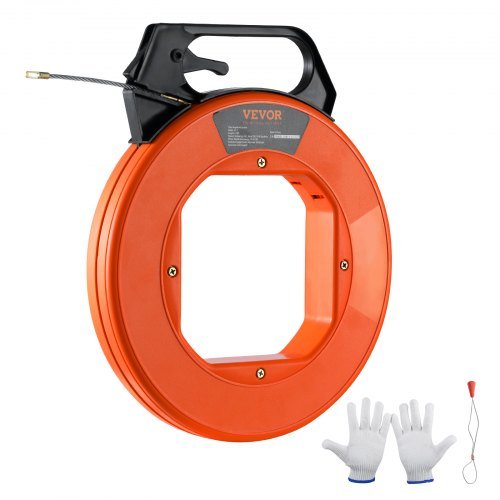
VEVOR Fish Tape
VEVOR Fish Tape, 125-foot, 3/16-inch, PET Wire Puller with Optimized Housing and Handle, Easy-to-Use Cable Puller Tool, Flexible Wire Fishing Tools for Walls and Electrical Condui…
Overview
The VEVOR Fish Tape is a 125-foot (38.1 m) cable pulling tool made from PET (polyethylene terephthalate) with a 3/16-inch (4.5 mm) diameter. It comes in an optimised housing with a comfortable handle and is presented as a flexible, non-conductive option for fishing wire through walls and electrical conduit. At around 1.25 kg (2.8 lbs) and compact dimensions, it’s designed to be easy to carry and to reduce user fatigue on long pulls.
This review looks at what the VEVOR tape offers, who it suits, practical considerations when using a PET fish tape, and how it stacks up against other ways of routing cable. The product appears on the Hand Tools comparison list as a practical option for both DIYers and tradespeople, but as with any tool, suitability depends on the job and the installer’s needs.
Who is this best for?
The VEVOR 125 ft fish tape will appeal to several groups:
- DIYers and home improvers who need a long, lightweight tape for running cable through conduit or behind walls in houses and small commercial spaces.
- Electricians or maintenance technicians who prefer a non-conductive tape for safety when working near live circuits or exposed wiring (note: non-conductive does not remove the need for safe working practices).
- Anyone who values portability—its relatively light weight and compact housing make it easy to carry in a toolbox or van without adding much bulk.
It’s less likely to be the first choice for specialist heavy-duty applications that require very stiff tapes or long service life in rugged environments; steel tapes and purpose-built rod systems still have roles there. If you frequently pull very heavy cable, or work in industrial settings with lots of sharp bends and metal conduit, consider whether a stiffer or larger-diameter option is more appropriate.
Key features
- 125 ft / 38.1 m tape length — gives reach for long runs in residential and small commercial buildings.
- 3/16 in (4.5 mm) diameter — a common size that balances flexibility and strength for many cable types.
- PET construction — non-conductive material reduces risk of electrical conduction compared with steel tapes and offers good flexibility.
- Optimised housing and handle — designed for comfortable use and easier rewinding and deployment.
- Lightweight — product weight around 1.25 kg makes it easy to handle on site.
These are the principal facts supplied for comparison; for more detail about accessories, warranty or packaging, check the retailer’s product page as listings can vary.
Practical evaluation
What you can expect from a 125-foot PET fish tape in everyday use. PET fish tapes are popular because they combine useful flexibility with a non-conductive profile. That means they can negotiate standard conduit runs and the occasional sharp bend without the risk of conducting electricity. For routing data, coax or electrical cable through conduit and cavities, the length here is generous for most residential tasks and many commercial jobs.
The 3/16-inch diameter is a sensible middle ground: it’s thin enough to feed through common bends, junction boxes and conduit sizes, yet still provides enough backbone to push through moderate resistance without constantly kinking. For long, straight conduit runs the tape should thread nicely; however, for very twisty runs or runs with repeated sharp 90-degree bends, you may find stiffer tapes or fish rods with sectional flexibility work better.
The optimised housing and handle are more than cosmetic. A well-designed reel helps keep the tape from twisting and makes rewinding easier after a pull. A comfortable handle reduces hand strain during extended use. Those little practical touches matter if you’re doing multiple runs in a day.
One practical caveat: PET and other non-metallic tapes can wear when dragged across sharp edges or if they’re forced through rough, corroded conduit. Take care at entry and exit points; consider using protective bushings or a pull head where possible. Also check what accessories are supplied—retailer listings sometimes include pulling heads, hooks or swivel ends that help attach cable or rope; if the listing lacks these, you may need to source a compatible connector separately.
Strengths
- Length: 125 ft gives reach for most domestic and many commercial runs without needing to splice or join tapes.
- Non-conductive PET: safer near live conductors than steel tapes and suitable for electrical and data cabling where metal is a concern.
- Balanced diameter: 3/16 in is good for negotiating common conduit and most domestic situations.
- Lightweight and portable: makes it a practical choice for trade professionals who need to carry tools between sites, and for DIYers storing in a workshop or shed.
- Compared product details: the listing gives enough information to compare with other fish tapes on length, material and diameter, which is helpful when making a decision.
Limitations
No single tool fits every need, and the VEVOR fish tape has limitations that are worth noting before you buy. The PET construction, while offering non-conductivity and flexibility, won’t match the durability of steel in extremely abrasive or industrial environments. If you’re pulling through long runs with lots of metal burrs or severe internal damage, a steel tape or a sectional fish rod system may withstand rough treatment better.
Also bear in mind that product listings and offers can vary. The current guide price is noted, but stock, accessories and delivery options may change depending on the retailer. Confirm the exact accessories included, the return or warranty policy, and up-to-date price on the retailer page before purchasing.
Finally, 3/16 in diameter and 125 ft length are not universal solutions. If you regularly pull very thick cable, or need a tape for specific conduit sizes and long, complex runs, a different diameter or a longer/shorter tape may be more appropriate. Check the job requirements and compare with other tapes in the same category.
Pricing and value
The supplied guide price gives an indication of where this product sits in the market. A mid-range price for a 125 ft PET fish tape is typical: you’re buying length and a non-conductive material rather than specialist features such as heavy-duty steel construction, integrated measuring markings, or motorised retractors. For general electrical and data work around the house or light commercial sites, the combination of length, diameter and a user-friendly housing represents good functional value.
Value also depends on what you need for the job. If you rarely need more than 25–50 ft of tape, a shorter, cheaper model could be more economical. Conversely, if you need heavy-duty or professional-spec kit day in, day out, investing in a more rugged tool may save money over the long run by avoiding replacements. Always check the retailer listing for the latest price, availability and any bundled accessories that might influence the value proposition.
Note: offers and prices can change. Check the retailer page for the most up-to-date information before buying.
Alternatives to consider
When choosing a fish tape, consider what kind of jobs you do most often. Here are some common alternatives and when they might be preferable:
- Steel fish tape — better for very long-run durability and for negotiating tight, sharp bends where extra stiffness is required. Steel is conductive, so take appropriate safety precautions around live circuits.
- Fibreglass or sectional rods — excellent for pushing through cavities and around corners without the tendency to coil. Rods are modular, making them good for long runs where control matters more than raw length.
- Nylon pull cords — cheap and lightweight, suitable when you only need to pull light cables and don’t require a rigid backbone to guide through conduit.
- Motorised pullers or powered reels — for professional users who regularly handle heavy gauge cable or long, complex pulls. These reduce strain and can speed up repeated tasks, but they’re a bigger investment.
Which alternative is best depends on the job: for general home wiring and occasional commercial work the VEVOR PET tape is competitive; for heavy industrial or specialist cabling, consider a steel tape or a rod system.
Final verdict
The VEVOR Fish Tape, at 125 ft and 3/16 in diameter, is a sensible, workmanlike option for anyone who needs a long, lightweight, non-conductive cable puller. Its PET construction and ergonomic housing make it a practical choice for wiring runs in houses and most light commercial settings, and the length covers the majority of typical installations without the need for joining tapes.
It won’t replace steel tapes or powered pullers where extreme durability, stiffness or heavy-duty pulling is required, but that’s not the market this product is aimed at. If you want a portable, reasonably priced fish tape that performs the everyday tasks—pulling low- to medium-weight cables through conduit and walls—this VEVOR model is worth considering. Do check the retailer page for the current price, stock and any included accessories before purchasing, and match the tape’s length and diameter to the specific runs and cable types you plan to install.
Quick buying checklist
- Confirm the tape length and diameter suit your conduit runs and cable thickness.
- Check the retailer listing for included accessories (pull heads, connectors) and warranty details.
- Decide whether non-conductive PET is preferable for your work or if a steel tape is needed for heavy-duty use.
- Consider storage and transport: the compact housing is handy, but verify dimensions if space is tight.
- Always follow safe working practices around electricity—non-conductive material reduces risk but does not eliminate hazards.
Offers and prices can change, so check the retailer page for the latest information before buying.
Also featured in
This product also appears on these price comparison pages:
Return to the saved price comparison
Go back to the saved comparison page to see this product alongside the other saved search results and current deal options.