
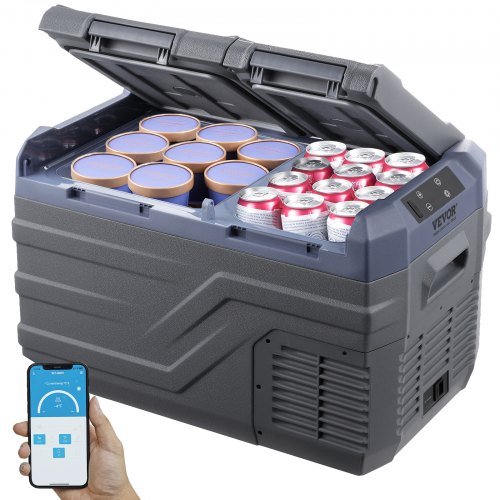
VEVOR Car Refrigerator
25 L dual‑zone compressor fridge — a middle ground between compact and full‑size. Dual compartments let you separate frozen and chilled items on the road.
Overview
The VEVOR 25 L dual-zone portable car refrigerator is a compressor-based cooler that aims to bridge the gap between a small travel cooler and a full-size portable freezer. With a 25-litre internal volume and a true dual-zone layout, it gives you separate compartments for fridge and freezer items in a compact package. The unit runs from 12/24V DC or 100–240V AC mains, offers a wide temperature range (−20 to 20°C), and is built from robust plastics with a vacuum-formed liner intended for outdoor and vehicle use.
This model sits under the larger 32 L option in the VEVOR range and is pitched at people who want the flexibility of both chilled and frozen storage without the bulk and weight of larger compressor fridges. Below I cover where the 25 L dual-zone fridge makes sense, what to expect from day-to-day use and which buyers should consider other sizes or configurations.
Who is this best for?
The VEVOR 25 L dual-zone fridge suits several common scenarios:
- Couples or small groups on weekend roadtrips who want to carry frozen food and chilled drinks without a large, heavy appliance.
- Van-lifers or weekend campers who value the ability to run on vehicle power (12/24V) and occasionally switch to mains at home or campsite pitches.
- People who want dual temperature zones so a portion of their food remains frozen while the other is kept chilled — useful for mixed loads (ice creams and fresh produce, for example).
- Anyone upgrading from a passive cool box to a compressor fridge for more reliable temperature control and lower running temperatures in hot weather.
It’s less well suited to ultralight travellers, motorcyclists or anyone who needs a fridge to run for many days purely off a small leisure battery without additional power planning — the net weight (around 12.8 kg) and the 60 W maximum power draw are factors to consider.
Key features
Here are the main features worth bearing in mind when comparing this unit with other portable fridges:
- 25 L capacity — A compact internal volume that keeps the unit reasonably small in footprint while still providing useful space for food and drinks.
- Dual-zone layout — Two independent compartments let you set different temperatures so you can freeze items in one zone and chill others in the other. This is the headline benefit over single-zone models.
- Wide temperature range — Adjustable between −20°C and 20°C, giving genuine freezer temperatures when required and precise chilling at the warmer end.
- Compressor cooling — More efficient and effective than thermoelectric or passive systems, especially in hot conditions; the compressor will maintain set temperatures even when ambient temperatures rise.
- Multi-voltage power — Supports 12/24V DC for vehicle use and 100–240V AC for mains, so you can switch power sources easily depending on whether you’re on the road or at a campsite with hookups.
- Build materials — Outer casing combines PP and HDPE with a vacuum-formed HIPS liner for durability and easier cleaning.
- Noise and power — Listed noise up to 45 dB and a rated power draw of 60 W. Both figures are useful to understand practical usage and battery planning.
Practical evaluation
Because this review is based on the product specification rather than hands-on testing, the practical notes below focus on what the features mean in daily use and how to plan for them.
Capacity and layout in real life
Twenty-five litres is large enough for a typical weekend away for two people if you pack sensibly. The dual-zone layout is the real convenience: you could keep frozen goods like pre-cooked meals or ice packs in one section and chilled items such as vegetables, dairy and drinks in the other. Bear in mind that partitions, lids and any internal baskets reduce the usable space compared with the headline 25 L number, so measure the internal compartments if you have particular containers or bottles to fit.
The unit’s footprint is deliberately smaller than the 32 L VEVOR option, so it’s more likely to fit into a smaller car boot or between seats as a compact fridge. Still, check vehicle dimensions and the fridge’s external size before buying — even compact compressor fridges can be awkward if your boot slope is steep or you have limited trunk space.
Power and battery planning
One advantage of compressor fridges is their temperature control and efficiency relative to passive coolers, but they still need planning. The unit lists a 60 W power draw. In simple electrical terms, at 12 V that figure equates to about 5 amps when the compressor is running at full power (60 W ÷ 12 V ≈ 5 A). In practice, compressors cycle: they run to reach and maintain temperature, then pause when the set temperature is reached, so the average current over time will usually be lower than the peak.
Even so, if you intend to run the fridge for long periods with the vehicle engine off, calculate battery capacity and consider a dual-battery set-up, a suitable leisure battery, or a portable power station. If you only run the compressor from the vehicle while driving or from campsite mains occasionally, the 12/24V and 100–240V compatibility makes switching straightforward.
Noise and environment
The manufacturer lists noise at up to 45 dB. That’s audible in a quiet environment but not especially loud — similar to ambient background noise in a living room or a quiet office. In a vehicle or at a campsite the sound is often less noticeable, but if you’re sensitive to compressor noise in close quarters (e.g. sleeping close to the fridge in a camper van) factor this into your decision.
Ventilation matters for compressors. Allow space around the rear and sides for airflow — cramped compartments that trap heat will make the compressor run more and increase power consumption. Check the user manual or retailer guidance for recommended clearance when installing in a vehicle or van.
Durability, cleaning and accessories
The outer materials (PP + HDPE) and HIPS liner are typical of robust portable fridges and should handle normal camping use and cleaning. Interior liners that are vacuum-formed help reduce seams and make cleaning spills easier. Still, you’ll want to wipe and dry the liner after use to prevent odours and mildew.
Accessories such as baskets, divider panels or a protective cover are useful but may not be included — check the product listing for what’s supplied. Securing the fridge during transit with straps is sensible; the net weight of around 12.8 kg means it can move under hard braking if not fastened down.
Strengths
- Dual-zone flexibility: Separate chilled and frozen compartments let you carry a wider variety of food and drinks without compromise.
- Wide temperature range: The −20 to 20°C setting range covers true freezer temperatures as well as soft-fridge settings for delicate items.
- Multi-source power: Ability to run on vehicle DC and mains AC adds versatility for road use, home storage and campsite hook-up.
- Compact footprint: Smaller and lighter than the 32 L sibling while still offering sensible capacity for short trips.
- Robust construction: The materials and liner type are chosen for outdoor use and easy cleaning.
Limitations
- Weight: At around 12.8 kg the fridge isn’t heavy for a compressor unit, but it’s not pocketable either. Lifting into small cars or lofted van spaces requires planning.
- Power draw: 60 W peak is significant for long off-grid stretches; you’ll need to plan battery capacity if you expect to run it from leisure batteries for multiple nights.
- No built-in battery or advanced power management: The unit does not include an integrated battery pack or intelligent power-saving features beyond the normal compressor controls—external power management solutions may be needed for long-term off-grid use.
- Accessories may be extra: Items such as internal baskets, straps or covers aren’t always included; check the retailer page so you know what you’ll need to buy separately.
- Fitment considerations: Even though it’s compact for a compressor fridge, measure carefully — boot shapes and van layouts vary and compressor fridges need clearance for ventilation.
Pricing and value
The VEVOR 25 L dual-zone fridge is positioned as a mid-range, value-focused option: it supplies compressor cooling, true dual-zone control and a wide temperature range in a relatively compact package. The manufacturer has supplied a guide price (USD 180.99) — treat that as a rough reference and check current retailer listings for the latest price, availability and any extras that may be bundled in different markets.
When assessing value, compare what you need against what you’ll actually use. Dual-zone fridges give flexibility but add complexity and can reduce the usable volume of each compartment compared with a single-zone unit of the same overall capacity. If you rarely need a freezer, a single-zone compressor fridge can offer more usable chilled space or a lower power draw. Conversely, if you regularly carry frozen meals, the dual-zone option prevents cross-temperature issues and avoids the need for separate coolers.
Factor in the likely accessories you’ll want (internal baskets, straps, spare power cables and possibly a protective cover), and consider the long-term costs of running the unit from batteries if you plan off-grid use. Warranty terms, returns policy and local support can also affect value — check the retailer for those details before purchase.
Note: offers and prices can change. Always check the retailer’s page for current pricing, shipping costs and warranty terms before buying.
Alternatives to consider
Within the VEVOR range the obvious alternatives are different capacities and form factors:
- Larger dual-zone models: If you regularly travel with a bigger group or want more freezer capacity, a larger 32 L dual-zone unit will give extra space at the cost of weight and footprint.
- Single-zone compressor fridges: For those who only need chilling (no frozen storage), a single-zone compressor model can offer more chilled volume for the same external size or slightly lower power draw.
- Armrest-style fridges / compact units: Some portable fridges are designed to function as an armrest or for tight spaces in vehicles; if boot space is limited this form factor can be a space-efficient solution.
Outside the VEVOR family, other manufacturers offer compressor car refrigerators with different feature sets, power options and warranties. When comparing, look for similar temperature ranges, the availability of 12/24V DC operation, accessory inclusion and any power-saving modes. Remember not all compressor fridges are built the same: fan and compressor size, insulation quality and internal layout affect how they perform in hot weather and under load.
Final verdict
The VEVOR 25 L dual-zone car refrigerator is a sensible choice if you want the flexibility of chilled and frozen storage without committing to a large, heavy compressor fridge. It offers practical capacity for weekend trips, reliable temperature control via a compressor and the convenience of both vehicle and mains power. The wide −20 to 20°C temperature range and dual compartments make it a good option for mixed loads — frozen meals and chilled produce — and its smaller footprint compared with larger VEVOR models helps it fit in smaller cars and vans.
That said, the unit isn’t for everyone. It still weighs around 12.8 kg, and a 60 W peak draw means you must plan battery capacity if you expect to use it off-grid for extended periods. It also lacks an onboard battery or advanced power-management features, and accessories you may want (baskets, straps) might be sold separately. Careful measurement for fit and ventilation is essential before purchase.
If you want a straightforward, capable dual-zone compressor fridge for short trips and mixed food loads, the 25 L VEVOR is worth considering. If your trips are longer, your group larger, or you need extremely lightweight equipment, look at larger VEVOR models (for more capacity) or single-zone/armrest-style options (for more efficient chilled space or a smaller footprint).
Check the current retailer listing for up-to-date pricing, included accessories and warranty information before you buy — offers and availability can change.
Compare this with the full shortlist
Return to the full comparison guide to see how this product compares against the other shortlisted choices.