
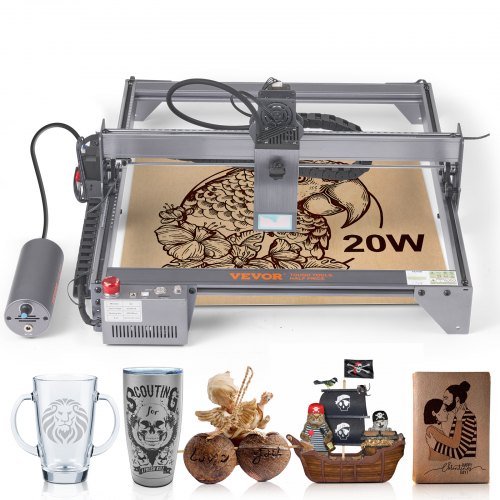
VEVOR Laser Engraver
20W VEVOR unit offering a 40 × 40 cm bed, USB connection and a listed air-assist pump — positioned as an all-in-one entry-level desktop engraver.
Overview
The VEVOR 20W Laser Engraver is presented as a compact desktop machine aimed at hobbyists and small‑scale makers who want a reasonably large work area without stepping up to industrial kit. On paper it packs a 20W blue diode laser, a 40 × 40 cm (15.7 × 15.7 in) effective bed, aluminium chassis and an included air pump for air‑assist. It also lists compatibility with common control software such as LightBurn and LaserGRBL.
Because this product is often sold through a variety of retailers and bundles, the exact accessories and support level can vary — the manufacturer emphasises a compressed spot for finer engraving detail and a movement speed figure aimed at faster job turnaround. If you’re compact 20W options (for example the Twotrees TTS‑20 Pro bundles), VEVOR is worth considering as a single‑package alternative, but it’s important to check what the specific retail listing includes before you buy.
Who is this best for?
The VEVOR 20W will suit people who want a flexible, larger‑bed diode engraver without the cost or footprint of a laser with a more powerful tube or fibre source. Typical buyers will include hobbyists, makers who sell small batches of engraved products, and DIYers who want to experiment with cutting and engraving wood, leather, card, coated metals and some plastics.
It’s not aimed at users who need to cut thick acrylic or metal regularly, or those expecting industrial throughput out of the box. If you’re after compact workshop convenience with decent software compatibility and an air‑assist included, it provides a practical balance of price, bed size and features — assuming you choose a seller bundle that gives you the accessories you expect.
Key features
- 20W diode laser output (blue, ~455 nm wavelength).
- Effective working area: 40 × 40 cm (15.7 × 15.7 in).
- Compatible with LightBurn and LaserGRBL — common control software for hobby lasers.
- Included air‑assist function with air pump (listed in the product details).
- Aluminium alloy frame aimed at improving rigidity and reducing vibration.
- Advertised compressed spot for finer detail engraving.
- USB connection for control and file transfer; movement speed specification listed by the seller.
Practical evaluation
Because seller packages can vary, the first practical step for anyone considering the VEVOR 20W is to confirm the exact contents of the listing. The reference material notes an included air pump and compatibility with popular software, which makes setup and basic workflow straightforward for anyone familiar with LightBurn or LaserGRBL. If you already have a workflow built around those programs, the VEVOR should slot in relatively easily.
The aluminium frame is a sensible choice for a desktop unit because it helps keep the core structure stable while still being relatively light. A stable frame matters for engraving detail and consistent cutting results, especially when you use higher speeds. The advertised compressed spot suggests the optics are tuned to produce a smaller focus area, which is helpful for crisp engravings, but real‑world detail depends on alignment, focal distance, and material settings rather than spec alone.
Air‑assist is a meaningful inclusion for a 20W diode system. Blowing air across the cut helps clear smoke and debris, prevents flare ups, and often improves cut quality and edge finish at this power level. The fact an air pump is included in the base specification is a plus — but again, confirm the retail bundle includes it; some sellers list it while others sell it as an add‑on.
Manufacturers often publish movement speed numbers, and VEVOR provides a headline figure. Those speeds are useful for comparing theoretical throughput, but you’ll rarely run the machine at maximum speed for full‑depth cuts — effective speed depends on material, focal setup, passes, and safety margins. Expect to tune speed and power through test cuts to find the sweet spot for your material and desired finish.
There are also practical items worth planning for before you switch the machine on. Diode lasers produce visible blue light and reflected stray beams can be hazardous — appropriate protective eyewear, well‑considered enclosure or extraction arrangements, and a fire safety plan are essential. Likewise, good ventilation or fume extraction improves workshop safety and prevents resin or lacquer fumes lingering in the room.
Strengths
- Large desktop bed: The 40 × 40 cm working area is generous for a desktop diode machine and will handle most small projects without repeated repositioning.
- Air‑assist included (often): Having an air pump quoted as included is a practical benefit for cleaner cuts and fewer scorch marks compared with unassisted diode setups.
- Software compatibility: LightBurn and LaserGRBL support mean you can use established workflows and community resources for settings and file preparation.
- Aluminium frame: A rigid frame helps with repeatability and engraving quality compared with cheaper acrylic or low‑spec frames.
- Cost‑competitive alternative: Positioned as a viable alternative to Twotrees and other 20W diode bundles, it often appeals to buyers preferring a single‑seller purchase.
Limitations
- Diode limits: Despite the 20W rating, diode lasers have physical limits compared with CO2 or fibre lasers. Thick acrylic or metal cutting is outside the reasonable expectations for this class — coatings and surface marking on certain metals are possible, but cutting ferrous metals is not.
- Bundle variance: The specification and accessories can vary between retailers. Some listings include a honeycomb bed, rotary attachments, extraction or a full enclosure; others are more basic. Always verify the exact package contents before purchase.
- Support and spares: Support quality, firmware updates and spare parts availability can differ depending on the seller. If reliable local support matters, check seller reputation and spare‑part sourcing options.
- Assembly and tuning: Expect to assemble, align and tune the machine before the first job. This is normal for hobby class lasers but worth noting if you want a plug‑and‑play experience.
- Safety and extraction: The product listing doesn’t remove the need for proper fume extraction and eye protection. You’ll still need to budget for extraction or work inside a suitable enclosure, and maintain a safe workspace.
Pricing and value
The guide price provided with the product listing is USD 589.99, which places the VEVOR 20W in the lower‑cost segment of desktop diode lasers with comparable bed sizes. Value depends heavily on which accessories are included with your purchase; a model that includes a honeycomb table, air‑assist pump and basic enclosure represents better out‑of‑the‑box value than a bare bones kit that requires additional purchases.
When you judge value, factor in the extras you may need: protective eyewear rated for the laser wavelength, fume extraction or a small workshop extractor, a stable surface or stand, and possibly spare consumables such as belts or lenses. If a seller includes an air pump and a reasonably rigid bed, that reduces early follow‑up costs and makes the machine ready for many everyday tasks sooner.
Comparing to the Twotrees TTS‑20 Pro bundles, VEVOR typically competes on price and bed size rather than brand ecosystem. Twotrees often sells region‑specific bundles with locally tailored accessories and shipping; VEVOR’s angle is a single‑machine purchase that can be cheaper depending on promotions. For buyers outside the regions Twotrees targets or for those preferring the particular retail channel VEVOR uses, it can be the better pragmatic choice.
Alternatives to consider
When you’re a 20W diode machine, options to weigh alongside the VEVOR include the Twotrees TTS‑20 Pro bundles and other established desktop brands. Twotrees tends to offer different regional bundles that may include extras such as an enclosure, honeycomb bed or enhanced optics; those bundles are worth attention if you value out‑of‑the‑box readiness and local support.
Other alternatives could include 10–15W diode machines if your projects are lighter duty and you prioritise cost and simplicity, or CO2 tube lasers if you regularly need to cut thicker non‑metal materials. CO2 machines require more space and maintenance but outperform diodes for thicker acrylic cuts and some finishes. For marking or occasional light metal work, an MOPA fibre or dedicated metal‑marking setup is a different category, usually at a higher price point.
Decide first what you’ll mostly do: small, detailed engravings across a variety of substrates (wood, leather, coated metals) favour a diode with a good optics setup and software like LightBurn. Thicker cutting or metalwork requires different laser technology. If you want a flexible desktop maker machine with a large bed and the ability to grow into more complex projects, the VEVOR and Twotrees 20W‑class machines are the right part of the market to compare carefully.
Final verdict
The VEVOR 20W Laser Engraver presents a practical option for hobbyists and micro businesses who need a large desktop work area and want a relatively complete diode laser package. Its strengths are the 40 × 40 cm bed, aluminium frame and the inclusion (in many listings) of air‑assist — plus the fact it works with LightBurn and LaserGRBL which makes file preparation and control straightforward for most users.
It’s important to be realistic about what a 20W diode machine can do: it will excel at engraving and light cutting on wood, leather, cardboard, coated metal and thin plastics, but it’s not a substitute for a higher‑power CO2 or fibre laser where thicker or metal cutting is required. Also bear in mind the variability of retail bundles — confirm whether the seller’s package contains the advertised accessories and check on support and spares availability for your region.
If you prioritise a large bed and a straightforward software workflow, and you’re prepared to handle the usual setup, tuning and safety preconditions (extraction, eyewear, enclosure), the VEVOR 20W is a sensible, cost‑conscious pick. If you prefer brand‑specific bundles with regionally focused support or a different accessory mix, compare the Twotrees TTS‑20 Pro listings side‑by‑side and verify what each package includes before committing.
Note: product listings, included accessories and prices can change — always check the retailer page to confirm the exact package contents and the latest price before you buy.
Ready to check VEVOR Laser Engraver, 20W Output Laser Engraving Machine, 15.7" x 15.7" Large Working Area, 10000mm/min Movement Speed, Compressed Spot with Eye Protection, Laser Cutter for Wood, Certain Metal?
Check the latest offer before buying, then return to the main comparison if you want to compare it against the other shortlisted options.
Compare this with the full shortlist
Return to the full comparison guide to see how this product compares against the other shortlisted choices.