
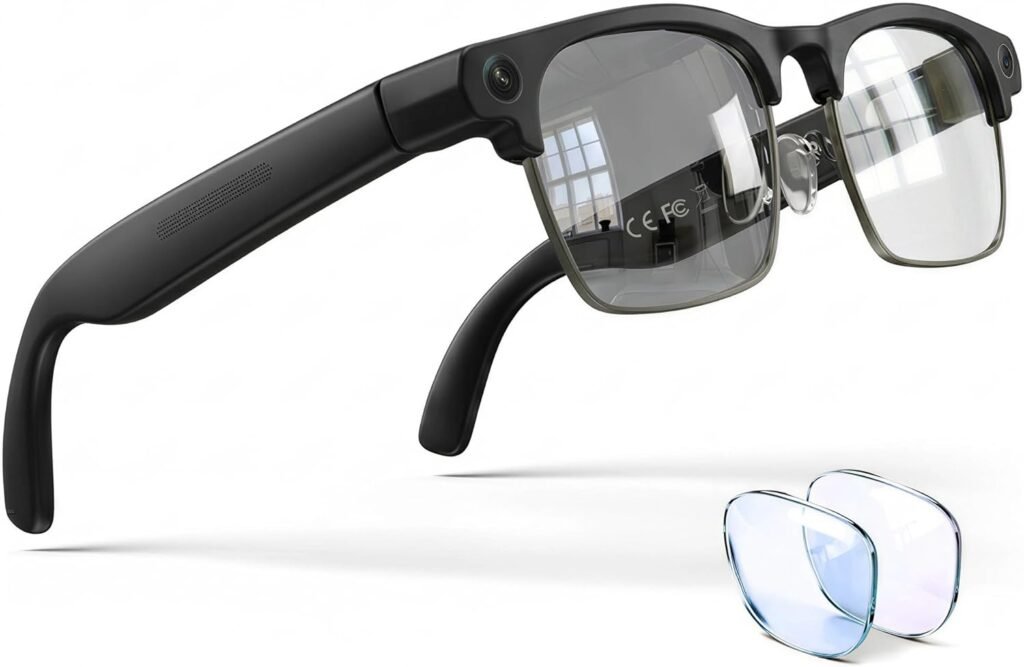
AI Smart Glasses with Camera
Another EGQINR model focused on translation and wearable camera use, adding blue‑light lenses and photochromic options for everyday wear.
Overview
These AI Smart Glasses aim to pack a lot of convenience into everyday eyewear: an 8MP camera for photos, the ability to record 4K video, real‑time translation for live conversations, voice assistant integration, and hands‑free calling. The design is described as lightweight and suitable for routine wear, with detachable blue‑light lenses included to ease screen strain. Put simply, they’re pitched at people who want to capture life moments, stay connected on the move and avoid constantly pulling out a phone—rather than at professional filmmakers or people who need prescription eyewear from the outset.
Because the product blends optical accessories with compact electronics, it’s worth looking beyond the headline features to understand how they will fit into your day‑to‑day routine. In this review I summarise the key capabilities, practical considerations, likely use cases and limitations so you can decide whether these smart glasses suit your needs.
Who is this best for?
These smart glasses are best suited to a few specific user types:
- Casual vloggers and travellers who want quick, hands‑free photos and video without carrying a separate camera or always grabbing a phone.
- People who value hands‑free interactions—voice assistant control and calling—while walking, commuting or doing light tasks.
- Anyone who wants a travel‑friendly translation aid for brief conversations in other languages, especially when you need an instant response without pulling out a device.
- Users who spend a lot of time on screens and would appreciate the included detachable blue‑light lenses to reduce eye strain during computing or phone use.
They are less appropriate if you need professional‑grade video or audio, if you require a customised optical prescription, or if you are concerned about extended battery life for long recording sessions. Also check compatibility with your phone or apps before buying—these glasses are a connected device and some features will depend on the supporting software and handset pairing.
Key features
- 8MP built‑in camera: For stills and to capture quick moments without reaching for a phone.
- 4K video recording capability: The glasses can record high‑resolution video, making them useful for vlogging and travel clips.
- Real‑time translation: Designed to translate live conversations so you can interact more easily when abroad.
- Voice assistant integration: Hands‑free control and quick actions through voice commands.
- Hands‑free calling: Make and receive calls without taking your phone from a pocket or bag.
- Lightweight, everyday frame: Built for comfort so you can wear them during daily activities.
- Detachable blue‑light lenses included: Lenses you can add or remove to reduce screen glare and eye strain.
Practical evaluation
On paper the feature list reads like a useful toolkit for modern, mobile living: record life moments, handle calls and translations, and protect your eyes from screen fatigue. Translating that into everyday use depends on a few practical factors—compatibility with phones and apps, how the camera and audio perform in real environments, battery life, and how comfortable the frames are for extended wear.
Because this review is based on supplied product details rather than hands‑on testing, consider these practical questions before you buy. First, check the app requirements and which smartphones are supported; real‑time translation and any companion app features will normally rely on a mobile connection and a compatible operating system. Second, look up the battery and charging specifications—how long the glasses can record video, how long they last in standby for calls, and how quickly they recharge. Third, consider fit and optical needs: while the frame is described as lightweight, people who require prescription lenses should confirm whether the frames can accept prescription inserts or if compatible prescription versions are offered.
In everyday scenarios, these glasses can remove friction: capturing a quick video on the go without fishing for a phone, or making a hands‑free call while walking. The 8MP camera and 4K recording capability suggest reasonable image quality for casual vlogs, social sharing and travel diaries. However, compact devices always involve compromises—sensor size, microphone placement and lens optics are constrained by the need to keep the frame slim and wearable—so expect results to be suited to casual use rather than professional production.
Strengths
There are several clear strengths that make these glasses worth considering if they match your use case:
- Genuine hands‑free convenience: Recording photos and video, making calls and using a voice assistant without handling a separate device reduces friction in everyday tasks. This is particularly useful when your hands are occupied or when you want to capture something quickly.
- Travel functionality: Built‑in real‑time translation can be a big help when navigating unfamiliar places or having short conversations in another language. It simplifies interactions where typing or tapping a phone isn’t practical.
- Blue‑light lenses included: Having detachable blue‑light lenses supplied with the frame adds practical value—useful for people who spend time in front of screens and want to reduce eye strain without buying extra accessories.
- Lightweight design: Comfort matters for a wearable. A lightweight frame increases the chance you’ll actually wear them regularly, whether for commuting, walking or casual recording sessions.
- Feature‑rich package: Combining camera, translation, voice control and calling into one wearable makes this a versatile everyday device for people who prioritise convenience and multi‑functionality.
Limitations
There are a number of sensible caveats to bear in mind before committing to a purchase:
- Not a professional camera: The glasses are marketed for casual vlogging and life‑moment capture. Expect limitations in low light, audio capture and image stabilisation compared with larger cameras or smartphones with bigger sensors.
- Battery life and charging: Battery performance is rarely as generous in compact wearables as in phones. Confirm how long you can record at 4K, how calls and translation affect battery drain, and how long recharging takes so you don’t run out mid‑day.
- Compatibility and app support: Features like real‑time translation and voice assistant integration typically depend on a companion app and specific phone OS versions. Make sure your phone is supported and that the app provides the features you need.
- Privacy considerations: Wearing a discreet camera in public raises privacy and legal questions. Be mindful of local laws and social norms around recording people in public or private spaces.
- Prescription limitations: These are not described as prescription glasses by default. If you wear corrective lenses you’ll need to check whether prescription inserts are available or whether you can use them with contact lenses comfortably.
- Audio and image quality trade‑offs: Compact microphones and tiny lenses are convenient but limited compared with dedicated audio recorders and cameras—expect varying performance depending on wind, background noise and lighting.
Pricing and value
The product description notes that price varies by retailer and configuration. Because retailers and offers change frequently, it’s important to check the current price and shipping options for the UK before buying. Factor in any additions you might need—prescription lens fitting, protective cases, or extra accessories—when judging overall value.
Value depends largely on how much use you’ll get from the combined features. If you regularly need hands‑free recording, quick translation and voice control, a single device that covers all those roles can be economical and convenient compared with buying separate gadgets. On the other hand, if you already own a capable smartphone with good video and translation apps, the incremental benefit may be smaller and harder to justify unless the wearable form‑factor is specifically what you want.
When evaluating worth, ask yourself: will you use the camera and translation often enough for the convenience to outweigh the cost? Are you comfortable with the likely image/audio quality for social and casual video? If you need prescription lenses, include the additional cost and practicality of retrofitting or using inserts in your calculation.
Alternatives and how to choose
If you’re considering these glasses, it’s sensible to compare them against a few alternatives to decide which route suits you best:
- Smartphone with gimbal or clip‑on lens: For many people, a current smartphone plus a small stabiliser or external lens provides superior video and audio quality while remaining portable. It lacks true hands‑free capture but still covers most vlog and travel needs.
- Dedicated action cameras or compact cameras: If you prioritise image quality and durability, action cameras and compact mirrorless devices outperform wearable cameras—especially in low light or when you need better audio solutions. They are bulkier, though, and not hands‑free.
- Other smart glasses with fewer features: There are simpler smart glasses that focus only on audio, notifications or basic recording. These can be lighter and cheaper if you don’t need translation or 4K recording.
- Prescription smart frames or clip‑ins: If you need vision correction, look for brands that offer prescription smart frames or that accept prescription inserts. That allows you to combine corrective lenses with wearable tech more safely and comfortably.
Choosing between these options comes down to priorities: if convenience and true hands‑free control are essential, smart glasses are compelling. If you value image and sound quality above all, a dedicated camera or smartphone setup will deliver better results. Consider how often you’ll use translation and calls—if those features are central to your use, a pair of smart glasses with reliable app support could be a good fit.
Final verdict
These AI Smart Glasses offer a tempting package for anyone wanting to stay connected and capture moments without constantly handling a phone. The combination of an 8MP camera, 4K recording capability, real‑time translation, voice assistant support and hands‑free calling makes them versatile for travel, light vlogging and daily convenience. The included detachable blue‑light lenses add practical value for screen users, and the lightweight frame enhances comfort for regular wear.
That said, they are not a replacement for professional camera kit or bespoke prescription eyewear. Practical considerations—battery life, app and phone compatibility, privacy norms and the trade‑offs of compact camera hardware—are important. Image and audio quality will likely be fine for social sharing and casual vlogs, but expect compromises compared with larger devices. If you mainly want the novelty of a wearable camera or you regularly need translation on the go, these glasses could be a valuable tool. If your priority is cinematic video, long recording times or corrective lenses, you may need to look at dedicated cameras or a device designed specifically to accept prescription lenses.
Before buying, check the latest price and shipping details for the UK and confirm the app/phone compatibility and battery specifications to make sure the glasses will meet your routine needs. Offers and prices can change, so it’s worth checking the official product page or authorised retailers for the most up‑to‑date information.
Ready to check AI Smart Glasses with Camera, 8MP Camera Glasses for Life Vlog Travel Work, 4K Video Recording Glasses for Women Men, Real-Time Translation, Voice Assistant, Calls, Bonus Blue Light Lenses Included?
Check the latest offer before buying, then return to the main comparison if you want to compare it against the other shortlisted options.
Compare this with the full shortlist
Return to the full comparison guide to see how this product compares against the other shortlisted choices.