
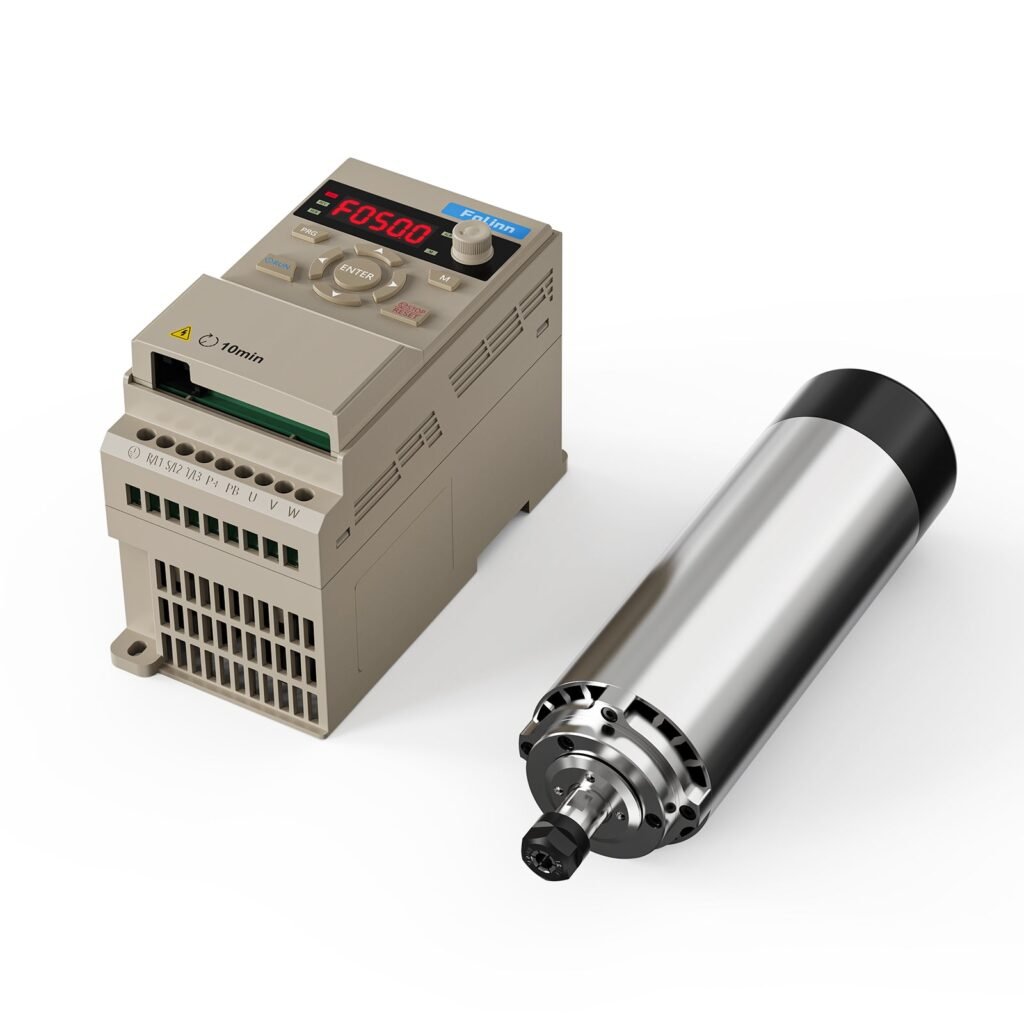
Twotrees 1000W Air-Cooled CNC Router Spindle Motor -…
A 1000W air‑cooled spindle designed for heavier cutting and consistent performance in demanding hobby or light professional use.
Overview
The Twotrees 1000W air‑cooled spindle is presented as a direct upgrade option for the TTC450, TTC450 Pro and TTC450 Ultra desktop CNC routers. Unlike the common brushed router heads often bundled with hobby CNC machines, this spindle uses a dedicated motor and air‑cooling system and is rated for continuous duty. TwoTrees positions it as a quieter, smoother and more versatile option with a broader RPM range suitable for a wider variety of materials.
This review unpacks what that means in practical terms. I’ll cover who benefits most from the swap, the key features to be aware of, what to expect during installation, realistic strengths and limitations, pricing and value considerations, and some alternative routes if this particular spindle doesn’t fit your needs.
Who is this best for?
The Twotrees 1000W air‑cooled spindle is aimed at TTC450 owners who want to step up from a generic router head without moving to full water‑cooled spindles or changing their machine entirely. Typical users who will see the most benefit are:
- Hobbyists and makers doing regular wood, acrylic or light aluminium work who want quieter, smoother operation for longer jobs.
- Small workshop users who run longer cycle times and need a spindle rated for continuous duty rather than intermittent hobby use.
- People who prefer a water‑free setup to avoid pumps, tubing and the maintenance that comes with liquid‑cooled spindles.
- Anyone who wants a wider RPM range to better match cutting speeds to different materials and tooling sizes.
This isn’t necessarily for every TTC450 owner. If you only make occasional cuts with small bits, the stock router head might be sufficient. Likewise, if your projects regularly require very high power under heavy cuts (for example, thick aluminium work with large cutters), you should be ready to assess the machine’s overall mechanical limits—not just the spindle—before upgrading.
Key features
- 1000W air‑cooled motor: A purpose‑built spindle motor that avoids liquid cooling and is designed for continuous duty.
- Drop‑in compatibility: Marketed as designed to fit the TTC450, TTC450 Pro and TTC450 Ultra with matching spindle mounting and electrical connections—though compatibility checks are still important.
- Broader RPM range: A wider speed range than typical brushed routers, which helps when switching between materials and cutter sizes.
- Noise and vibration reduction: Intended to run quieter and smoother than many generic router heads, improving surface finish and operator comfort.
These points cover the headline differences compared with a standard hobby router head. The air‑cooled approach keeps the setup simpler: no pump, radiator or coolant to manage. The continuous duty rating also implies the spindle is built for longer runtime, which matters if you’re doing production batches or long carvings.
Practical evaluation
Because this review is based on manufacturer details and compatibility notes, the practical evaluation focuses on how the spindle behaves as an upgrade in a TTC450 environment and what to consider before you buy.
First, think about installation. The spindle is described as a drop‑in upgrade, but ‘drop‑in’ in CNC terms usually means the motor’s physical mount and connector types match the machine’s existing provisions. Before committing, check these points carefully:
- Mechanical mount: Confirm the spindle’s mounting flange or collet housing lines up with your TTC450 variant. Small geometry differences can mean adapting plates or shims are required.
- Electrical compatibility: Ensure your machine’s controller and wiring can supply the spindle safely. Some upgrades require altered wiring, different fuses or a dedicated spindle VFD (variable frequency drive). The product notes advise checking controller and electrical compatibility.
- Collets and tooling: Verify the spindle’s collet size and the tooling you plan to use. The usable tooling will still be limited by collet size and recommended max RPM for specific cutters.
Operationally, the air‑cooled, continuous‑duty design makes this spindle better suited to longer cuts than many hobby router heads. The broader RPM range is helpful when you need to use lower speeds for larger end mills or higher speeds for small carbide tools. Reduced vibration and noise are practical benefits — smoother cuts not only feel nicer but can translate into better surface finish and more predictable results, particularly on delicate materials.
However, note that air cooling has limits. Under heavy, sustained loads or when aggressively cutting metals, air cooling will not dissipate heat as effectively as a liquid‑cooled system. That doesn’t rule out light aluminium work, but it does mean you should monitor spindle temperature and cut conservatively if you push feeds and depths.
Strengths
The Twotrees 1000W air‑cooled spindle brings several practical upsides to TTC450 users:
- Quieter and smoother operation: A dedicated spindle motor tends to reduce vibration compared with inexpensive brushed routers. Less vibration helps tooling life, surface finish and the machine’s mechanical stress over time.
- No water cooling required: For many hobby workshops, removing a pump and tubing simplifies the build and reduces potential maintenance points and leaks.
- Continuous duty rating: Designed to run for longer jobs without thermal cutouts that are common on consumer routers intended for intermittent use.
- Wider speed range: More flexibility to dial in RPMs that match material and cutter size, improving cut quality and potentially expanding the range of feasible jobs.
- Made for the TTC450 family: Marketing emphasises fit with the TTC450 range, which should reduce the worst compatibility headaches compared to a generic third‑party spindle.
These strengths make the spindle a sensible upgrade step for users who want better everyday performance without the complexity of a liquid‑cooled spindle or a complete machine change.
Limitations
No upgrade is perfect for every scenario, so it’s worth being clear about the practical limitations of this device:
- Compatibility caveats: While sold as a drop‑in upgrade for the TTC450 series, individual machines and controller versions can differ. You must confirm mechanical mount and electrical connections before purchase. Some TTC450 owners may need adaptors or wiring changes.
- Controller and wiring may need work: If your controller cannot supply the spindle correctly—or if the spindle requires a VFD—you may need to upgrade wiring, fuses or the controller itself.
- Cooling limits: Air cooling is simpler but less effective under sustained heavy metal cutting than water cooling. If you plan routine, aggressive aluminium or steel cuts, consider whether a liquid‑cooled spindle or a more powerful machine would be a better fit.
- Tooling and RPM limits: The spindle’s broader RPM range helps, but usable tooling still depends on collet sizes and cutter RPM ratings. Don’t assume you can use arbitrarily large cutters at high RPMs.
- Machine structural limits: Upgrading the spindle may reveal the TTC450’s mechanical limits—lead screw stiffness, frame rigidity and feed drive power—which determine how much material you can remove in a single pass without chatter or missed steps.
All of these are practical realities rather than criticisms of the product itself; they’re the trade‑offs you should weigh when moving from a basic router head to a purpose spindle.
Installation and practical tips
If you decide the spindle is worth exploring, a few practical tips help avoid common pitfalls:
- Double‑check fit before buying: Compare the spindle’s mounting dimensions and connector types with your TTC450. If possible, ask the seller for mounting drawings or photos.
- Plan the electrical side: Confirm whether the spindle needs a separate VFD or if the machine’s existing wiring supports it. If in doubt, consult a technician or an experienced hobbyist forum rather than improvising with mismatched wiring.
- Match tooling to RPM and collet size: Use cutters rated for the RPMs you intend to run and ensure you have the correct collets for the spindle. Running the wrong collet or overloaded tooling is a fast route to poor results or broken bits.
- Start conservatively: When first using the spindle, reduce depths and feeds compared with your router head settings until you’re confident in the machine’s rigidity and toolpath behaviour.
- Monitor temperature and vibration: Watch the spindle temperature on longer jobs and listen/feel for changes in vibration. Air‑cooled systems should be allowed to breathe—avoid blocking intake vents and keep a reasonable ambient temperature.
Pricing and value
The Twotrees 1000W spindle is offered through TwoTrees’ official store, and the company lists the product as an upgrade specifically for the TTC450 series. Exact pricing and UK availability can change, so check the product page before buying.
Value is best judged in context. If you frequently run jobs that push a stock router head—long carvings, small‑bit detailed work, or moderate aluminium cutting—the quieter operation, broader RPM range and continuous‑duty rating provide tangible benefits that justify the cost of an upgrade. The simplified maintenance of air cooling also saves time and potential expense compared with a water‑cooled setup.
On the other hand, if your CNC use is occasional or limited to softwoods and small bits, the stock router head may be perfectly adequate and cheaper overall. Similarly, if you intend to scale into heavier metalwork, you should compare the cost and benefits of this spindle against a higher‑powered spindle or a different machine capable of more robust cutting.
Bear in mind you may need to budget for minor extras: adaptors, collets, wiring or a VFD if your controller doesn’t supply the spindle directly. Those costs should be added into your value calculation.
Alternatives to consider
If the Twotrees 1000W air‑cooled spindle isn’t an ideal match for you, there are reasonable alternative approaches depending on your goals:
- Stick with or replace with another air‑cooled spindle: Other brands offer air‑cooled spindles at various power levels. If you want the same simplicity but different specs (or compatibility) it’s worth comparing mounting and electrical requirements.
- Choose a liquid‑cooled spindle: If you expect heavy or sustained metal cutting, a water‑cooled spindle handles heat better. This adds complexity but can permit more aggressive feeds and depths.
- Upgrade the machine or controller: If your TTC450’s rigidity, motors or controller limit cutting capability, a spindle upgrade alone won’t fix those constraints. Sometimes a controller upgrade, stiffer frame mods or a different machine are better long‑term solutions.
- Consider tooling and workflow changes: Optimising feeds, toolpaths, cutter types and step‑overs can often deliver big improvements without any hardware changes. Before buying hardware, ensure your CAM and tooling strategy is well suited to the parts you want to make.
Final verdict
The Twotrees 1000W air‑cooled spindle is a sensible, pragmatic upgrade for many TTC450 owners. It addresses common pain points associated with bundled brushed routers: noise, vibration, limited RPM range and thermal limits for continuous use. For hobbyists and small workshop users who want quieter, smoother operation and a broader operating range without the extra complexity of liquid cooling, it’s an attractive middle ground.
That said, it’s not a magic bullet. Buyers must confirm mechanical and electrical compatibility with their TTC450 variant and be realistic about the machine’s structural and drive limitations. Air cooling is convenient, but if you plan to push hard on metals a liquid‑cooled spindle or a different machine architecture may be more appropriate. Also factor in any additional costs for adaptors, collets or wiring changes.
In summary: if you regularly perform longer jobs, want improved finish and reduced noise, and prefer a simpler, water‑free setup, the Twotrees 1000W air‑cooled spindle is worth considering. If your work routinely demands heavy metal removal or your TTC450 is an early or heavily customised unit, take extra care to check compatibility and consider whether a heavier‑duty system is the better investment.
Note: Product availability and pricing can change. Check the seller’s page for the latest details and UK shipping options before you buy.
Ready to check Twotrees 1000W Air-Cooled CNC Router Spindle Motor – UK / For TTC450/TTC450 Pro/TTC450 Ultra?
Check the latest offer before buying, then return to the main comparison if you want to compare it against the other shortlisted options.
Compare this with the full shortlist
Return to the full comparison guide to see how this product compares against the other shortlisted choices.