
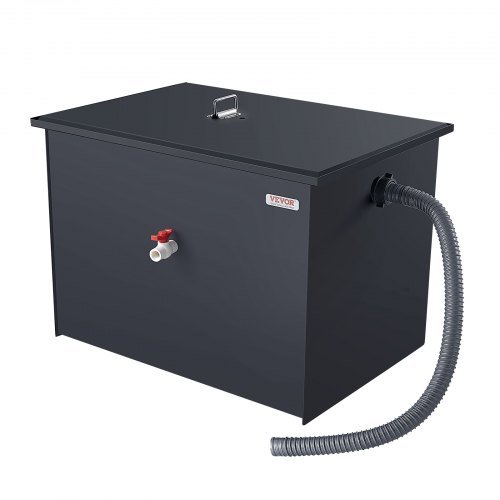
VEVOR Commercial Grease Trap
Largest of the three: 40 lb capacity, 15.23 GPM flow and a heavier carbon-steel body for higher grease loads and less frequent emptying.
Overview
The VEVOR Commercial Grease Trap is a 40 lb under‑sink grease interceptor intended for small commercial kitchens, canteens and busy domestic setups that need a more robust solution than typical domestic traps. Constructed from Q235 carbon steel, it’s a side‑inlet unit with an inlet/outlet diameter of 48 mm (≈1.89 in) and a rated flow of about 15.23 GPM. At 650 × 450 × 460 mm it’s larger and heavier than compact under‑sink models, but that extra size is what gives it the higher capacity and longer intervals between pump‑outs.
This review looks at how that specification translates into day‑to‑day use: whether it fits the realities of a small commercial kitchen, how straightforward plumbing connections are likely to be, maintenance expectations, and whether carbon steel construction is the right choice for your environment.
Who is this best for?
This VEVOR interceptor is aimed at small restaurants, cafés, catering operations and canteens where grease output is moderate to high and the operator needs a durable under‑sink solution that copes with short bursts of heavy flow. The 15.2 GPM flow rating is generous for a 40 lb interceptor, so during a busy service period the trap should cope without backing up, provided inlet flows and pipework are installed correctly.
It’s also suitable for premises where standard plumbing sizes are already in use: the common 48 mm inlet/outlet makes retrofit a realistic option for many kitchens. However, if your under‑sink cupboard is very confined or corrosion resistance is a priority (for example, a wet or highly humid environment), you should weigh the size and material choices carefully before buying.
Key features
- 40 lb grease capacity: Offers a larger holding volume than many compact under‑sink traps, reducing the frequency of emptying.
- Q235 carbon steel construction: Robust, heavy‑duty body suitable for commercial kitchens where durability is required.
- Side inlet, under‑sink design: Intended to fit beneath sinks with side inlet plumbing arrangements.
- Flow rate ~15.23 GPM: Relatively high flow for a trap of this class, helping during short peaks in usage.
- Standard inlet/outlet 48 mm: Matches common plumbing sizes, easing installation or replacement.
- Sealing design to limit odour: Aims to reduce smells escaping from the interceptor into the kitchen area.
- Dimensions: 650 × 450 × 460 mm — important for cupboard or under‑sink fitment checks.
Practical evaluation
When choosing a grease interceptor for a small commercial kitchen, three practical considerations determine whether a particular model will work well: physical fit, plumbing compatibility and maintenance routine. On all three, the VEVOR 40 lb trap shows clear strengths, together with some caveats worth planning for.
Fit under the sink
The unit’s physical footprint is noticeably larger than domestic under‑sink traps. At 650 × 450 × 460 mm it will fit many standard under‑sink cupboards used in small commercial fit‑outs, but it’s essential to measure the space available — including clearance for removal and servicing. If your cabinet is narrow, has internal shelving, or contains other equipment such as waste disposal units, you may need to reorganise or select a differently configured interceptor.
Keep in mind that the trap must be removable for regular emptying and cleaning. Tightly confined locations are not only awkward for maintenance but may invalidate some local health‑service or plumbing requirements if access is restricted.
Plumbing connections and installation
The 48 mm inlet/outlet diameter is a practical choice: many small kitchens already use similar sizes for sink drainage, so the risk of having to rework major pipework is reduced. The side‑inlet arrangement suits typical under‑sink layouts where the incoming waste pipe can be brought in horizontally.
That said, the unit’s heavier carbon‑steel body means professional handling during installation is often necessary. A qualified plumber will ensure trap orientation, fall, and trap seals meet local building and environmental health regulations — and that the grease interceptor’s inlet piping is configured correctly so grease doesn’t bypass the unit during peak flows. In some jurisdictions, only accredited installers can fit grease interceptors to maintain compliance with trade effluent rules.
Capacity vs. emptying frequency
The 40 lb capacity is larger than many compact units aimed at similar users, which translates into longer periods between emptying—provided grease accumulation matches the stated capacity and normal usage patterns. Larger capacity can be a real labour and cost saver for busy kitchens because pump‑outs are disruptive and often require external waste contractors.
However, larger capacity does not eliminate the need for routine maintenance. Grease traps should be checked and emptied on a schedule determined by actual grease loading, not simply by elapsed time. If your kitchen produces large volumes of solids or heavy fats, inspect the trap more frequently: capacity ratings are guidelines, and real‑world conditions can vary.
Material considerations
Q235 carbon steel is strong and cost‑effective, giving the unit a solid build quality. Carbon steel, though, will corrode over time if exposed to aggressive cleaning chemicals, standing water or salt‑laden atmospheres. Good kitchen practice — rinsing, draining, and ensuring the internal finish is adequately protected — will extend the life of the trap, but operators in high‑humidity coastal areas or very wet environments may prefer stainless steel alternatives for enhanced corrosion resistance.
Odour control
VEVOR calls out a sealing design intended to limit odour escape. For an under‑sink unit, this is important: smells invading the kitchen are a practical nuisance and a hygiene concern. While seals and gaskets are effective when intact, they do require inspection and occasional replacement. If odour control is critical where the unit will be sited, ensure good ventilation in the cupboard area and a maintenance plan that includes gasket checks.
Strengths
- Higher capacity: 40 lb interception capacity reduces the frequency of emptying versus smaller domestic traps.
- Strong flow capability: ~15.23 GPM rating helps prevent backups during busy service bursts.
- Durable construction: Q235 carbon steel gives a robust build suitable for commercial use.
- Standard plumbing sizing: 48 mm inlet/outlet eases retrofit and replacement work.
- Under‑sink installation: Keeps the interceptor out of the way while still accessible for maintenance.
- Designed to limit odour: Sealing features reduce smells when properly maintained.
Limitations
- Size and weight: Larger footprint and heavier build can make installation trickier in cramped cabinets and may need professional fitters.
- Carbon steel corrosion risk: Requires attention to maintenance and environmental conditions; stainless alternatives resist corrosion better.
- Required maintenance: Larger capacity reduces but does not remove the need for regular emptying and cleaning.
- No listed accessories: Product details do not mention included fittings or installation hardware, so you may need additional parts or plumbing adaptors.
- Potential compliance requirements: Some local authorities require accredited installers or certified traps; check local regulations before purchase.
Pricing and value
The guide price provided for the VEVOR 40 lb grease interceptor is USD 231.90. That figure can give a baseline idea of investment compared with other under‑sink commercial traps, but prices change and may vary by supplier, shipping, import duties and available discounts. When assessing value, factor in the unit’s robust construction, larger capacity and the reduced frequency of pump‑outs — all of which can lower ongoing operating costs.
Also budget for installation and any additional fittings or adaptors. Because the trap uses a common 48 mm connection, plumbers can usually adapt existing piping without complex modifications, which helps keep installation costs down. If you need corrosion‑resistant materials or a bespoke layout, those extras will add to the overall cost.
Finally, consider lifecycle costs: a cheaper trap that corrodes or fails prematurely can be more expensive in the long term than a slightly pricier, more durable unit. The VEVOR’s carbon‑steel construction sits between lightweight consumer models and stainless‑steel commercial interceptors in terms of upfront cost and durability — an attractive compromise for many small businesses.
Alternatives and when to consider them
While the VEVOR 40 lb interceptor ticks many boxes for small commercial kitchens, there are situations where another choice may be preferable:
- Tighter under‑sink spaces: If your cupboard is shallower or more confined, look for low‑profile or alternative orientation traps that reduce footprint. Some manufacturers offer slimmer models or top‑inlet designs more suitable for narrow cabinets.
- Maximum corrosion resistance: Stainless steel traps resist corrosion better than carbon steel and are worth considering in coastal or very humid environments despite their higher price.
- Very high grease loading: If your operation produces exceptionally large volumes of emulsified fats or solids, a larger external interceptor or a two‑stage system may be necessary to meet local drainage and trade effluent requirements.
- Strict regulatory contexts: Some councils and water companies insist on certified traps or specify minimum capacities and installation practices. If you operate in such areas, check compliance rules; a product with recognised certification or supplied by an accredited installer will reduce paperwork and potential enforcement action.
Maintenance and regulatory notes
Regular maintenance is essential for any grease interceptor, regardless of capacity. For the VEVOR unit that means routine inspections to monitor grease accumulation, periodic emptying by trained staff or waste contractors, and checking seals and gaskets for wear. A maintenance log can help demonstrate compliance with local health and environmental rules — something many inspectors expect from commercial kitchens.
Local regulations vary widely. Some authorities set emptied‑at‑least‑every‑X‑weeks requirements, while others require servicing when the grease reaches a percentage of the interceptor’s capacity. Check with your local environmental health or water authority so you adopt an acceptable servicing schedule and use approved disposal routes for recovered grease. Using a qualified plumber for installation not only ensures correct operation but can also help meet any certification or compliance requirements.
Final verdict
The VEVOR Commercial Grease Trap (40 lb) is a pragmatic, well‑spec’d option for small commercial kitchens that need a dependable under‑sink interceptor with higher-than‑typical capacity. Its Q235 carbon‑steel construction and relatively high 15.2 GPM flow rating give it the durability and throughput required for busy service bursts, while the standard 48 mm connections simplify plumbing tie‑ins.
It’s not without caveats: the larger footprint and weight mean you must check under‑sink dimensions and prepare for possible professional installation, and carbon steel demands attentive maintenance to avoid corrosion. If your site has tight cupboard spaces or you need the ultimate corrosion resistance, consider alternative geometries or stainless options. Equally, always verify local regulatory requirements before purchase — compliance can dictate installation method, capacity or even the make of interceptor allowed.
All told, the VEVOR 40 lb interceptor represents strong value for kitchens that can accommodate its size and will benefit from reduced pump‑outs. It’s a sensible middle ground between small domestic traps and larger external interceptors: robust enough for commercial use, but compact enough to fit beneath many sinks.
Note: prices and offers can change — check the current listing and availability before buying.
Ready to check VEVOR Commercial Grease Trap, 40 LBS Grease Interceptor, Side Inlet Interceptor, Under Sink Carbon Steel Grease Trap, 15.2 GPM Waste Water Oil-water Separator, for Restaurant Canteen Home Kitchen?
Check the latest offer before buying, then return to the main comparison if you want to compare it against the other shortlisted options.
Compare this with the full shortlist
Return to the full comparison guide to see how this product compares against the other shortlisted choices.