
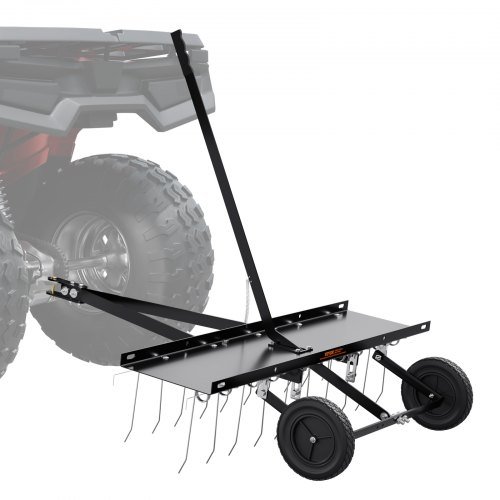
VEVOR Tow Behind Dethatcher
Compact 40in tow-behind dethatcher with 20 spring steel tines and a lift handle for light to medium thatch on smaller lawns.
Overview
The VEVOR 40-inch Tow Behind Dethatcher is a simple, budget-friendly implement for homeowners and small-holding owners who need to remove light surface thatch without breaking the bank. Built with a Q235 steel frame and fitted with 20 spring steel tines, it’s designed to be towed behind an ATV or garden mower. At roughly 15.8 kg, it’s lighter than many rival tow-behind units, making it easier to handle, hitch up and store.
This review outlines what the machine does, who should consider it, and where it will — and won’t — meet expectations. I’ll also cover practical buying considerations such as tow compatibility, working width, tine behaviour and likely maintenance needs.
Who is this best for?
The 40-inch VEVOR dethatcher is aimed at owners of small to medium lawns who want a straightforward way to lift and remove surface thatch. Typical users include:
- Owners of domestic lawns up to roughly half a hectare who already use an ATV or ride-on mower and want a tow-behind attachment.
- Gardeners looking for a gentle dethatching action: spring steel tines are flexible and remove surface debris without aggressively gouging the turf.
- People who favour lightweight tools that are easier to attach, manoeuvre and store in limited shed space.
It is less well suited to large estates, commercial turf contractors or anyone facing heavy, compacted thatch and who needs a more aggressive, weighty apparatus. Also, it is not designed for three-point tractor hitches, so check your towing setup before buying.
Key features
Highlights of the VEVOR 40-inch tow dethatcher include:
- 40-inch working width: A manageable width that balances coverage with compact storage. Practical for small- to medium-sized lawns but means more passes on larger areas.
- 20 spring steel tines: These flexible tines pull up surface thatch and moss without digging aggressively into the soil — ideal for seasonal surface treatment.
- Q235 steel construction: The frame material offers basic robustness for garden use. It’s a practical, cost-effective steel suitable for implements of this class.
- Lift handle: Allows the operator to raise the tines for transport or to avoid obstacles without detaching the unit.
- Universal bottom plate hitch: Designed to fit a broad range of ATVs and ride-on mowers. As always, check connector compatibility if you have an unusual hitch or toolbar.
- Lightweight design: At around 34.8 lbs (15.8 kg) it’s easier to manhandle, hitch up and store than heavier dethatchers.
Practical evaluation
How does the VEVOR 40-inch dethatcher perform in everyday garden situations? Consider four practical areas: turf safety, coverage, tow compatibility and maintenance.
Turf safety and dethatching action
The spring steel tines are the defining characteristic here. They flex rather than dig rigidly, so they’re kinder to established turf and are suitable for routine seasonal dethatching — removing loose thatch, moss and organic debris that restricts air and water movement at the surface. For lawns with shallow thatch layers, or for a light annual clean-up, the action should be effective.
However, because the tines are relatively flexible and the frame is light, the unit won’t produce heavy downward force. If your lawn suffers from deep, compacted thatch or heavy moss you’ll need a more aggressive implement — either a dethatcher with rigid tines or a powered machine — to achieve deeper penetration and extraction.
Coverage and efficiency
A 40-inch working width is a sensible compromise for domestic use. It’s wide enough to cover ground quickly on medium lawns but narrow compared with 60- and 72-inch commercial-style models. That means more passes on larger areas, but the trade-off is easier turning and better access around borders, beds and obstacles.
For small gardens the width keeps the machine manoeuvrable behind an ATV or mower; for bigger properties consider whether you prefer fewer passes with a wider model or the convenience and lower upfront cost of this compact unit.
Tow compatibility and handling
The universal bottom plate hitch is intended to be compatible with most ATVs and garden mowers. That said, universal hitches are not literally universal — check the attachment method and any pin sizes before purchase. The light overall weight means the dethatcher won’t overly burden smaller tow vehicles, but it also means it lacks the mass to apply extra downward pressure for tougher jobs.
Handling is straightforward: attached behind an ATV or mower, the unit will follow closely and the lift handle makes it easy to dock or lift tines when crossing hard surfaces such as drives or paths. If you frequently need to raise and lower the tines mid-job, the mechanical simplicity is an advantage.
Maintenance and spare parts
Expect routine maintenance typical of basic garden attachments: check tines for wear or bending, keep moving parts free of debris, and touch up any paint chips to limit surface corrosion. Spring tines can fatigue or break over time; sourcing spares through the retailer is sensible before you need them, because part availability varies with lower-cost implements.
Overall, the simple construction works in your favour — fewer moving parts mean fewer things to go wrong — but also remember that finish quality and corrosion resistance will likely be basic compared with premium brands. Protecting the machine from long-term exposure to wet storage will prolong its life.
Strengths
- Lightweight and easy to manoeuvre: At around 15.8 kg it’s simple to hitch, store and handle — a real benefit for domestic users and smaller huts.
- Affordable option: The design is straightforward with sensible materials, making it a low-cost entry into tow-behind dethatching.
- Gentle spring tines: These are kinder on turf than rigid tines and suitable for seasonal surface maintenance.
- Lift handle for simple transport: Raise the assembly quickly without tools when you need to cross paved surfaces or stop work briefly.
- Universal hitch for broad compatibility: Works with many ATVs and ride-on mowers — ideal if you already own a tow vehicle.
- Compact footprint: Easier to store in small sheds compared with wider commercial units.
Limitations
- Not for heavy-duty dethatching: Spring tines and light weight limit deep dethatching or work on compacted soils.
- Smaller width means more passes: For larger lawns the 40-inch working width increases the time spent in the garden compared with wider models.
- Hitch type limitations: Not designed for three-point tractor hitches — confirm compatibility with your towing machine.
- Basic build and finish: Expect practical but unrefined fittings and a finish that needs some care to prevent corrosion over time.
- Spare parts availability: Replacement tines and parts may require checking with the retailer before you buy, particularly if you want long-term support.
Pricing and value
The VEVOR 40-inch dethatcher is positioned as a value-oriented product. Its design and material choices reflect that: functional Q235 steel frame, spring steel tines, and a light, straightforward build. For gardeners who need occasional dethatching and already own a compatible ATV or mower, it represents a sensible, low-cost way to maintain surface thatch without hiring machinery.
Value comes from matching the tool to the job. If you have a small lawn with light thatch, the purchase should be cost-effective — you avoid hiring a machine or paying for professional services. Conversely, if your lawn has persistent, heavy thatch or the property is large, the long-term value is reduced because you may outgrow the tool quickly and seek heavier-duty solutions.
Note: product offers and prices change. Always check current availability and the retailer’s price before deciding.
Alternatives and buyer considerations
Before you buy, ask a few practical questions about your lawn and towing equipment:
- How large is the area you need to treat? For large properties a 60- or 72-inch unit will reduce work time but at higher cost and greater storage footprint.
- How severe is the thatch layer? Light spring tines are fine for surface thatch; deep or compacted layers need rigid tines or a powered dethatcher/scarifier.
- What tow vehicle do you have? Confirm hitch compatibility and whether the tow machine has enough traction and stability for the job.
- How often will you use the unit? Occasional homeowners may prefer a cheaper tool like this one, while regular users will benefit from a more robust, service-backed product.
If you need alternatives, consider these general directions rather than specific models:
- Wider tow-behind models (60″ or 72″) — If you have more ground to cover and a suitably powered ATV or tractor, a wider unit cuts working time but increases the initial cost and storage needs.
- Rigid-tine dethatchers or powered scarifiers — For heavy thatch layers or compacted soils, powered scarifiers or units with stiffer tines achieve deeper penetration and a more thorough result.
- Portable tow-behind scarifiers with three-point hitches — If you own a small tractor with a three-point linkage, look for implements designed for that hitch type; they often accept heavier frames and deeper working depths.
- Manual or lawn aeration approaches — In some cases, aeration combined with seasonal maintenance can reduce thatch without aggressive scarification; these options are gentler and good for sensitive lawns.
Final verdict
The VEVOR 40-inch Tow Behind Dethatcher is a practical, cost-conscious choice for domestic users with small to medium lawns who need a gentle, easy-to-handle dethatching solution. Its spring steel tines, lightweight frame and simple lift handle make it well suited to seasonal surface maintenance, especially when towed behind an ATV or garden mower.
Its strengths lie in affordability, ease of use and compatibility with many tow vehicles. However, it is not a heavy-duty machine: those with deeper thatch, compacted soils or large areas will find it limiting and should consider wider or more robust alternatives. The build and finish are functional rather than premium, and you should check spare part availability if you expect frequent use.
If your needs are modest — routine surface dethatching on a domestic lawn and a desire for an inexpensive, easy-to-store implement — the VEVOR 40-inch will likely serve well. If you’re tending larger grounds or require deeper scarification, look for a heavier-duty or wider machine that matches the scale of the task.
Remember: offers and prices change, so check the retailer for current availability and up-to-date pricing before buying.
Ready to check VEVOR Tow Behind Dethatcher, 40-inch Tow Dethatcher with 20 Spring Steel Tines, Lawn Dethatcher Rake for ATV or Mower, Tow Behind Lawn Rake with Lift Handle for Garden Farm Grass?
Check the latest offer before buying, then return to the main comparison if you want to compare it against the other shortlisted options.
Compare this with the full shortlist
Return to the full comparison guide to see how this product compares against the other shortlisted choices.