
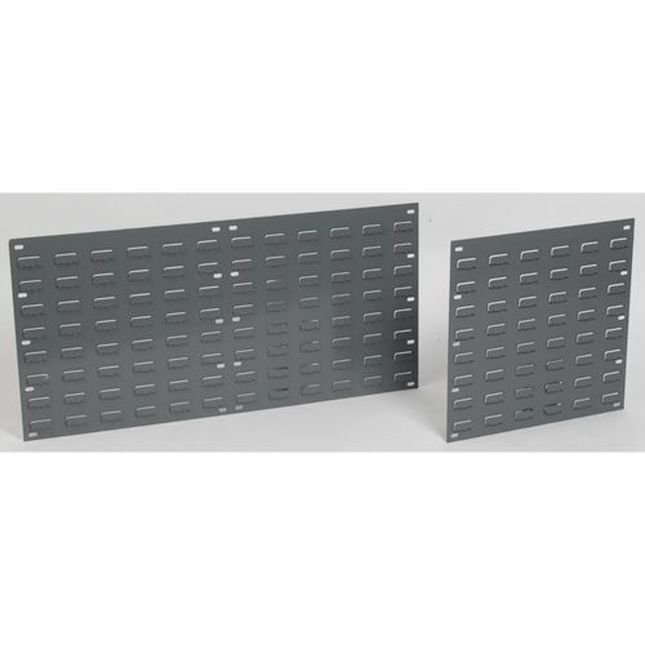
Barton TP2 Louvre Panel
Strong wall mounted steel double indented louvred panel designed for modular hooks and bins.
Overview
The Barton TP2 Louvre Panel is a double indented steel louvre panel designed for wall mounting in workshops, garages or service vehicles. It provides a familiar, modular surface for hanging hooks, small plastic bins and other louvre-compatible accessories so hand tools, tapes and consumables can be organised and kept visible. As a straightforward, low-tech storage solution it’s aimed at anyone who wants to turn bare wall space into a flexible tool board that can be expanded across a run of wall space.
This review walks through the panel’s practical strengths and limitations, what to consider when installing, how it fits into typical workshop workflows and whether it represents good value for the sort of user who needs simple, durable wall storage.
Who is this best for?
The Barton TP2 is most useful for hobbyists, DIYers and tradespeople who want a reliable, no-frills way to keep frequently used hand tools and consumables within easy reach. It suits several scenarios:
- Home workshops and garage mechanics who need to clear clutter from benches and get a visible place for commonly used items.
- Small trades vans or service vehicles where a fixed backboard provides a quick organisation solution — provided the mounting surface is suitable.
- Workshops that prefer incremental upgrades: add one panel today and extend along the wall later without changing the system.
If you need portable storage that can be reconfigured on the move, or want fully enclosed cabinets with lockable doors and precise internal compartments, this is not the product for you. The TP2 is a fixed, wall-mounted system: very flexible in terms of what you hang from it, but dependent on suitable wall fixings and available wall space.
Key features
From the manufacturer’s description and product guidance, these are the defining features you’ll see with the Barton TP2:
- Double indented steel louvre design — the panel uses the common louvre pattern that accepts a wide range of hook types and small bins designed for louvre panels.
- Wall-mounted format — intended to be fixed to a workshop backboard or wall, turning vertical space into usable storage.
- Accessory compatibility — compatible with common louvre hooks and small bins, so you can mix and match accessories as your needs evolve.
- Expandable — panels can be installed side-by-side to create larger runs of organised wall space.
- Robust material — steel construction gives a durable surface for everyday hand tool storage.
- Mounting and layout guidance — a manufacturer/retailer guide is available for recommended fixings and layout planning.
Practical evaluation
Because the Barton TP2 is essentially a platform for other accessories, much of its usefulness comes down to how you mount it and the hooks/bins you choose. Here are the practical points to think about before you buy and during installation.
Mounting — don’t skimp on fixings. The panel will only be as strong and safe as the way it’s attached to the wall. The retailer provides a mounting guide; follow it closely and choose fixings suited to the wall type — masonry, stud walls or vehicle panels all require different anchors. If you hang heavier items, distribute the load across multiple fixings and consider battens or a plywood backboard behind the panel to spread weight and avoid overloading single anchors.
Layout and workflow. Think about how you work. Tools you grab constantly should be at eye level or within a natural reach zone; less-frequently used items can live higher or lower. Using a mix of hooks, small bins and designated holders keeps consumables like tapes and smaller parts visible and accessible. Because the TP2 supports a common louvre format, you’re not tied to a single manufacturer for accessories, which helps you evolve the layout as your needs change.
Depth and bench clearance. Be mindful of how far items hang from the panel. Large, deep bins or long-handled tools reduce bench space in front of the panel and can interfere with workspace or vehicle doors. If bench clearance is tight, choose shallow bins and compact hooks designed to keep tools closer to the wall.
Durability and environment. Steel construction is robust for everyday workshop use, but consider the environment: if your workshop is particularly damp or you’re storing tools used in corrosive conditions, check whether the finish suits that environment and whether additional corrosion protection is needed.
Flexibility and expansion. One of the TP2’s strengths is that you can add panels along a run. This incremental approach is helpful when you start with a small allocation of wall space and plan to expand later. Keep a note of the panel layout and accessory sizes as you grow the system so new panels align and accessories remain interchangeable.
Strengths
The Barton TP2 has a number of practical benefits that explain why louvre panels remain a common choice in workshops:
- Proven, familiar system: the louvre format has been used for years, so there is a broad ecosystem of hooks, bins and holders available. That gives you choices for customising your layout without needing bespoke accessories.
- Durable steel build: steel gives a solid hanging surface that copes with the usual knocks and knocks of workshop life better than thin plastic or flimsy alternatives.
- Expandable and adaptable: you can start small and add panels as your needs grow. Accessories can be rearranged as workflows change, making it a future-proof option for many users.
- Good entry-level value: as a basic panel it’s an affordable way to get started with organised wall storage. You don’t pay for complicated mechanisms or built-in fittings you may not need.
- Compared mounting guidance: manufacturer guidance is available, which helps avoid common installation mistakes and ensures safe load-bearing when paired with appropriate fixings.
Limitations
No single storage solution suits every workshop. The TP2’s limitations are mostly practical rather than product flaws, but they matter depending on how you intend to use it:
- Requires wall space and suitable fixings: if you don’t have a secure wall or plan to move it around, this fixed panel won’t be appropriate. Some installations, such as vehicle interiors, need additional backing or reinforcement.
- Not portable: once fixed it remains attached to the wall unless removed. If you change premises frequently you may prefer freestanding or portable storage.
- Accessory purchases needed: the panel alone doesn’t give you hanging points — you’ll likely need to buy hooks and bins separately to make it useful. That adds cost and requires planning for the layout.
- Depth can affect bench space: items that protrude from the panel reduce clear workspace. If bench clearance is at a premium, carefully selecting shallow hooks and bins is important.
- Load capacity depends on fixings and span: heavy items should not be treated lightly — distribute weight and check the mounting guidance to avoid overloading a section of panel or a single fixing.
Pricing and value
The Barton TP2 is positioned as an entry-level, practical louvre panel for workshop use. A guide price is given, but online prices and availability can change, so always check the retailer page before making a purchase. The product’s value is best judged not just by the panel cost but by the ecosystem it opens up: the ability to mix and match hooks and bins from a wide range of suppliers adds flexibility and, over time, can be more cost-effective than bespoke fitted solutions.
When assessing value, consider the total cost of ownership: the panel plus the hooks, bins and fixings you’ll need to achieve your intended layout. If you need a single, affordable solution to tidy a small work area, the TP2 typically represents sensible value. If you’re building a full workshop storage system from scratch, factor in the cost of extra panels and accessories as you plan your budget.
Finally, remember that a well-thought-out layout can pay dividends in time saved: quicker tool retrieval, fewer lost items and a neater workspace. Those practical benefits are harder to price but often justify the initial investment in wall storage.
Alternatives and complementary options
The Barton TP2 sits within a broad category of workshop storage choices. Helpful alternatives or complements to consider include:
- Freestanding slotted cabinets or pegboard systems: if you need portability or a different aesthetic, freestanding units or pegboard can provide similar benefits while offering different mounting or mobility options.
- Closed cabinets and drawers: for secure or dust-sensitive storage, enclosed cabinets with drawers are better, particularly for precision tools and consumables you want protected from the environment.
- Heavy-duty tool racking and hoists: for very heavy items or long-handled equipment consider specialised racking rather than relying on a louvre panel’s hook strength.
- Additional louvre-compatible accessories: before you buy, browse the available hooks, bins and holders designed for the louvre format so you can plan a layout that meets both shallow and deeper storage needs.
Choosing to blend storage types often gives the best results: use the TP2 for frequently used hand tools and small parts, keep larger power tools on shelves or in cabinets, and reserve enclosed storage for items sensitive to dust or theft.
Final verdict
The Barton TP2 Louvre Panel is a straightforward, dependable choice if you want to turn a stretch of wall into a flexible tool board. Its steel construction and compatibility with a wide range of louvre hooks and small bins make it a practical foundation for an organised workshop. The ability to expand the system by adding more panels is particularly useful if you prefer to grow your storage solution in stages.
It’s not the right option for everybody: you need suitable wall space and the right fixings, and the panel only becomes truly useful with the addition of hooks and bins. Depth of hanging items and the weight of stored tools require considered planning, especially where bench clearance and safe mounting are concerned. But for those who want a classic, proven system that’s adaptable and cost-effective, the TP2 is a solid starting point.
Before you buy, check the retailer product page for the latest price, exact dimensions and official mounting guidance, and make a list of the accessories you’ll need to achieve your intended layout. Offers and prices can change; verify current information with the retailer before completing a purchase.
Practical buying checklist
- Confirm the panel dimensions on the retailer page and measure your available wall space.
- Decide which hooks and bins you’ll need and whether those accessories are compatible with the TP2’s louvre pattern.
- Choose fixings appropriate for the wall type and anticipated load; where in doubt, use a plywood backer or battening to spread loads.
- Plan the layout so frequently used tools are at natural reach and deep items don’t obstruct benches or doors.
- Factor accessories into your budget — the panel is the platform, and its usefulness increases with well-chosen hook and bin choices.
When used thoughtfully, the Barton TP2 can be the backbone of a tidy, efficient workshop — simple, robust and easy to expand as your storage needs grow.
Ready to check Barton TP2 Louvre Panel?
Check the latest offer before buying, then return to the main comparison if you want to compare it against the other shortlisted options.
Compare this with the full shortlist
Return to the full comparison guide to see how this product compares against the other shortlisted choices.