
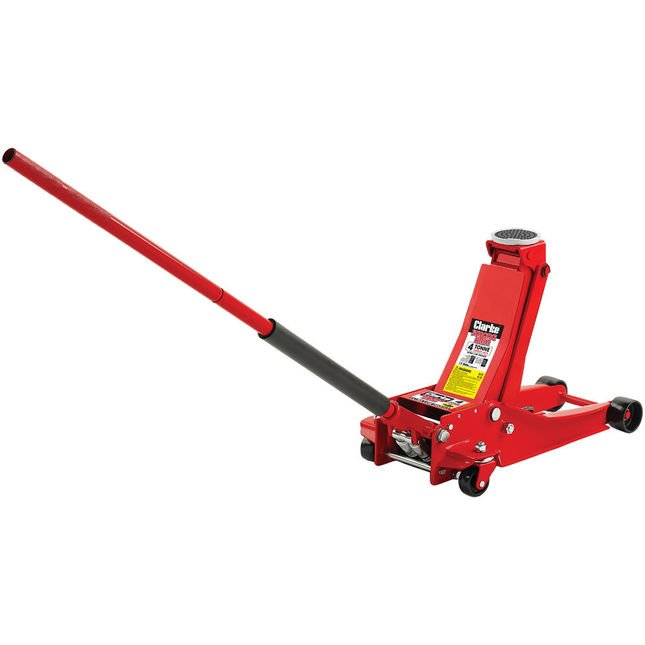
Clarke CTJ4000G 4 Tonne Professional Garage Jack
A robust 4‑tonne trolley jack with a single‑piece hydraulic unit and heavy gauge base, built for professional garage use.
Overview
The Clarke CTJ4000G is a professional‑grade trolley jack built to lift vehicles and heavy components to a safe working height. With a 4‑tonne stated lifting capacity, a single‑piece hydraulic unit designed to reduce leak points and a heavy‑gauge base for stability, it’s positioned as a reliable, mobile lifting solution for garages, tyre bays and busy workshops. The compact trolley format and heavy‑duty wheels aim to make it easy to move around the shop and store under benches when not in use.
This review pulls together the CTJ4000G’s core features, practical strengths and limitations, and buyer guidance to help you decide if it fits your workshop needs. I haven’t performed hands‑on testing; the commentary is based on the product’s supplied specification and general workshop practice.
Who is this best for?
The Clarke CTJ4000G is aimed primarily at tradespeople, small commercial garages and serious DIYers who need a dependable mobile lifting solution. Typical users will include:
- Independent garages and tyre bays that handle routine vehicle servicing and need a robust, everyday jack.
- Workshop owners who need portability—moving a jack between bays or storing it under benches between jobs.
- Home enthusiasts and restoration hobbyists working on cars and light vans within the 4‑tonne limit.
It’s not designed to replace a fixed hydraulic press or specialist heavy‑lift equipment. If your main requirement is pressing components, sheet metal work or very high lifting capacity, a fixed press or a higher‑capacity machine would be more appropriate.
Key features
From the information provided, the CTJ4000G focuses on practical durability and workshop usability. The headline features are:
- 4‑tonne lifting capacity — Suitable for many cars and light vans, this capacity covers most everyday workshop lifting tasks.
- Single‑piece hydraulic unit — Designed to reduce seal and joint points where leaks can occur, which should lower routine maintenance and improve reliability over time.
- Heavy‑gauge base construction — Adds stability under load, important when working under a lifted vehicle.
- Heavy‑duty wheels and castors — Intended to make the jack roll smoothly across shop floors, supporting easy positioning.
- Compact trolley format — The size allows storage under benches or in tight bays, freeing up floor space when not in use.
These features point to a unit designed for repeated professional use rather than occasional domestic lifting.
Practical evaluation
How the CTJ4000G will behave day‑to‑day in a workshop depends on a few factors: how often it’s used, the surface it’s wheeled across, and the types of vehicles handled. Here are practical considerations to bear in mind.
Mobility and positioning. The heavy‑duty wheels and castors make the jack easy to roll on a clean, level concrete floor. In busy commercial bays, that mobility matters—quickly moving between vehicles saves time. However, wheels will struggle on uneven, debris‑strewn floors or rough outdoor surfaces. A tidy bay and routine floor sweeping will keep the jack working smoothly.
Lift height and access. The CTJ4000G is a trolley jack, so it offers a lower profile and quick lift cycles compared with bottle jacks or taller floor jacks. That makes it handy for getting a vehicle high enough to swap wheels, access brake components or remove lower suspension parts. If you need exceptionally high lift clearance—for example to remove large gearbox assemblies or for chassis‑off work—you may find specialised jacks or axle stands combined with ramps are still required.
Reliability and maintenance. The single‑piece hydraulic unit is a thoughtful design choice for workshop durability. Fewer connections and seals mean fewer potential leak points, reducing the chance of sudden hydraulic failures and cutting maintenance time. Still, any hydraulic jack relies on seals and hydraulic fluid—periodic inspection for oil seepage, correct fluid level and seal replacement when worn are sensible preventive measures. In a professional setting, schedule a regular inspection and keep service records.
Stability and safety. A heavy‑gauge base improves steadiness under load, which is important when mechanics are working beneath or around a lifted vehicle. Even so, a trolley jack should never be the sole means of support when working under a vehicle—use rated axle stands and follow the vehicle manufacturer’s jacking point guidance. Check that the jack’s saddle or pad matches the vehicle’s jacking points; adapters are sometimes needed for certain vehicle models.
Storage and workshop footprint. The compact design helps when space is at a premium. If you run several bays, being able to store jacks under benches or in cupboards keeps the floor clear. Consider an inventory plan so you always have a couple of jacks readily available while the rest are stored safely.
Strengths
- Professional‑orientated design: Built for repeated use in a workshop, with sturdier construction than many consumer models.
- 4‑tonne capacity: Covers a broad range of cars and light commercial vehicles used in small garages and by serious DIYers.
- Single‑piece hydraulic unit: Reduces potential leak points and should help long‑term reliability and lower maintenance frequency.
- Good stability: Heavy‑gauge base provides a solid foundation when lifting under load, reducing wobble and increasing confidence when positioning.
- Mobile and compact: Heavy‑duty wheels and compact trolley format make it easy to move and store in busy workshops.
Limitations
- Not a press: This is a mobile lifting jack, not a substitute for fixed hydraulic presses or shop presses used for pressing bearings, sleeves or straightening work.
- Limited lift height: Typical trolley jacks offer limited maximum headroom compared with specialised jacks or lifts; higher clearance needs may require ramps or different equipment.
- Floor dependency: Wheels and castors are best on smooth, clean floors. Rough or cluttered floors reduce mobility and can accelerate wheel wear.
- Maintenance needs: Although designed to reduce leak points, the jack still relies on hydraulic seals and fluid; periodic inspection and service are essential to safe operation.
- Compatibility checks: Always check vehicle jacking points and jack pad fitment—some cars and vans use small or recessed points that need adapters.
Pricing and value
The listed guide price is GBP 239.98, but prices and availability can change—check the retailer page before buying. At this level, the Clarke CTJ4000G sits in the mid‑range for professional trolley jacks. Whether it’s good value depends on how you measure it:
If you need a dependable, daily‑use jack for a small commercial garage or a busy home workshop, spending a bit more for a unit designed for professional use is often sensible. The single‑piece hydraulic unit and heavy‑gauge base are features that typically reduce long‑term ownership costs by lowering maintenance and extending service life compared with budget options.
Conversely, if your needs are occasional and limited to light domestic use, a cheaper consumer model might suffice. The CTJ4000G’s strengths are most apparent where the jack sees frequent cycles and a demanding working environment.
Alternatives to consider
Before you commit, consider a few alternatives depending on the specifics of your workshop and the kinds of jobs you do most:
- Higher‑capacity jacks: If you regularly work on larger commercial vehicles, consider a higher‑capacity trolley jack or a heavy‑duty bottle jack designed for higher loads.
- Shop presses for pressing work: For tasks such as pressing bearings, removing gears or frame work, a fixed hydraulic press is the right tool — a trolley jack is not suitable for pressing jobs.
- Hydraulic lifting tables and scissor lifts: These provide larger working platforms and variable heights for under‑vehicle work and can be more ergonomic for some tasks.
- Two‑post or four‑post vehicle lifts: If floor space and budget allow, a permanent lift gives full underbody access and removes reliance on jacks and stands for longer jobs.
Choosing between these depends on workshop space, budget and the typical jobs you do. A trolley jack like the CTJ4000G is versatile and compact; bigger investments offer greater capability but also require floor anchoring, more space and higher initial costs.
Maintenance and safety checklist
Owning a professional trolley jack comes with a responsibility to maintain it and operate it safely. Here are practical steps to keep the CTJ4000G in good working order and to protect people and vehicles:
- Inspect the jack and wheels before each use for visible damage, leaks or loose components.
- Check hydraulic fluid levels as the manufacturer recommends; top up with the correct fluid if specified.
- Keep the working area clean—grit and debris can hamper wheel movement and damage seals.
- Use wooden blocks or a purpose‑made saddle adapter if a vehicle’s jacking point is recessed or thin to avoid damage to the bodywork.
- Always use rated axle stands once the vehicle is lifted—never rely on the jack alone to support a vehicle while you work underneath.
- Service the jack periodically, replacing seals and worn parts as needed; keep records in a busy shop environment.
Final verdict
The Clarke CTJ4000G 4 Tonne Professional Garage Jack is a solid, pragmatic choice for workshops that need a reliable, mobile lifting tool. Its professional‑grade build—highlighted by a single‑piece hydraulic unit and heavy‑gauge base—makes it well suited to frequent use in garages, tyre bays and light commercial environments. The compact trolley design and heavy‑duty wheels help with manoeuvring and storage, which is useful when space is at a premium.
It’s important to be clear about what this jack is and isn’t. It’s an effective mobile lifting device, not a fixed press or a substitute for a hydraulic power unit. If your primary need is pressing components or achieving very high lift heights, a different type of equipment will be necessary. For standard lifting tasks—wheel changes, minor underbody servicing and component removal within the 4‑tonne limit—the CTJ4000G represents a dependable workshop tool that balances durability and mobility.
If you run a professional garage or a busy home workshop where a jack will see daily use, the Clarke is worth considering. For occasional domestic use, it may be more jack than you need, and a lower‑cost model could be suitable. Whatever you choose, remember to check the latest price and availability, confirm compatibility with the vehicles you’ll be working on, and plan for routine maintenance to keep the jack safe and reliable.
Note: Offers and prices can change—check the retailer for the latest details before buying.
Ready to check Clarke CTJ4000G 4 Tonne Professional Garage Jack?
Check the latest offer before buying, then return to the main comparison if you want to compare it against the other shortlisted options.
Compare this with the full shortlist
Return to the full comparison guide to see how this product compares against the other shortlisted choices.