
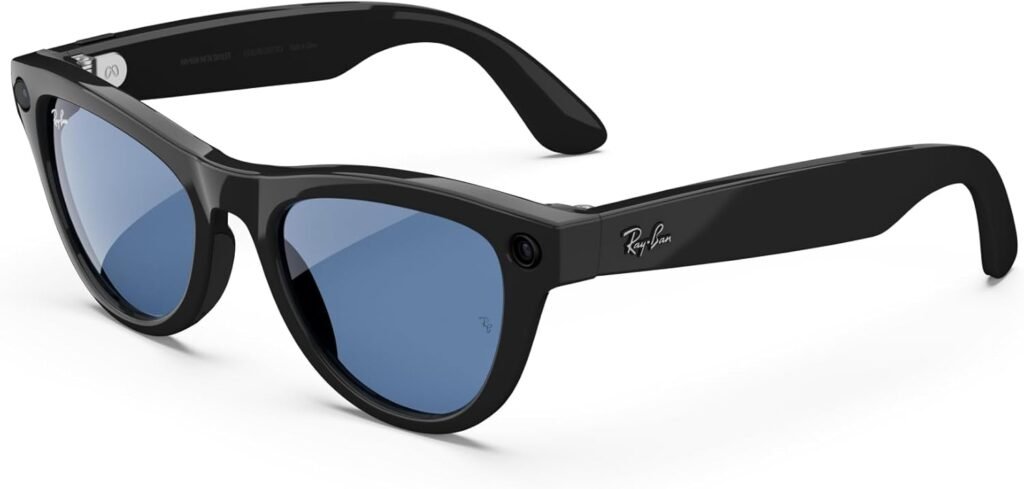
Meta Ray-Ban Skyler (Standard) Smart Glasses – Shiny…
Ray‑Ban styling with Meta's smart features: point‑of‑view camera, hands‑free calls, open‑ear speakers and AI assistant capabilities.
Overview
The Meta Ray‑Ban Skyler (Standard) smart glasses combine a classic Ray‑Ban acetate frame with Meta’s compact electronics. On first impression they read as a stylish pair of sunglasses with modern details: discreet speakers embedded in the frame for private audio, a tiny camera for photos and short videos, and voice control to trigger functions hands‑free. The lenses are clear‑to‑blue transitions, which darken outdoors and stay usable indoors, so you don’t need to keep swapping between glasses.
These aren’t augmented‑reality spectacles. There’s no immersive visual overlay or complex heads‑up display. Instead, Skyler aims for a practical middle ground: everyday eyewear that quietly offers a few smart conveniences without looking like a piece of wearable tech. That design choice will appeal to buyers who prioritise style and subtlety over advanced AR functions.
Who is this best for?
Skyler is best suited to people who want glasses that do more than protect their eyes but still look like normal Ray‑Bans. If you already wear Ray‑Ban frames and want the brand’s aesthetic with the added convenience of audio and a capture camera, these make sense. They’re a sensible option for casual photo takers who prefer quick snaps and short clips rather than professional‑grade imaging.
They’re also a good fit if you spend a lot of time moving between indoors and outdoors — the clear‑to‑blue transition lenses mean you won’t need separate pairs for different light conditions. And if you require vision correction, it’s helpful that some markets offer prescription lens options so the smart modules can be paired with prescription lenses where available.
What Skyler is not for: people who want immersive AR experiences, full visual displays, or high‑fidelity audio for serious listening. Also, if you rely on an ecosystem or device compatibility that’s not supported locally, availability and compatibility checks are essential before buying.
Key features
- Classic Ray‑Ban acetate frame paired with Meta’s compact smart modules.
- Discreet on‑frame speakers for private, open‑ear audio.
- Built‑in camera designed for photos and short video clips.
- Voice control for hands‑free operation of core functions.
- Compared‑to‑blue transition lenses that darken outdoors and remain clear indoors.
- Prescription lens options available in some markets.
Practical evaluation
Because the Skyler blends fashion with modest smart functionality, it’s useful to consider how those two halves work together in everyday life. The frame reads and wears like a familiar Ray‑Ban: acetate gives a sturdy, polished feel that suits both casual and smarter outfits. That means you can comfortably wear them for everyday errands, commuting, or weekends out without standing out as someone wearing obvious tech.
The transition lenses are one of the most practical additions. If you move frequently between bright sunlight and indoor lighting, having lenses that darken automatically reduces the need to carry an extra pair. Transition lenses won’t match dedicated sunglasses for the darkest possible tint or polarisation effects, but for most day‑to‑day use they simplify things and keep you comfortable across different environments.
The smart components are intentionally compact and restrained. The on‑frame speakers provide private audio without plugging your ears; this is convenient for hands‑free calls, podcasts, or voice prompts while you’re out and about. Expect a different listening experience to over‑ear or in‑ear headphones: the audio is private but open‑ear designs can’t deliver the same bass depth or total isolation. In situations where audio fidelity is crucial — long music sessions or noisy environments — a dedicated pair of headphones will still be preferable.
Photography with the built‑in camera is tuned to spur‑of‑the‑moment moments: quick snaps and short clips when stopping to capture something without taking your phone out. That convenience comes with trade‑offs. The camera isn’t designed as a replacement for your phone camera or a dedicated action camera. For long recordings, high‑resolution photography or low‑light performance you should expect limitations compared with dedicated devices.
Voice control keeps operation hands‑free, which is useful when you’re on the move. Voice commands will cover common tasks like activating the camera and controlling audio, but the vocabulary and responsiveness depends on software updates, local availability and device compatibility. Before buying, check whether the voice features and any required companion app are supported on your smartphone and in your country.
Prescription lens support is a practical plus but varies by market. If you need prescription lenses, check local options and timelines: having your glasses fitted with prescription lenses can increase cost and extend delivery time compared with buying non‑prescription lenses off the shelf.
Strengths
- Stylish, everyday Ray‑Ban acetate frame that won’t look out of place in most social or professional settings.
- Transition lenses add real convenience for mixed indoor/outdoor use, reducing the need to swap eyewear.
- Discreet, compact smart hardware keeps the profile low and the glasses comfortable for all‑day wear.
- On‑frame speakers deliver private audio without earbuds, which some users find more comfortable and safer for awareness in urban environments.
- Small built‑in camera makes it easy to capture quick photos and short video clips hands‑free.
- Prescription fitting options available in some markets, widening suitability for spectacle wearers.
Limitations
- Not designed for advanced AR: there are no immersive overlays or head‑up displays for navigation or gaming.
- Camera is intended for quick snaps and short clips; it won’t match a smartphone or dedicated camera for extended recording or high‑quality imaging.
- Smart functionality is basic compared with specialist wearables — you’re getting convenient features, not a full wearable computing platform.
- Audio quality is fine for voice and casual listening but won’t match dedicated headphones for music fidelity or noise isolation.
- Availability and feature compatibility vary by region; you should verify local support for voice control, software updates and prescription services.
- Prescription lenses or bespoke fittings can add to the cost and may increase delivery times relative to non‑prescription models.
Pricing and value
Skyler sits in the premium bracket you’d expect from a branded fashion collaboration. The price reflects a mix of Ray‑Ban’s design and Meta’s smart hardware, so you’re paying for style, brand recognition and the convenience of integrated smart features rather than for high‑end AR or pro‑grade camera tech.
Value depends on your priorities. If you want a polished, everyday pair of glasses that layer in a few useful smart features — quick photos, private audio and voice control — then Skyler is a sensible investment. The transition lenses add practical value for people who move between light conditions often. Conversely, if you want the absolute best sound quality, the most advanced wearable features, or pro‑level imaging, you’ll find better value in specialist devices aimed at those needs.
Because prescription options are available in some markets, that flexibility can increase value for wearers who otherwise would need to pay for customised fittings. Bear in mind that custom lenses typically add cost and may require extra time for manufacture and fitting.
Note: offers and prices can change — check current retailer listings and local availability before you buy.
Alternatives to consider
If you like the idea of smart glasses but aren’t sure Skyler is the right fit, there are a few natural alternatives to weigh up depending on what you prioritise.
- For more advanced AR or heads‑up visual features: consider wearable systems that emphasise augmented reality and visual overlays. These typically look more like dedicated tech devices and are aimed at specific productivity or entertainment use cases rather than everyday fashion.
- For better audio or longer listening sessions: high‑quality true wireless earbuds or over‑ear headphones will outperform on‑frame speakers in fidelity and noise isolation.
- For superior photography or long video recording: modern smartphones and action cameras still offer better sensors, stabilisation and manual controls. If photography is a priority, treat the Skyler camera as a convenience feature rather than a replacement.
- For a similarly subtle smart look: other fashion‑brand smart glasses partnerships use small embedded modules to offer audio and camera features while retaining a traditional aesthetic. Compare lenses, frame fit, and prescription options to meet your needs.
Final verdict
The Meta Ray‑Ban Skyler (Standard) smart glasses are an appealing option if your priority is everyday style with a hint of practical tech. They succeed at being unobtrusive: the Ray‑Ban acetate frame looks and feels familiar, the transition lenses remove friction for indoor–outdoor use, and the compact smart modules give you audio, quick photo capture and voice control without a chunky, gadgety look.
They’re not the right choice if you want advanced AR or high‑end audio and imaging. The built‑in camera and on‑frame speakers are convenient, not class‑leading. But for someone who wants a fashionable pair of glasses that subtly adds a few smart conveniences, Skyler represents a sensible, stylish compromise.
Before buying, double‑check compatibility and local availability — voice features and prescription services depend on your region — and consider whether you’ll pay extra for prescription lenses. If you want more advanced wearable features, evaluate specialist AR devices or better audio hardware; if you simply want a smart everyday pair of glasses that look like normal Ray‑Bans, Skyler is worth a close look.
Note: offers and prices can change — check current retailer listings and local availability before you buy.
Ready to check Meta Ray-Ban Skyler (Standard) Smart Glasses – Shiny Black, Compared to Blue Transitions?
Check the latest offer before buying, then return to the main comparison if you want to compare it against the other shortlisted options.
Compare this with the full shortlist
Return to the full comparison guide to see how this product compares against the other shortlisted choices.