
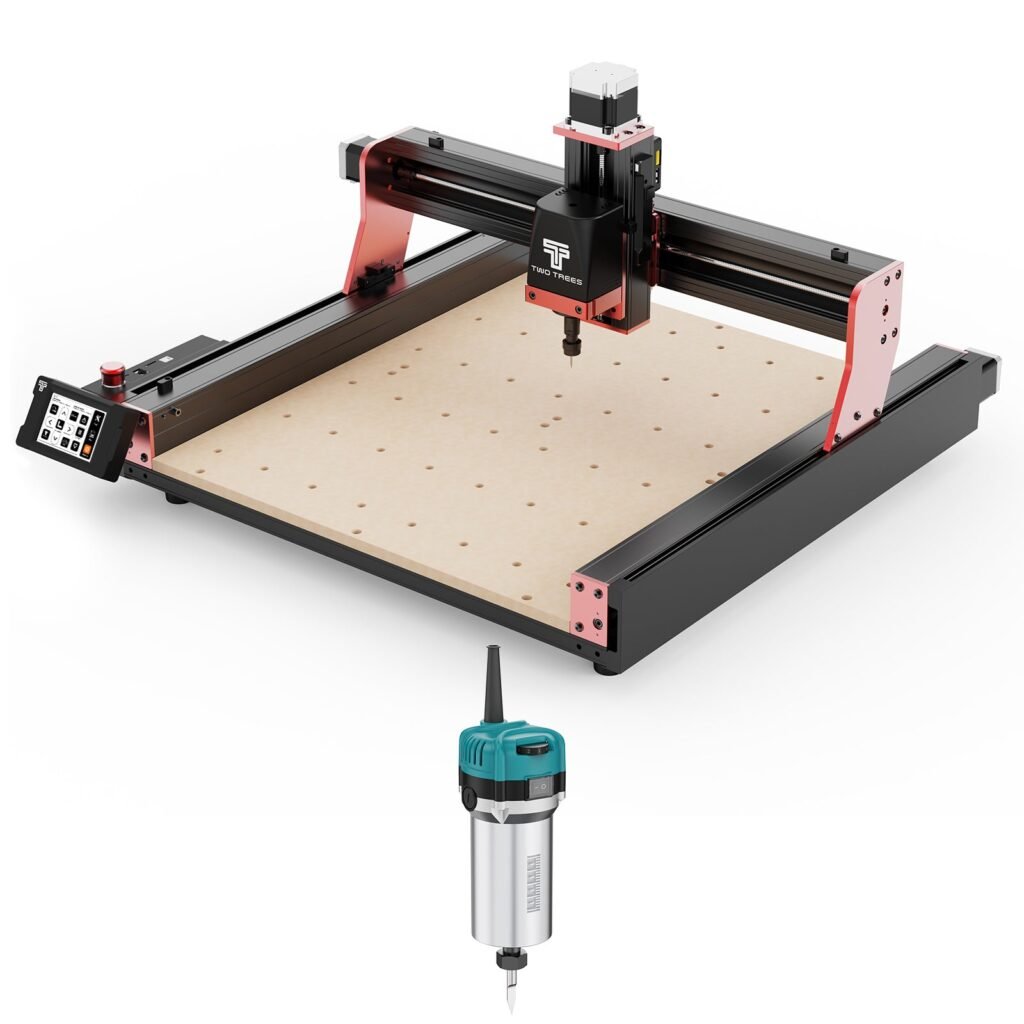
Twotrees TTC450 PRO CNC Router Machine + 800W…
Complete CNC Router Bundle with 800W Spindle The Twotrees TTC450 Pro CNC Router Machine + 800W Spindle Bundle combines powerful cutting performance with a versatile CNC platform in one complete solution. Designed for ma…
Overview
The Twotrees TTC450 PRO CNC Router Machine bundled with an 800W spindle is presented as a complete upgrade package for makers, educators and small businesses that need a desktop-sized CNC capable of handling a wider range of materials. The headline here is the 800W spindle, which steps up cutting capability beyond typical bargain routers and claims compatibility with wood, acrylic, plastics, carbon fibre, soft metals and various composites.
As a package, it’s pitched as a practical one-stop solution: a machine platform plus a higher‑power spindle that should let you tackle engraving, carving, light milling and prototype work without immediately investing in separate upgrades. This review examines what that bundle actually means in practice, who it suits and what you should check before committing.
Who is this best for?
The Twotrees TTC450 PRO + 800W spindle is best suited to three main user groups:
- Hobbyists and makers who are ready to move on from basic laser cutters or small routers and want a single machine that can work with harder materials like acrylic and some soft metals.
- Woodworkers and furniture makers doing small to medium components, decorative panels or repeatable parts where CNC accuracy and repeatability are valuable.
- Educators and prototyping workshops that need a compact, versatile router to demonstrate or produce parts for projects and small production runs.
It’s less appropriate for heavy industrial use, large-format furniture production or deep metal machining — tasks that require a larger, more rigid machine, higher‑torque spindles and industrial clamping systems. If you plan to mill large blocks of aluminium or run continuous high‑load production, you’ll want a more substantial platform and a spindle rated specifically for industrial metalworking.
Key features
From the product description, the main selling points are clear and centred around the enhanced spindle and the idea of a ready-to-run upgrade bundle:
- Complete CNC bundle: The TTC450 PRO machine supplied together with an 800W spindle, so you get a more capable cutting head than the typical entry-level routers.
- 800W high-power spindle: Designed to provide stronger cutting performance and improved machining efficiency across a wider range of materials than low-power hobby routers.
- Enhanced machining performance: Higher spindle power is intended to smooth cutting, improve material removal and increase productivity for more demanding projects.
- Wide material compatibility: Manufacturer states suitability for wood, plywood, MDF, acrylic, various plastics, carbon fibre, soft metals and composites.
- Versatile applications: Recommended for engraving, carving, milling, prototyping, furniture components and decorative work.
These features position the TTC450 PRO bundle as a mid-step between purely hobby gear and entry-level professional machines.
Practical evaluation
Without independent hands-on testing, the assessment below is drawn from the bundle’s stated features and typical expectations for machines in this class. It aims to give a pragmatic sense of what to expect in day-to-day use and what preparations are sensible before buying.
First, the 800W spindle is the most consequential upgrade in the package. Compared with small brushless hobby routers, an 800W unit generally offers better torque and steadier cutting at moderate depths. That makes it more tolerant of tougher materials such as acrylic or thin aluminium and helps produce smoother finishes when feeds and speeds are set appropriately. However, spindle power isn’t everything: rigidity of the frame, quality of motion components (rails, lead screws or belts), and the workholding system all influence the final cut quality and material limits.
Expect the machine to be aimed at bench-top use. That usually means a compact working envelope and a lighter frame than floor-standing machines. For most users this is perfectly fine for signmaking, inlays, circuit board panels, prototype parts and custom accessories. If you need to machine larger panels or want to remove large volumes of material at high depth, you’ll need to assess whether the machine’s structure and router mounting are up to the job — and the manufacturer’s technical data or retailer should clarify the working area and travel limits.
Software and control compatibility are also important. The bundle description doesn’t list a controller or CAM package, so you should check what control board and driver software are supplied, and whether they work with the CAM/GRBL/G-code workflow you plan to use. Many machines in this class run open or widely-supported controllers, but confirming file formats, connection types and post-processors ahead of time reduces friction on setup day.
Finally, consider the workshop essentials that turn a capable router into a productive system. Dust extraction and chip removal are critical when working with wood, MDF and carbon fibre. Likewise, for plastics and composites, ventilation and fume management are necessary. Workholding (clamps, sacrificial spoilboards, vacuum tables) and a selection of appropriate end mills are also required to get the best from the spindle and achieve neat results.
Strengths
- More cutting power than basic hobby routers: The 800W spindle should open up material options and improve finishes on job types that often require higher torque.
- Bundle convenience: Buying the machine bundled with a higher‑power spindle saves the need to source a spindle upgrade separately and avoids compatibility guesswork.
- Versatility: Claimed compatibility with a broad range of materials makes the machine suitable for varied projects — from decorative woodwork to making prototypes in plastics or light metals.
- Good fit for small workshops and education: The compact form factor and expanded capabilities make it a practical step up for learning and small-scale production without the footprint or costs of full-scale industrial routers.
Limitations
There are a few practical caveats to weigh up before deciding:
- Unspecified machine details: The public description focuses on the spindle but doesn’t list travel dimensions, frame materials, controller model or collet size. These are important for compatibility with cutters and for understanding the working envelope.
- Not an industrial metal mill: While the spindle broadens material options, milling heavy aluminium, steel or prolonged full‑depth metalwork is outside the typical remit of desktop CNCs without further industrial-grade upgrades.
- Setup and tuning required: Expect assembly, calibration and some learning curve for feeds & speeds, especially with harder or composite materials. Plan for time to set up dust extraction, workholding and safety measures.
- Consumables and accessories: To get the best results you’ll need to budget for quality end mills, clamps, sacrificial spoilboards, and possibly a vacuum table or stronger frame braces depending on the workload.
Pricing and value
The product is listed with a guide price of USD 638.00. That places the TTC450 PRO + 800W spindle in the mid-range for desktop CNC bundles with higher‑power spindles. Whether that represents good value depends on how much you value an out‑of‑the‑box spindle upgrade and the full specification of the base machine (frame construction, travel, controller and support).
When judging value, compare what’s included in the bundle against the alternatives: some manufacturers sell the machine and spindle separately, while others include a complete kit with clamps, a spoilboard and software. You should also factor in the cost of essential extras such as tooling, dust extraction and personal protective equipment. Finally, remember that shipping, local taxes and any import duties can affect the landed cost if buying from outside the UK.
Note: offers and prices change frequently, so check the retailer’s page for the latest price and availability before buying.
Practical buying checklist
Before you click Buy, check this list so you know what you’re getting and what to expect on arrival:
- Working area and travel: Confirm the X/Y/Z travel dimensions to ensure your parts will fit.
- Controller and software compatibility: Find out which control board and software are supplied and whether they support the CAM tools you use.
- Spindle specs and collet size: Verify the spindle’s collet size and supported bit diameters so you can buy compatible end mills.
- Mounting and workholding: Check whether clamps, a hold-down kit or a spoilboard are included or need to be bought separately.
- Dust extraction and enclosures: Plan for dust collection, especially for MDF and carbon fibre which generate hazardous dust.
- Support and documentation: Look for clear assembly guides, firmware updates and access to customer support or community resources.
Alternatives to consider
If you’re weighing options, it helps to look at a few alternative approaches rather than a single product comparison. Consider these paths depending on your priorities:
- Smaller hobby routers: If your work is primarily light engraving and occasional woodwork, a cheaper router‑mounted CNC might be more appropriate and easier to set up.
- Larger desktop/prosumer machines: If you need a bigger working envelope or greater rigidity for heavier cuts, look at slightly larger desktop routers that prioritise frame stiffness and industrial rails.
- Custom upgrade route: Some users buy a robust base machine and purchase a spindle, vacuum table or controller upgrade separately so they can tailor the system to their exact needs.
- Industrial or benchtop mills: For primarily metalwork or heavy-duty prototype runs, a dedicated benchtop milling machine with higher torque and coolant options may be a better fit than a hobby CNC router.
When comparing, focus on the complete setup cost (machine plus necessary accessories), the availability of local support or parts, and the learning resources you’ll need to get productive quickly.
Final verdict
The Twotrees TTC450 PRO CNC Router Machine bundled with an 800W spindle is an attractive mid‑level proposition for makers, woodworkers and small workshops that want to broaden the range of materials they can work with without stepping straight into large, industrial machines. The 800W spindle is the defining feature: it gives the bundle more cutting capability than many basic hobby routers and makes a convincing case for users tackling acrylics, tougher woods, composites and light metalwork.
That said, the bundle description leaves out several practical details that matter: frame construction, travel dimensions, controller type and collet size. Those are the points to confirm with the retailer before buying. Also be realistic about expectations: this is not a substitute for a dedicated industrial milling centre for heavy metal removal or high‑volume production, and you should plan to invest in tooling, dust management and safe, ventilated working conditions.
If you primarily want a compact, versatile router for varied projects and you’re prepared to set the machine up and tune it, the TTC450 PRO + 800W bundle could be a sensible, cost‑effective step up. If your projects demand very large parts, heavy continuous metal milling, or an ultra‑stiff production platform, look instead at larger benchtop or industrial machines.
Always check the retailer page for the most recent price, full technical specifications and availability before purchasing.
Ready to check Twotrees TTC450 PRO CNC Router Machine + 800W Spindle – US?
Check the latest offer before buying, then return to the main comparison if you want to compare it against the other shortlisted options.
Also featured in
This product also appears on these price comparison pages:
Compare this with the full shortlist
Return to the full comparison guide to see how this product compares against the other shortlisted choices.