
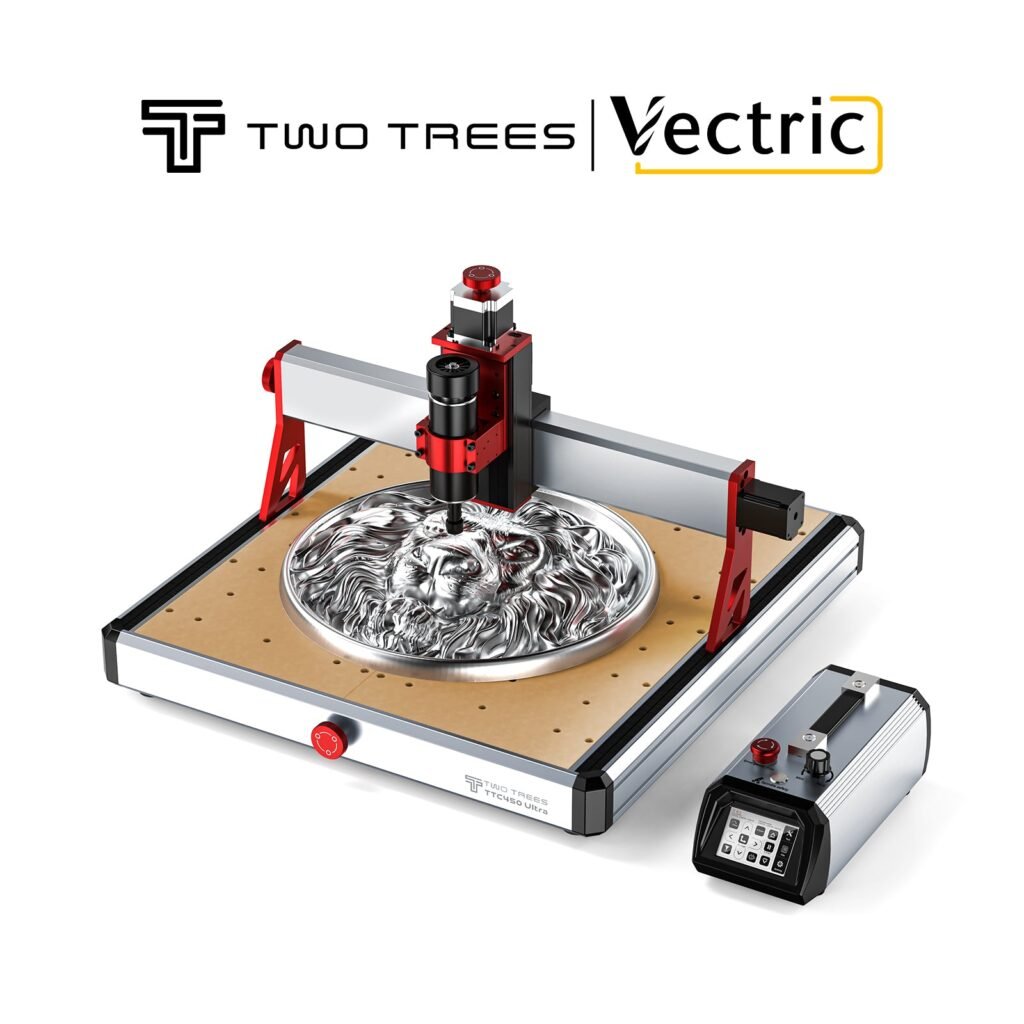
Twotrees TTC450 Ultra CNC Router Machine – US…
Twotrees TTC450 Ultra is a high-performance desktop CNC router with a 500W spindle, 460×460×100mm working area and 0.05mm high precision, supporting both CNC and laser modes. It f…
Overview
The Twotrees TTC450 Ultra positions itself as a high‑performance desktop CNC router aimed at makers, hobbyists and small businesses that need more working area than typical benchtop machines. On paper it combines a 500W spindle (8,000–30,000 RPM), a relatively large 460×460×100mm travel envelope, 0.05mm claimed engraving precision, and a sealed, dustproof chassis. It also supports both CNC and laser modes under GRBL firmware, and uses dual 12H linear rails for increased rigidity.
That specification makes the TTC450 sound like a step up from entry‑level hobby routers: more torque from the spindle, a larger working area for bigger projects and a build aimed at durability. This review walks through the practical strengths and limitations of the machine, who it will suit, and what you should check before buying.
Who is this best for?
The TTC450 is primarily aimed at three groups:
- Makers and DIYers who want to move beyond tiny 200–300mm desktop machines but don’t have room or budget for a full‑size industrial CNC.
- Small businesses or craftspeople producing custom furniture components, signage, inlays or small parts who need a larger bed and the ability to work with tougher materials such as aluminium and some steels.
- Hobbyists who value a tidy, dust‑protected machine with an integrated touchscreen and the option to swap between CNC routing and light laser engraving without complicated firmware changes.
If you frequently work on very large panels, need heavy milling of thick steel, or require industrial certification and warranty support, a desktop router like this will be limiting. But for woodworkers, acrylic fabricators, PCB makers and light metalworkers who want flexibility and a larger workspace, it’s a sensible middle ground.
Key features
- 500W spindle — Runs from around 8,000 to 30,000 RPM. The manufacturer advertises improved cutting efficiency for a range of materials.
- Large working area — 460×460×100mm travel, which is significantly larger than many entry‑level desktop machines and gives scope for bigger projects.
- 0.05mm precision — Claimed engraving accuracy intended for detailed carving and fine work.
- Dual 12H linear rails — Provides higher rigidity and stability, which helps with repeatability and smoother cuts, especially on tougher materials.
- CNC + laser modes — GRBL firmware supports both machining and laser engraving modes reportedly without flashing the firmware, simplifying mode switching.
- Sealed, dustproof design — Aimed at reducing contamination of moving parts and electronics, improving longevity and reducing maintenance.
- 3.5‑inch IPS touchscreen — Onboard control for basic operations and convenient machine setup without always needing a PC.
- Multi‑material capability — Advertised compatibility with wood, acrylic, aluminium, stainless steel, carbon fibre, PCBs and more.
Practical evaluation
When considering a desktop CNC router you want to balance the advertised specs with real‑world needs. The TTC450’s most attractive practical feature is its working envelope. At 460×460×100mm you can machine parts that would be awkward or impossible on smaller desktop routers. That makes it useful for furniture accents, larger signs, multi‑part jigs and longer prototypes. The 100mm Z travel also gives freedom for thicker stock or for using sacrificial spoilboards and fixtures.
Spindle power is another important practical factor. A 500W spindle is stronger than the small 300–400W units common on hobby machines and should handle tougher wood, aluminium and light stainless steel when used with the right cutters and conservative feeds and depths. The 8,000–30,000 RPM range offers flexibility: lower speeds for metal work, higher speeds for fine engraving in plastics and wood. Bear in mind that spindle power and RPM are only one part of the cutting equation — cutter geometry, feed rate, machine rigidity and workholding all influence the final result.
The dual 12H linear rails are a notable mechanical upgrade over single‑rail designs. In practice they should reduce deflection and vibration when cutting, which translates into crisper edges and longer tool life. The sealed and dustproof chassis is a welcome feature for anyone working with wood dust or abrasive materials; keeping lubrication and electronics protected will reduce maintenance and improve reliability over time.
On the control side, an integrated 3.5‑inch IPS touchscreen makes routine tasks — homing, jogging, starting jobs — more convenient when you don’t want to be tethered to a laptop. GRBL compatibility is useful because it’s a widely supported open standard with many CAM packages and sender programs. The manufacturer’s claim that both CNC and laser modes are supported without reflashing suggest switching modes is straightforward, but you should confirm the exact laser power and safety provisions if you intend to use it for engraving.
Software workflow is a common sticking point for buyers. The TTC450 is designed to work with standard GRBL work flows, so you can use familiar CAM tools such as VCarve, Carbide Create, Fusion 360 (to generate G‑code), or dedicated G‑code senders that support GRBL. If you’re new to CNC, plan some time to learn CAM basics: toolpaths, feeds and speeds, climb vs conventional milling, and safe workholding are essential. The machine’s advertised 0.05mm precision is promising, but achieving that dependably requires correct setup, good tool selection and consistent fixturing.
Strengths
- Large workspace — The 460×460×100mm envelope is roomy for a desktop machine and opens up more project types.
- Stronger spindle — 500W gives more capability on denser materials than smaller hobby spindles.
- Rigid linear motion — Dual 12H rails boost stiffness and should improve cut quality and repeatability.
- Sealed build — Dustproof design helps reduce maintenance and protect electronics.
- Flexible modes — Support for both routing and laser engraving under GRBL reduces the need for separate machines.
- Onboard touchscreen — Easier setup and operation without constant PC connection.
Limitations
No machine is perfect for every user. The TTC450 has a number of practical limitations to consider before deciding it suits your workshop.
- Not an industrial mill — While the spindle is powerful for a desktop router, it’s not comparable to industrial CNC mills for heavy, continuous metal milling. Expect reasonable performance on aluminium and light stainless work with appropriate tooling and conservative cuts, but don’t anticipate full metalworking production rates.
- Safety considerations with laser mode — Laser engraving requires strict safety measures, including proper enclosure, eye protection and ventilation to handle fumes from materials like acrylic and carbon fibre. Ensure the laser option’s specifications and safeguards meet your needs.
- Learning curve — GRBL compatibility is a plus, but users new to CAM and CNC will need to learn feeds, speeds and workholding. Good results depend on setup and tooling.
- Accessories and ecosystem — The machine’s capabilities will be influenced by the quality of bits, collets, clamps, spoilboards and dust extraction you supply. Budget for these extras if you don’t already own them.
- Support and warranty — The level of aftersales support, spare parts availability and warranty terms can vary between suppliers. Check these details with your retailer before purchase.
Pricing and value
The manufacturer lists a guide price of USD 1,038.00. That figure should be treated as a starting point — actual retail prices, shipping, import duties and tax will affect the final cost. Also factor in the cost of consumables and accessories: quality endmills and engraving bits, a suitable collet system, clamps or vacuum fixtures, a spoilboard and a dust extraction setup if you plan to work with wood and composite materials regularly.
Value depends on how you plan to use the machine. For makers who will take advantage of the larger bed and stronger spindle, the TTC450 can represent good value compared with buying a small mill and a separate laser. For users who only need occasional small‑scale engraving, a cheaper compact router or a dedicated hobby laser might be more cost‑efficient. Always check the retailer page for the latest price and availability before buying, as offers and prices can change.
Alternatives to consider
Before you commit, think about these alternative routes depending on your priorities:
- Smaller hobby desktop routers — If your projects are mostly jewellery, small signs and thin materials, a cheaper compact router with a 200–300mm bed will be more affordable and easier to store.
- Dedicated laser engravers — If fine engraving on wood, leather or acrylic is your main focus, a dedicated laser with appropriate power and enclosure might be a better, safer choice than using a dual‑mode CNC and laser module.
- Larger or industrial CNCs — For full metalworking capability, production throughput or very large panels, a larger gantry CNC or a dedicated CNC mill will be necessary.
- CNC router + separate laser — Some workshops prefer to keep routing and laser work separate. Buying two specialist machines can be more convenient and safer in the long run, depending on the volume and type of work.
When comparing, consider workspace size, spindle power, software ecosystem, and the availability of local support or a parts supply. The TTC450 sits in the middle ground between compact hobby routers and small industrial machines; your choice should reflect the mix of materials, part sizes and production level you expect.
Final verdict
The Twotrees TTC450 Ultra is a compelling option for makers and small businesses that need a larger desktop CNC with more muscle than basic hobby routers. Its 460×460×100mm work area and 500W spindle broaden the range of projects you can tackle, while the dual linear rails and sealed design address durability and cut quality. The convenience of an onboard touchscreen and GRBL compatibility for both CNC and laser modes adds to its appeal.
It’s important to be realistic about limits: this isn’t a full industrial mill, and achieving the claimed precision and burr‑free engraving depends on correct tooling, setup and safe work practices. If you plan to machine metals regularly or run high‑volume production, consider a more robust industrial option. But for woodworkers, acrylic fabricators, PCB hobbyists and makers wanting a versatile, larger‑format desktop machine, the TTC450 is worth serious consideration. Check the retailer for the current price and delivery details before you buy, as offers and availability change.
Note: offers and prices can change — always verify the latest price and availability with the retailer before purchasing.
Ready to check Twotrees TTC450 Ultra CNC Router Machine – US / None / VCarve Desktop?
Check the latest offer before buying, then return to the main comparison if you want to compare it against the other shortlisted options.
Also featured in
This product also appears on these price comparison pages:
Compare this with the full shortlist
Return to the full comparison guide to see how this product compares against the other shortlisted choices.