
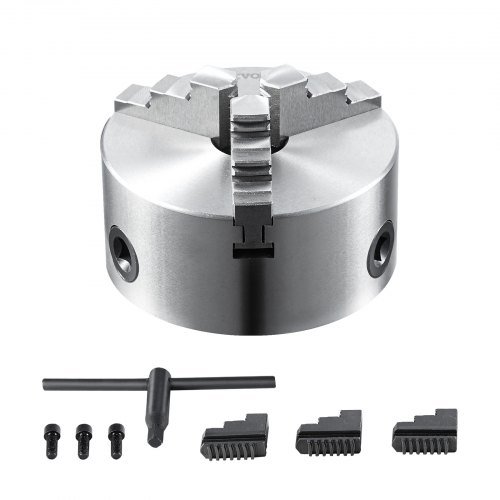
VEVOR 3-Jaw Lathe Chuck
VEVOR 3-Jaw Lathe Chuck, 6'', Self-Centering Lathe Chuck, 0.14- 6.3 in/3.5-160 mm Clamping Range with T-key Fixing Screws Reversible Jaws, for Lathe 3D Printer Machining Center Mi…
Overview
The VEVOR 3‑Jaw Lathe Chuck is a 6‑inch (approximately 160 mm) self‑centring chuck intended for general lathe, milling and drilling uses — the product listing also references compatibility with machining centres and some 3D printer setups that accept chuck mounting. It comes with reversible jaws, T‑key fixing screws and a stated clamping range that covers both internal and external gripping. The body is cast HT300 with hardened steel jaws and scroll components. If you need a relatively low‑cost chuck for routine workshop tasks, this is one of the options you’ll see on the market.
Who is this best for?
This chuck suits hobbyists, small‑scale workshop users and anyone building or upgrading a lathe or a DIY CNC/3D printer setup who needs a straightforward self‑centring holding method. It’s most useful where a mix of internal and external clamping is required and where ultimate, high‑precision accuracy is not the primary concern.
It’s not aimed at high‑precision toolrooms or heavy production where tight runout figures and certified concentricity are critical. Before buying, make sure the chuck’s mounting (bore, thread or adapter) matches your spindle or backplate — the listing shows a bore of φ45 mm and fixed thread 3‑M8, but exact spindle compatibility will depend on your machine.
Key features
- Size: 6 in (chuck outer diameter approximately 160 ± 5 mm).
- Clamping ranges: internal clamping 0.138–2.36 in (3.5–60 mm); external jaw clamping 2.2–6.3 in (56–160 mm).
- Three reversible jaws made from 20Cr steel, hardness ≥ 53 HRC.
- Scroll made from 40Cr steel, hardness ≥ 45 HRC.
- Main body material: HT300 casting; surface treated to Ra < 0.8 and oil coated.
- Bore diameter: φ45 mm; fixed thread: 3‑M8.
- Net weight: about 8.1 kg (17.8 lb); product size: φ160 × 140 mm.
- Includes T‑key fixing screws for jaw adjustment.
- Model number: K11‑160.
Practical evaluation
Given the specification, this chuck is built for versatility. The reversible jaws let you use the same chuck for a variety of jobs: flip them to grip externally around bigger stock, or use them internally to hold smaller bores. That flexibility matters if you frequently switch between turning outside diameters and boring or reaming jobs.
The materials listed (20Cr for jaws and 40Cr for the scroll, with stated hardness values) suggest the critical wear parts are heat treated to resist deformation and wear under normal workshop loads. The HT300 casting for the body is typical for cost‑effective chucks and the stated Ra < 0.8 surface treatment and oil coating help resist corrosion out of the box.
However, the listing does not quote a guaranteed runout or concentricity tolerance. Runout — the small wobble when the chuck rotates — is the figure most professionals check before buying, particularly for finishing or precision turning. If you need a chuck for finishing parts to tight dimensional tolerances, ask the seller for runout figures or look for independent measurement results from buyers and reviewers.
Another practical point is mounting. The chuck’s bore of 45 mm and 3‑M8 fixed thread suggest it’s designed to fit a particular range of backplates or adapter plates. Confirm the mounting method with your machine supplier. If your spindle uses a different mounting standard you may need an adapter or a different chuck model.
Strengths
- Wide practical clamping range — the combination of internal and external jaw limits covers a good span of common workshop diameters without swapping chucks.
- Reversible jaws increase versatility and reduce the need for separate jaw sets for many jobs.
- Hardened parts for durability — jaws and scroll are heat treated to resist wear under normal use.
- Relatively heavy and robust construction for the price point; oil coating helps protect the surface in storage.
- Comes with T‑key fixing screws for adjusting jaws — standard, easy to operate for most users.
Limitations
- No stated runout or concentricity tolerance in the supplied listing — buyers who need precision should verify this before purchase.
- Cast HT300 bodies are common on economy chucks; they are durable but won’t match the stability and vibration damping of premium forged or precision machined chucks.
- Mounting specifics mean it won’t fit every spindle without an adapter or backplate. Double‑check bore and thread compatibility with your machine.
- Weight (around 8.1 kg) is significant for small hobby machines or lightweight 3D printer rigs — ensure your machine can accommodate the mass safely and that bearings are rated for it.
- As with most general‑purpose chucks, you’ll want to invest in soft jaws or dedicated jaw sets if you routinely work with delicate or finished surfaces.
Pricing and value
The product listing includes a guide price of USD 82.90. That places the chuck in the budget to mid‑range segment, where value is often a balance between upfront cost and the level of precision required. For many hobbyists and small workshops this price point is attractive, particularly given the reversible jaws and the breadth of clamping range.
Remember that price is only one factor. Consider the total cost of ownership: adapters or backplates to suit your spindle, soft or stepped jaws if you need to protect workpieces, and any maintenance supplies. Also, some buyers replace standard chuck jaws with machined or soft jaws for better contact and finish — factor those possible extras into your budget.
Note: offers and prices can change quickly. Check the retailer page for the latest price and availability before buying.
Safety and maintenance notes
Chucks are the main holding device for many turning operations and must be used safely. Never over‑tighten the chuck beyond the manufacturer’s guidance or the strength of the chuck key and fasteners. Ensure workpieces are supported appropriately, especially long, thin stock which can flex or vibrate under cutting loads.
Routine maintenance will prolong the life of a chuck: keep the scroll and jaw ways clean and lightly greased, protect the outer surfaces from swarf and coolant, and check jaw screws and fastenings regularly. If you store the chuck for a long time, keep the oil coating topped up or apply a light rust preventative.
Alternatives and when to choose them
If you decide this VEVOR chuck doesn’t meet your needs, here are common alternatives and when they’re worth considering:
- Higher‑precision 3‑jaw chucks: choose these if runout tolerance and repeatability are critical. Professional toolroom chucks often have guaranteed concentricity figures and tighter manufacturing controls.
- Independent 4‑jaw chucks: a 4‑jaw independent chuck is better for irregularly shaped stock or when you need to deliberately offset work for eccentric turning. They’re slower to set up but offer more flexibility for non‑centric work.
- Collet chucks: if you mostly work with smaller diameters and need very high concentricity, collets (ER, Morse taper, or expanding collets) provide very accurate, repeatable clamping for round bar stock.
- Step or soft jaws: rather than a whole new chuck, adding machined step jaws or soft aluminium/bronze jaws to a 3‑jaw chuck can protect finished surfaces and improve the match to particular workpieces.
- Larger or smaller diameter chucks: if you routinely work beyond the external clamping limit of this chuck (up to ~160 mm) or need a smaller, lighter chuck for a mini‑lathe, consider size‑appropriate alternatives.
Final verdict
The VEVOR 3‑Jaw 6″ Self‑Centering Lathe Chuck is a practical, budget‑minded choice for hobbyists and small workshops that need a versatile holding solution. Its reversible jaws, wide clamping range and heat‑treated components give it the flexibility to handle a broad range of turning tasks — external and internal. For general metalworking, light milling or integrating with a DIY CNC/3D printer rig (provided the mounting matches), it represents reasonable value.
That said, the listing omits certain precision metrics such as runout tolerance, so anyone working to tight tolerances should verify those figures before buying. Also check spindle mounting compatibility and consider whether additional accessories (adapters, soft jaws, step jaws) will be needed to get the most from the chuck. If you want a low‑cost, general‑purpose chuck and are prepared to manage the mounting and accessory choices, this VEVOR unit is worth considering. If absolute precision or industrial duty is required, look at higher‑specification alternatives or 4‑jaw/collet solutions instead.
Prices and availability can change — check the retailer page for the latest information before you buy.
Ready to check VEVOR 3-Jaw Lathe Chuck, 6'', Self-Centering Lathe Chuck, 0.14- 6.3 in/3.5-160 mm Clamping Range with T-key Fixing Screws Reversible Jaws, for Lathe 3D Printer Machining Center Milling Drilling Machin?
Check the latest offer before buying, then return to the main comparison if you want to compare it against the other shortlisted options.
Also featured in
This product also appears on these price comparison pages:
Compare this with the full shortlist
Return to the full comparison guide to see how this product compares against the other shortlisted choices.