
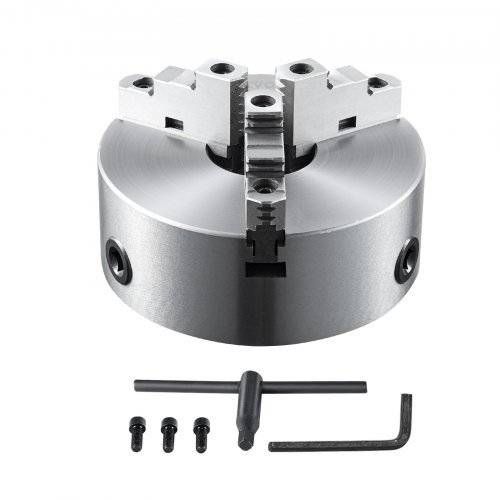
VEVOR 3-Jaw Lathe Chuck
VEVOR 3-Jaw Lathe Chuck, 8'', Self-Centering Lathe Chuck, 0.16-8 in/4-200 mm Clamping Range with T-key Fixing Screws Hexagon Wrench, for Lathe 3D Printer Machining Center Milling …
Overview
The VEVOR 3‑Jaw Lathe Chuck (8″) is a self‑centring chuck aimed at hobbyists, small workshops and light industrial use. It advertises a broad clamping capability — from small internal gripping to larger external clamping — and is built from cast iron with hardened jaws and a scroll mechanism. The package includes a T‑key fixing screw and a hexagon wrench, and the machining details supplied suggest a practical, no‑frills chuck intended to be fitted to a lathe, milling or drilling machine, and even some larger 3D printer setups where a chuck is required.
This review lays out what the chuck offers, who it will suit, and the practical points to check before you buy. I haven’t tested this item; the notes below are based on the manufacturer specifications and common workshop practice so you can decide whether it fits your machine and the jobs you plan to do.
Who is this best for?
This VEVOR chuck is aimed at several user groups:
- Hobby machinists and home workshops who want a robust, general‑purpose 3‑jaw self‑centring chuck without a large outlay.
- Small engineering shops and training workshops that need a spare or replacement chuck for medium‑duty turning and drilling work.
- Users of larger DIY CNC or converted lathe/3D printer rigs who require mechanical gripping for odd‑shaped jobs, provided they match the spindle mounting and speed limits.
It’s less suitable for precision production work where runout at the jaws must be minimal without truing, or for very high‑speed spindles unless you confirm safe RPM with the seller. If you need to hold irregular stock tightly, a dedicated four‑jaw independent chuck will generally be a better choice.
Key features
Here are the main features to note from the specification list:
- Size: 8 in (approximately 200 mm) external diameter; product dimensions φ200 x 160 mm. This puts it in the medium chuck size range for small to mid‑sized lathes.
- Clamping ranges: the product description provides both internal and external jaw ranges. Internal (through‑jaws) clamping is specified at about 4–85 mm (0.157–3.346 in) and external jaw clamping at about 70–200 mm (2.76–8 in). Taken together the chuck can handle stock approximately 4–200 mm depending on whether you use internal or external gripping modes.
- Jaw and scroll materials: jaws are listed as 20Cr with hardness ≥53 HRC; scroll is 40Cr with hardness ≥45 HRC. These are common alloy steels used in chuck manufacture and indicate hardened contact surfaces where wear resistance matters.
- Body material: HT300 cast iron, a typical chuck body material that provides stiffness and vibration damping for many workshop applications.
- Bore and mounting: a bore (through hole) of φ65 mm is given; fixed thread details list 3‑M10, which implies a 3‑hole bolt mounting pattern. Confirm whether this matches your spindle or backplate pattern before purchasing.
- Finishing: surface finish listed as Ra0.8 and oil coated, which suggests a reasonably smooth machined exterior and anti‑rust protection during storage and shipping.
- Accessories: comes with a T‑key fixing screw and a hexagon wrench for jaw adjustment and chuck mounting operations.
- Weight: net weight around 12.3 kg (27.1 lb), so it’s a relatively heavy, solid unit that will need secure mounting and may require assistance to fit or remove from the spindle.
Practical evaluation
From the specification it’s possible to draw practical conclusions about how the chuck will behave in a workshop environment. The hardened 20Cr jaws (≥53 HRC) and hardened scroll (40Cr ≥45 HRC) indicate the components that see wear have been specified with durability in mind. For routine turning, facing and drilling operations on mild steel, aluminium, brass and similar materials this should be more than adequate.
The combination of an internal clamping range down to around 4 mm and an external range up to roughly 200 mm makes this a versatile chuck for different jobs: use the jaws inverted for external clamping of larger pieces, or run the jaws through the bore for internal gripping of smaller items. That versatility matters in hobby and small shop settings where you don’t want to own a large number of specialised chucks.
There are some things to check before you buy. First, confirm the mounting pattern. The spec lists a fixed thread of “3‑M10” so you’ll need to match that to your spindle nose or backplate, or be prepared to fit an appropriate adaptor or backplate. Second, ask the retailer about maximum safe spindle speed for this chuck. Many general‑purpose chucks are not dynamically balanced to the tolerance required for very high RPMs; running a heavy chuck at high speed without balancing risks vibration or damage.
Because the chuck is relatively heavy (about 12.3 kg), make sure your lathe or machine can handle the additional rotating mass and that tools and bearings are in good condition. If you plan to use it on a converted 3D printer or small desktop CNC, check the machine’s load and speed limits — many lighter hobby machines will struggle with spindles and chucks of this size.
Another practical point: self‑centring three‑jaw chucks are very convenient but they centre based on jaw geometry rather than independent jaw adjustment. That makes them quick to use for round bar and similar stock, but they’re not the best option for odd‑shaped material or where you need very low runout unless you have the chuck trued on the spindle first. If you require extremely precise concentricity, expect to spend time truing the chuck or to consider a different chuck type.
Strengths
- Versatile clamping: internal and external jaw ranges allow you to work with a wide variety of stock diameters without swapping chucks.
- Hardened contact surfaces: hardened jaws and scroll gear suggest good wear resistance for workshop use.
- Solid construction: HT300 cast iron body and a significant mass indicate robustness and vibration damping for typical lathe operations.
- Complete basic kit: arriving with a T‑key and hex wrench removes the need for immediate additional purchases to mount and use the chuck.
- Reasonable finish: the listed surface finish and oil coating mean the chuck should arrive well protected against corrosion from packaging and shipping.
Limitations
- Mounting compatibility: the 3‑M10 fixed thread pattern means you must confirm your spindle or backplate matches, or obtain an adaptor. This is a common issue with aftermarket chucks.
- Dynamic balancing and RPM limits: specification does not list an explicit maximum RPM. For high‑speed work you should confirm balancing and speed limits with the seller or manufacturer.
- Not a precision trued chuck out of the box: like most economy chucks, it may need truing if you require very low runout for precision turning — expect to allow time for setup.
- Weight and handling: at over 12 kg you’ll need to handle it carefully when mounting or removing, ideally using a second pair of hands or a hoist on larger machines.
- Three‑jaw limitations: while fast and suitable for round work, three‑jaw chucks remain less flexible than four‑jaw independent chucks for irregular shapes and eccentric work.
Pricing and value
The listed guide price for this VEVOR chuck is USD 116.90. That positions it as an affordable medium‑size chuck within the broader aftermarket market, where prices vary by brand, finish, and balance rating. For basic workshop use — turning metal or wood in a home workshop, fitting to a small lathe, or adding a mechanical chuck to a multifunction machine — this appears to offer solid value, particularly given the hardened jaws and solid cast‑iron body.
However, value depends on fitment and intended use. If you need a chuck for high‑precision production or for high‑speed spindles, paying a premium for a factory‑balanced, matched chuck from a specialist manufacturer may be worthwhile. If you’re fitting to an unfamiliar spindle, factor in the potential cost of an adapter or backplate and, if necessary, professional truing or balancing services.
Finally, remember that advertised prices and availability can change. Always check the retailer page for the most up‑to‑date price, shipping costs and return terms before you buy.
Alternatives
When choosing a chuck, consider what trade‑offs matter most for your work: speed, absolute concentricity, weight, and mounting simplicity are the usual deciding factors. Here are the categories of alternatives to weigh up:
- Four‑jaw independent chuck: better for irregular stock and for deliberately offset turning; slower to set up but more flexible than a three‑jaw self‑centring chuck.
- Keyless chucks or quick‑change chucks: these can speed up workholding changes, particularly for light‑duty or CNC setups, though they may have limitations on maximum grip force or diameter range.
- Collet systems: for small, high‑precision work and for high RPMs, collet chucks (ER collets, for example) often provide superior runout and gripping concentricity for smaller diameters, but don’t have the same wide diameter range as a three‑jaw chuck.
- Higher‑precision, factory‑balanced 3‑jaw chucks: if you require lower runout and higher safe RPMs out of the box, look for chucks that are supplied with balancing data and a known maximum RPM rating.
Choosing between these options depends on the specific jobs you do most often. If you mostly work with round bar and need quick, repeatable clamping for medium‑sized stock, a three‑jaw like the VEVOR model is a sensible, economical choice. If production tolerances are tight or you routinely run at very high spindle speeds, consider stepping up to a premium, balanced model or a collet system for smaller diameters.
Final verdict
The VEVOR 3‑Jaw 8″ Lathe Chuck presents as a practical, no‑nonsense workholding solution for hobbyists and small shops. Its hardened jaws, cast‑iron body and dual internal/external clamping ranges make it versatile for a broad range of turning tasks. The included T‑key and hex tool add convenience, and the overall build details suggest reasonable durability for typical workshop workloads.
Before buying, make sure you confirm mounting compatibility with your spindle or backplate, and check the maximum safe operating RPM with the seller if you plan to use it at high speed. Factor in the chuck’s weight when fitting it to the machine and remember that three‑jaw self‑centring chucks prioritise speed of set‑up over the absolute precision and versatility of a four‑jaw independent chuck or a collet system.
If you want a capable, generally useful chuck for moderate workshop use and don’t need guaranteed sub‑0.01 mm runout or factory balancing for extremely high spindle speeds, this VEVOR unit looks like a solid value option. For production environments or specialist high‑precision work, consider spending a little more on a purpose‑balanced or higher‑precision alternative.
Note: offers, prices and availability can change. Check the retailer page for the latest price, delivery options and technical details before you buy.
Ready to check VEVOR 3-Jaw Lathe Chuck, 8'', Self-Centering Lathe Chuck, 0.16-8 in/4-200 mm Clamping Range with T-key Fixing Screws Hexagon Wrench, for Lathe 3D Printer Machining Center Milling Drilling Machine?
Check the latest offer before buying, then return to the main comparison if you want to compare it against the other shortlisted options.
Also featured in
This product also appears on these price comparison pages:
Compare this with the full shortlist
Return to the full comparison guide to see how this product compares against the other shortlisted choices.