
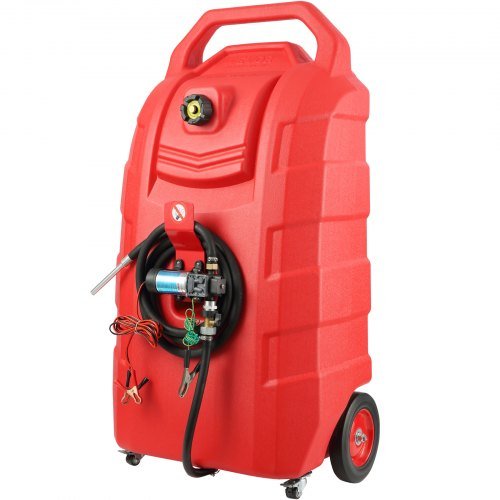
VEVOR Fuel Caddy
32‑gallon on‑wheels fuel caddy with a 12V DC transfer pump and 8.2 ft hose — faster, powered transfers for frequent use.
Overview
The VEVOR 32‑gallon fuel caddy is a portable fuel storage solution built around a sizeable polyethylene tank, a fixed steel mount and an included 12V DC transfer pump. Designed with mobility in mind, the unit sits on an on‑wheels chassis with 8‑inch rubber wheels and is intended for refuelling trucks, boats, lawn mowers and similar equipment where a large, transportable fuel reserve is useful.
Where this model differs from purely manual caddies is the included wired pump and dispensing nozzle. With a manufacturer‑listed maximum flow of about 7 litres per minute and an approximately 8.2 ft (250 cm) hose, the kit aims to speed up refuelling and reduce the physical effort of manually pumping. The tank material is polyethylene (PE), chosen for chemical resistance and corrosion avoidance, while the pump hardware is secured to a carbon steel mount for stability.
Who is this best for?
This VEVOR caddy is aimed at buyers who regularly move or dispense larger volumes of fuel and want the convenience of an electrically driven transfer pump. Practical examples include owners of small commercial vehicles, boat owners who need to fill tanks off a trailer or jetty, landscapers and contractors who run multiple mowers and equipment at a site, or anyone who prefers powered transfer to bending over with manual hand pumps.
It’s not primarily for casual, infrequent use. If you only occasionally move a couple of gallons to a mower, a much smaller or manual option will cost and weigh less. Likewise, if you need to carry the caddy within a vehicle frequently while full, be aware of the weight and local rules about transporting fuel containers—this unit is bulky and designed for wheeled movement rather than being toteable when full.
Key features
- 32 US gallons (approx. 121 litres) polyethylene tank – resists corrosion compared with steel drums.
- Included 12V DC transfer pump with wired hose and hand oil gun/nozzle for controlled dispensing.
- Maximum manufacturer‑listed flow around 7 L/min (actual speed depends on conditions and power supply).
- Fixed carbon steel mount for pump hardware to provide a stable installation.
- Approximately 8.2 ft (250 cm) hose length for reach around vehicles and equipment.
- On‑wheels chassis with 8‑inch rubber wheels for manoeuvring over yards, ramps and light terrain.
Practical evaluation
There are two central practical advantages to look for with this model: the increased convenience of powered transfer, and the benefits of a PE tank on a wheeled frame. The 12V pump removes most of the hard work from moving fuel. For someone emptying or filling several tanks in a day, that alone can save time and reduce fatigue. The hose length is generous for a single‑person setup; you can reach a vehicle’s filler or generator without repeatedly shifting the whole cart.
On the other hand, an electrically driven pump changes how you use and maintain the unit. You’ll need a reliable 12V power source — typically a vehicle battery or dedicated 12V supply — and sensible wiring practice to avoid accidental discharge or poor connections. Pumps, leads and electrical connections also introduce failure points that don’t exist with a simple gravity or hand pump. For that reason, expect to carry out periodic checks: ensure the wiring is intact, terminals are clean, and the pump runs smoothly without unusual noise or heat.
Construction mixes practical, lightweight materials with durable hardware. The PE tank provides the chemical resistance and avoids the rust issues that can affect metal drums left outdoors. The carbon steel pump mount gives a firm platform for the pump assembly, but steel parts exposed to weather are best kept dry and inspected for surface corrosion over time. Large rubber wheels make the caddy straightforward to move across grass, gravel or boat ramps, though lifting when full isn’t practical.
Real‑world flow will vary. The listed figure — about 7 litres per minute — is a useful reference, but it assumes ideal conditions: a good 12V supply, minimal head height, clean fuel and serviceable pump. If the caddy is on a slope, the pump is older, the fuel contains debris, or the vehicle battery is marginal, the transfer speed will drop. For anyone depending on predictable throughput (for example, commercial refuelling where job timing matters), allow for variability and factor in some margin when planning tasks.
Strengths
- Powered pump reduces manual effort and often speeds up refuelling compared with hand pumps, saving time on repeated transfers.
- Large 32‑gallon capacity caters for multiple machines or longer trips without constant refilling of the caddy itself.
- PE tank is corrosion‑resistant, lightweight relative to steel and generally kinder to fuel storage in outdoor environments.
- Wheeled chassis and 8‑inch rubber wheels make movement across yards, ramps and launch areas easier than dragging a drum.
- The hose and hand oil gun offer controlled dispensing and a usable reach around vehicles — useful when accessing awkward filler necks.
- Good choice where higher transfer rates are needed: suited to larger volumes and frequent use rather than occasional topping up.
Limitations
Electric convenience brings additional complexity. The included 12V pump requires a power source, so you’ll need either access to a vehicle battery, a dedicated 12V supply or a battery pack. That means one more item to check and maintain, and it can limit where and how you use the caddy if you don’t have suitable power on site.
Electrical pump assemblies need basic safety checks. Wiring, connectors and the pump should be inspected regularly for wear, secure fastening and signs of fuel vapour exposure. If you plan to store the caddy with fuel inside for any length of time, review the manufacturer’s instructions and local regulations about fuel storage and transport — rules vary and are important for safe use.
The pump’s stated maximum flow is conditional. In other words, 7 L/min is possible under ideal circumstances, but don’t expect that number every time. Pump performance can be affected by fuel temperature, battery voltage, hose routing, head height and cleanliness. Also, there may be occasions where the standard nozzle and hose don’t match the filler on a particular vehicle or piece of equipment — adapters and inline filters are commonly used additions but are not included by default.
Finally, this caddy is heavier and more complex than a purely manual alternative. If portability in the sense of picking up and carrying a full container is a priority, a smaller container or a manual plastic jerry with a carry handle will be easier. The VEVOR caddy is designed to be wheeled rather than carried.
Pricing and value
The supplied guide price for this model is a reference point; check the retailer page for current pricing and availability. At a glance, the unit sits in a category where buyers are paying for convenience, capacity and a powered pump. If you need a 32‑gallon capacity and an onboard 12V transfer pump, the value proposition is straightforward: you get a large, corrosion‑resistant tank, a decent hose reach and a pump capable of moving several litres per minute.
Value depends on how often you use it. For contractors, boat owners with frequent refuelling needs, or anyone who moves fuel between several machines regularly, the time saved and reduced physical effort can justify the cost. For an occasional gardener or a homeowner who only needs a small top‑up occasionally, a much smaller or manual option will represent better value.
Also consider lifecycle costs. Powered pumps will eventually require maintenance or replacement, and extras such as filters, adapter fittings or a battery lead with appropriate clamps may be sensible purchases. Factor those potential extras into your budget if you want a fully functional, long‑term setup.
Alternatives and comparators
There are two obvious alternative directions to consider when choosing a 32‑gallon portable caddy:
- Manual pump on a 32‑gallon wheeled caddy — if you don’t want the electrical complexity, several models use hand pumps or gravity dispensing. These are generally cheaper to buy and simpler to maintain, but they demand more physical effort and are slower for frequent large transfers.
- Smaller powered caddies or jerry cans — if mobility and ease of carrying are priorities, smaller powered tanks (or high‑quality jerry cans with pump attachments) reduce weight when full and are easier to lift into vehicles. They don’t offer the same single‑fill capacity, however.
When comparing, pay attention to these points:
- Pump power and flow rate claims — check whether flow is measured at zero head (ideal) or at a specified lift, and whether the vendor offers technical documentation.
- Hose and nozzle compatibility — some filler necks need narrow or longer nozzles or an adapter. Inline filters are useful when transferring to sensitive engines like outboards.
- Tank material and durability — PE tanks resist corrosion but can be more prone to damage from impact; steel tanks are robust but can corrode without maintenance.
- Wheels and manoeuvrability — wheel size and axle quality affect terrain capability. Bigger rubber wheels reduce rolling resistance on gravel and grass.
- Local transport and storage rules — larger capacities and wheeled carts may be subject to regulations when transporting on public roads; check local guidance.
Final verdict
The VEVOR 32‑gallon fuel caddy with 12V DC transfer pump is a sensible choice for anyone who regularly needs to move significant volumes of fuel and values the time and effort saved by an electrically driven pump. The mix of a corrosion‑resistant PE tank, a firm steel pump mount and large rubber wheels makes for a practical, durable solution for yard work, boat launching and multi‑machine sites.
It’s not a one‑size‑fits‑all answer: the electrical requirement adds complexity and a maintenance overhead compared with simple manual caddies. Expect to budget for basic checks, possible adapter fittings and, occasionally, pump service or replacement down the line. Also be realistic about the transfer rate — the quoted 7 L/min is useful guidance but will vary with conditions.
In short, choose this model if you need capacity, mobility and powered transfer for frequent or larger‑volume work. If you only need occasional small top‑ups, or you prioritise maximum simplicity and the lowest purchase price, a smaller manual unit will likely suit you better.
Note: prices and availability can change. Check the retailer page for the current price, delivery options and any additional details before buying.
Ready to check VEVOR Fuel Caddy, 32 Gallon, Portable Fuel Storage Tank On-Wheels, with 12V DC Transfer Pump, Gasoline Diesel Fuel Container with 8.2 ft Hose, Flow Rate 7L/min, for Trucks, Boats, Lawn Mowers?
Check the latest offer before buying, then return to the main comparison if you want to compare it against the other shortlisted options.
Compare this with the full shortlist
Return to the full comparison guide to see how this product compares against the other shortlisted choices.