
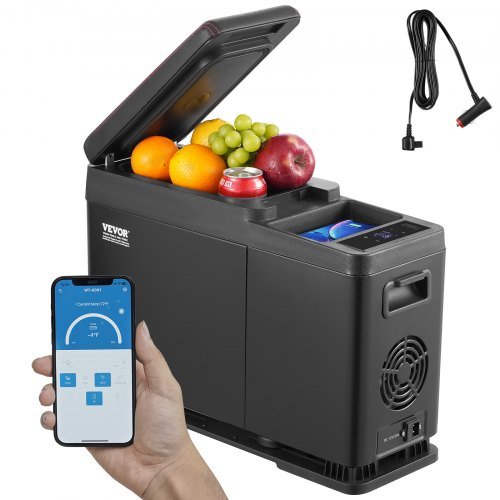
VEVOR Car Refrigerator
8 L armrest-style single‑zone compressor fridge designed to sit in a console or small space; useful where a built‑in style solution is preferred.
Overview
The VEVOR 8 L armrest car refrigerator is a compact compressor cooler aimed at drivers who want chilled storage inside the cabin rather than in the boot. With an armrest-style slim profile it’s intended to sit between front seats or on a narrow shelf, offering single-zone temperature control from roughly -20°C to 20°C. It runs from 12/24V DC in a vehicle and also accepts 100–240V AC when you’re near mains power. The construction mixes polypropylene and cold-rolled sheet for the outer shell and an embossed aluminium inner liner that’s straightforward to wipe clean.
Key numerical notes: this model lists about an 8-litre internal capacity, a net weight of approximately 8.6 kg, a power draw of around 45 W and a quoted noise level of up to 45 dB. Those figures point to a small, relatively quiet compressor unit that will keep a few drinks cool or a couple of snack packs frozen — but it’s not designed to replace a household fridge or larger portable chest freezers.
Who is this best for?
This VEVOR armrest fridge is aimed at people who need chilled storage within easy reach while driving. Typical users would include solo drivers or couples who want to keep drinks, sandwiches or insulin cool during short trips; taxi, rideshare or delivery drivers who want a convenient in-cabin option; and vehicle owners who have limited boot space but a narrow gap in the cabin that a standard chest-style portable fridge won’t fit.
It’s less suitable for families, multi-day camping without mains or large-van conversions where bulkier, higher-capacity units provide better value. If you plan to store a substantial number of meals, or want a split between fridge and freezer sections, a larger or dual-zone machine is a better match.
Key features
- 8-litre internal capacity — compact, drink-and-snack sized.
- Armrest-style slim form factor — designed to fit between seats or narrow spaces.
- Single-zone compressor cooling with adjustable temperature from about -20°C to 20°C.
- Dual power compatibility: DC 12/24V for vehicle use and AC 100–240V for home or campsite mains.
- Outer shell: PP plus cold-rolled sheet; inner liner: embossed aluminium for easier cleaning.
- Power consumption approximately 45 W; listed noise up to 45 dB.
Practical evaluation
Form factor and fit: the defining feature is the slim, armrest-like shape. This makes the unit attractive when you have a narrow slot between seats or need a fridge that sits close to the driver for easy access. Before buying, measure the space carefully: while the design targets centre-console gaps, not all vehicles have a compatible layout. Seat rails, handbrake location and console contours can interfere — so check width, depth and how it would be secured when the car is moving.
Capacity and everyday use: at 8 litres the interior holds perhaps a few cans, a small water bottle and a sandwich or two depending on packaging. That’s perfect for single-day commutes or short drives where you want one or two chilled items to hand. It won’t replace a picnic cooler for a family day out, and bulk purchase or meal-prep storage will quickly exceed the available volume. Think of it as a portable mini-fridge rather than a full meal carrier.
Cooling and temperature control: this is a compressor unit, which typically delivers reliable, consistent cooling compared with thermoelectric alternatives. The adjustable range — down to approximately -20°C and up to roughly 20°C — gives flexibility from a deep chill to freezing if you need it. In practice, how fast and how well it reaches a set temperature depends on ambient conditions, how often the lid is opened and what you load it with. Because this is a single-zone fridge you can’t keep separate compartments at different temperatures — everything inside follows the same setting.
Power and energy: the quoted 45 W power rating is modest for a compressor fridge and helps limit drain on a vehicle battery if used sensibly. However, continuous operation while the engine is off can cause battery discharge, so use it with a battery monitor or start the car occasionally on longer stops. The dual power option (12/24V DC and 100–240V AC) is convenient: you can plug in at home or at campsites to pre-chill items before travel, or use mains power when you return to base.
Noise and vibration: the stated noise level of up to 45 dB positions it among quieter compressor models. In a cabin that is already noisy from road or wind, the fridge is likely to be unobtrusive; in a quiet parked car it may be audible but not intrusive. If you are particularly sensitive to noise, consider placement and whether it will be directly adjacent to the driver’s head when idling in quiet conditions.
Cleaning and maintenance: the embossed aluminium inner liner makes spill cleanup straightforward — wipeable and less likely to harbour odours than some plastics. Basic maintenance is typical for compressor fridges: keep the exterior vents clear, don’t block airflow around the unit, and defrost if the freezer function accumulates excessive ice. The materials listed (PP and cold-rolled sheet) should be durable enough for typical vehicle conditions but avoid prolonged exposure to direct sunlight to reduce cosmetic fade or heat soak.
Installation and security: because it’s designed for in-cabin placement, think about how you’ll keep it secure in a moving vehicle. The weight of around 8.6 kg is heavier than the capacity might suggest, so it won’t slide easily if placed between seats, but it still should be restrained with straps or a bracket where possible. Also check that your vehicle’s 12V outlet can supply continuous power without tripping fuses — some cars have accessory outlets that shut off with the ignition.
Strengths
- Slim armrest profile for use in tight cabin spaces where a conventional chest fridge won’t fit.
- Compressor-based cooling and an expansive adjustable temperature range for fridge and freezer needs in one zone.
- Low-ish power draw (around 45 W) makes it efficient for its class and kinder to vehicle batteries when used responsibly.
- Dual power compatibility (12/24V DC and 100–240V AC) adds flexibility between car and mains use.
- Embossed aluminium inner liner is easy to clean and resists staining and odours better than some plastics.
- Relatively quiet operation for a compressor unit — the quoted noise is up to 45 dB.
Limitations
- Very limited capacity — 8 litres is suitable for a few drinks or small snacks only, not for multi-person trips or meal prep.
- Single-zone temperature means no separate fridge and freezer compartments; everything inside shares the same temperature setting.
- Shape and size may not fit all vehicles’ centre consoles or armrest gaps — measure before purchase.
- The unit’s weight (around 8.6 kg) is relatively high for its small capacity, which affects portability if you plan to carry it frequently.
- Given the small internal space, the price per litre can look high compared with larger portable fridges — worth considering when assessing value.
Pricing and value
The guide price supplied for this model is USD 159.90; actual retail prices and offers can vary between sellers and over time, so check the retailer’s page for the latest price and availability. At this price point buyers should weigh the convenience of an in-cabin solution against the cost per litre. Small, specialised fridges often carry a premium for compact form factor and the engineering needed to fit them into tight spaces.
If your priority is in-cabin access and the dimensions suit your vehicle, the price can be justified by the convenience and build features (compressor cooling, dual-power input, easy-clean liner). However, if you need more volume or a split fridge/freezer arrangement, a larger compressor fridge or a dual-zone model will usually offer better value per litre. Consider what you typically carry: two cans and a sandwich per trip is an ideal match for the VEVOR 8 L; if you regularly want to store more, look to bigger alternatives.
Other cost factors to bear in mind: if you plan to use the fridge extensively with the engine off, you may need a battery monitor or a dedicated leisure battery to avoid draining the vehicle’s starter battery — an additional expense that changes the total ownership cost. Also check warranty terms and any support or return policies from the retailer before purchase.
Alternatives and when to choose them
Before you commit, consider a few alternative approaches depending on your needs:
- Larger compressor portable fridges: If you frequently travel with a partner or family, consider a 20–40 L fridge. These offer far more capacity, better value per litre and often include features such as removable baskets or digital controls.
- Dual-zone units: For those who need both chilled and frozen storage simultaneously (for frozen food plus drinks), a dual-zone model is more flexible than a single-zone fridge.
- Top-loading chest fridges: Chest-style fridges usually have better thermal efficiency and can store more, but they are bulkier and usually go in the boot or cargo area rather than the cabin.
- Thermoelectric coolers: These are cheaper and lighter but generally less effective at cooling, especially in hot conditions, and are not a substitute for a compressor cooler when you need sustained low temperatures.
- Traditional cool boxes with ice packs: Cheap, silent and easy to use for short trips, but offer no active cooling and are impractical for keeping items frozen for long periods.
Which one to pick comes down to a balance of capacity, access, power availability and price. The VEVOR armrest fridge is a niche product that does one job well: in-cabin chilled storage in very limited spaces. If that specific need matches your use case, it’s worth considering. If you prioritise capacity or multi-day independent camping, a larger or different-style fridge will serve better.
Final verdict
The VEVOR 8 L armrest car refrigerator is a targeted product for a narrow but real market: drivers who want cold drinks or small chilled items within arm’s reach and have limited space for a conventional portable fridge. Its slim form factor, compressor cooling, low power draw and dual power inputs are all practical features for in-cabin use. The embossed aluminium interior is a helpful touch for keeping things hygienic and easy to clean.
However, the small internal volume and single-zone design limit its usefulness for anyone who needs to carry more than a couple of items or wants separate fridge and freezer zones. The weight relative to capacity and the likely higher cost per litre compared with larger fridges are also factors to weigh. Before buying, measure your vehicle’s available space carefully, consider how you’ll secure the unit while driving, and think about power management if you plan to run it with the engine off.
In short: choose this VEVOR model if you need a compact, in-cabin compressor fridge that fits narrow gaps and provides reliable single-zone cooling for short trips. If your priorities are volume, multi-person use, or independent multi-day camping, look to larger or dual-zone alternatives instead.
Note: Offers and prices can change — check the retailer page for the latest availability and details before buying.
Compare this with the full shortlist
Return to the full comparison guide to see how this product compares against the other shortlisted choices.