
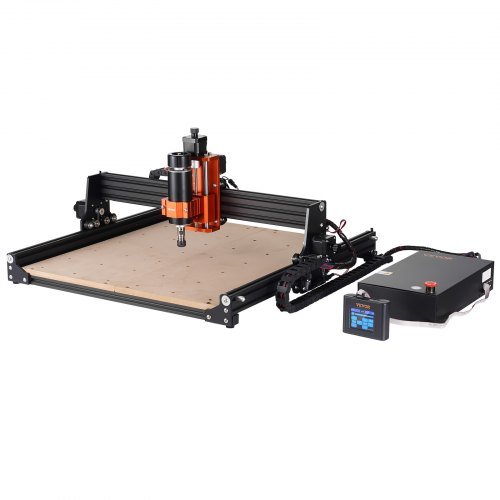
VEVOR CNC Router Machine
A compact 300W GRBL-controlled router kit with a roughly 400×400mm bed — budget-friendly and aimed at engraving, acrylic and light wood work.
Overview
The VEVOR CNC Router Machine is a benchtop, 3‑axis CNC kit aimed at hobbyists, makers and small workshops. With a roughly 400 x 400 mm working area and a 300W spindle, the machine is presented as an affordable way to move from hand tools to computer‑controlled carving, engraving and light milling. Control is via GRBL over USB, the frame is made from aluminium alloy and the unit ships as a kit that requires assembly and setup.
This review pulls together the machine’s stated specifications and practical buying guidance to help you decide whether it matches your needs. I haven’t carried out hands‑on testing; the comments below are based on the product information, typical behaviour of machines in this class, and practical considerations that matter when choosing a desktop CNC.
Who is this best for?
This VEVOR machine is primarily aimed at users who want to learn CNC workflows or produce small to medium‑sized projects without committing to a large router. Typical buyers include hobby woodworkers, small sign‑makers, model makers, educators and DIY enthusiasts who will be machining wood, MDF, acrylic, certain plastics (PVC, ABS) and foam.
It’s a sensible choice if you want a relatively compact working area (around 400 x 400 mm), prefer GRBL‑based control (well supported by free and entry‑level software), and are comfortable assembling and calibrating a kit machine. If you need to rout large sheets, machine thick hardwoods at high feed rates, or cut metals regularly, you’d be better off looking at machines with higher spindle power and more rigid frames.
Key features
- 3‑axis engraving and milling with GRBL control compatible via USB.
- Working area advertised at approximately 400 x 400 mm (the Z travel is stated in different places as roughly 60–75 mm; check the retailer listing for the exact figure supplied with your unit).
- 300W spindle motor — intended for light to medium duty cutting tasks.
- Spindle speed listed around 12,000 rpm by the manufacturer (some listings show different RPM figures; verify the specification on the sales page).
- Aluminium alloy main frame for a balance of rigidity and weight.
- USB connection for PC control; runs GRBL firmware and is compatible with common sender programs and CAM tools that export standard G‑code.
- Supplied as a kit that requires assembly and alignment; net weight about 13.8 kg and compact overall footprint.
Practical evaluation
What you can reasonably expect from the VEVOR CNC Router comes down to three things: the mechanical rigidity of the frame, the 300W spindle’s capability, and the quality of the control electronics and software compatibility.
Frame and movement: the aluminium alloy construction is typical for machines in this price bracket. A well‑built aluminium frame gives decent stiffness for engraving, cutting thin hardwoods, plywood, MDF and plastics. But aluminium frames aren’t as vibration‑resistant as cast iron or heavy steel gantries, so you should not expect industrial‑level chatter suppression or the ability to push very aggressive feeds and depths of cut. For best results, use sharp end mills, reduce cut depth for harder materials and ensure the machine is mounted to a stable bench.
Spindle and cutting power: the 300W spindle puts this machine in the light‑duty category. That’s perfectly adequate for routing signs, detailed engraving, small mouldings and trimming operations in softer woods and plastics. It will struggle with heavy hogging passes in hardwood, thick aluminium or other metals — those tasks require much more power and a stiffer machine. The spindle speed noted by the manufacturer (around 12,000 rpm) is appropriate for small diameter bits and fine finishing work; you’ll need to match bit diameter and chipload to the material for clean results.
Control and software: GRBL is a widely adopted open‑source control firmware, and that’s a strong point for a beginner‑friendly machine. GRBL makes it easy to use USB sender programmes and a range of CAM packages that output standard G‑code. Expect to use a PC (or laptop) with the chosen sender to jog axes, zero the machine and run jobs. If you haven’t worked with GRBL before, factor in a learning curve to get CAM settings, feeds and speeds dialled in — but you’ll benefit from large online communities and plenty of tutorials.
Assembly and setup: the unit is sold as a kit. That saves on shipping and cost but means you’ll need to assemble mechanical components, fit belts or lead screws, confirm endstop positions and calibrate axis steps per mm. If you’re not confident with basic mechanical assembly, this will add time before you can cut your first job. Helpful skills include a feel for squaring gantries, tensioning belts correctly, and securing a sacrificial wasteboard so clamps hold reliably.
Materials and tooling: the machine is advertised for wood, acrylic, MDF, PVC and foam. In practice, success across those materials comes down to bit choice and cutting strategy. Use two‑flute end mills for wood and plastics, climb vs conventional milling considerations for tearout, and shallow, multiple passes for cleaner edges. For acrylic, slower spindle speeds and light passes reduce melting. You’ll also need to confirm the collet size and compatible toolholders — the sales page should list which collet(s) are included.
Safety and environment: small desktop routers still produce dust and fumes (especially when cutting plastics). Plan for dust collection or at least a good extraction vacuum and wear appropriate PPE — eye protection, hearing protection and respiratory protection when needed. Also note electrical supply: the unit lists 110V, 60Hz input on some specifications. UK mains are 230V, 50Hz, so check whether the retailer supplies a 230V version, or whether an appropriate power supply/transformer is needed. Using the wrong mains voltage can damage the electronics or create a safety hazard.
Strengths
- Accessible entry point into CNC: fairly compact, GRBL control and a familiar 400 x 400 mm workspace make it a good step up from manual tools.
- Versatile for non‑metal work: suitable for detailed engraving, sign making and light routing in wood, MDF, acrylic and certain plastics.
- Relatively affordable on paper: the combination of size, GRBL control and kit format keeps purchase cost lower than many turnkey machines.
- Community and software support: GRBL compatibility opens up a wide range of free and low‑cost sender and CAM tools and active online help.
- Compact footprint: easy to fit on a workbench and transport if needed; ideal for small studios, workshops or classrooms.
Limitations
- Limited spindle power: 300W is fine for light work but not suited to thick hardwoods, aluminium or heavy stock removal.
- Frame stiffness: aluminium alloy frames are good for their weight but don’t match heavier industrial machines for vibration damping and heavy feeds.
- Kit assembly required: you need tools, patience and some mechanical skill to achieve correct alignment and reliable results.
- Voltage and regional variants: some listings state 110V/60Hz. UK buyers must verify the correct mains version or arrange a suitable power solution.
- Unclear specification consistency: some published specs for the same model differ (Z travel and RPM figures vary between listings). Confirm the precise figures with the seller before buying.
Pricing and value
The VEVOR machine is marketed as a budget‑oriented desktop CNC. A guide price listed alongside the product is USD 358.99, but actual prices and availability will vary by retailer, region and current offers. That guide price places the unit among the more affordable 300–400 mm desktop routers, which makes it attractive for hobbyists on a budget.
Value depends on what you need to do. If your projects are engraving, signage, model components or light routing, the machine offers good value when assembled and configured correctly. However, if you must add accessories — dust collection, more durable collets, a better wasteboard, endmills suited to specific materials, a stronger power supply or a 230V variant for the UK — that increases total cost. Factor in those extras when comparing with other machines that may come more ready to run out of the box.
Note: offers and prices change frequently; check the retailer listing for the latest price, shipping and any local‑region variants (especially the input voltage supplied).
Alternatives and what to consider instead
If you’re shopping around, consider these decision points rather than only comparing sticker prices:
- Working area: if you need to cut larger sheets or bigger parts, look for machines with a larger bed — many desktop options also come in 600 x 900 mm and larger sizes.
- Spindle power and rigidity: for frequent routing of hardwoods or occasional metal work, search for machines with higher spindle power (500W and up) and heavier gantry construction.
- Voltage and regional support: choose models that explicitly offer a 230V/50Hz variant or a compatible power supply for your country to avoid voltage adapters and potential warranty issues.
- Turnkey vs kit: if you prefer to get machining quickly with minimal setup, a factory‑assembled machine will save time, though at higher cost. Kit machines trade price for the need to assemble and tune.
- Extras and accessories: some vendors include collets, tool sets, dust boots and starter software. Factor those in to total value rather than looking only at the base unit cost.
If your work is mostly engraving and delicate signmaking, a machine like the VEVOR is a solid starting point. If you plan to scale up, budget for a higher‑power, more rigid machine or plan to move to a specialised router or small mill later.
Final verdict
The VEVOR CNC Router Machine (300W, 3‑axis, GRBL) is a compact, cost‑conscious option for hobbyists and small workshops wanting to explore CNC engraving and light routing. Its strengths are an approachable working area, GRBL compatibility and a price point that makes CNC accessible. The kit format also appeals if you enjoy hands‑on assembly and tuning.
However, this is not a heavy production machine. The 300W spindle and aluminium frame limit its suitability for thick hardwoods, metal cutting and aggressive milling. Also, some specification details vary across listings (Z travel and RPM figures in particular), and the unit’s listed input voltage needs careful attention for buyers outside North America.
In short: this VEVOR router is a sensible, economical choice for hobby CNC work, engraving and light‑duty routing — provided you accept the trade‑offs in power, rigidity and the time needed for assembly and tuning. If you have heavier machining needs or require a plug‑and‑play machine with robust warranty and local support, consider stepping up to a more powerful or pre‑assembled alternative.
Reminder: product offers, specifications and prices can change. Check the retailer page for the latest information before you buy.
Ready to check VEVOR CNC Router Machine, 300W, 3 Axis GRBL Control Wood Engraving Carving Milling Machine Kit, 15.75 x 15.75 x 2.36 in / 400 x 400 x 60 mm Working Area 1200 RPM for Wood Acrylic MDF PVC Plastic Foam?
Check the latest offer before buying, then return to the main comparison if you want to compare it against the other shortlisted options.
Also featured in
This product also appears on these price comparison pages:
Compare this with the full shortlist
Return to the full comparison guide to see how this product compares against the other shortlisted choices.