
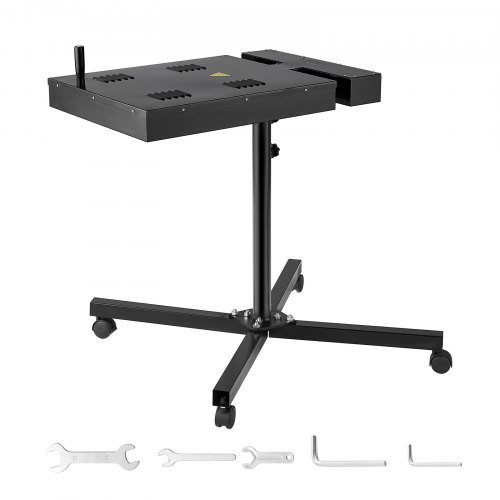
VEVOR Pro Flash Dryer 18×25 inch
Larger 18×25 platen, adjustable height and wide temperature range — suited to bigger prints and moderate throughput.
Overview
The VEVOR Pro flash dryer with an 18×25 inch platen is a budget-friendly electric flash dryer aimed at screen printers who need extra coverage for larger chest prints, full-front garments or small production runs. The unit combines a large platen, adjustable-height stand and a 360° rotating handle to help you position heat precisely. The manufacturer highlights an enhanced heating system and a sturdy X-shaped base to keep the dryer steady while you work. Model variants for different regions are listed, so check the retailer page for the exact electrical specification for your territory.
This review unpacks what that larger platen size means in practice, who benefits most from it, and how it compares conceptually to the compact 18×18 option. I haven’t carried out hands-on testing; the observations here are based on the product information and practical buying advice that matters when choosing between platen sizes and power variants.
Who is this best for?
The VEVOR Pro 18×25 flash dryer is aimed at hobbyists, start-up shops and small-scale printers who regularly work with larger print areas. If you frequently print full-front designs, chest panels, or images that approach the upper limits of a standard t-shirt print area, the extra platen width and length will allow you to cure in fewer passes and reduce fiddly repositioning.
It also suits printers who want a more flexible bench-top solution than a fixed conveyor or carousel dryer. The adjustable-height stand and rotation give you better placement control across different garment types. That said, the unit isn’t necessarily the best fit for people whose work is strictly small, single-area prints (for example, single left-chest logos), where the larger platen may be unnecessary and the footprint inconvenient.
Key features
- Large drying area: 18 × 25 in (470 × 635 mm) platen, designed for greater single-pass coverage compared with compact models.
- Adjustable-height stand: Lets you set platen height to match different garment thicknesses and shirt boards.
- 360° rotating handle: Helps to align the heater accurately over prints and reach awkward positions without moving the garment.
- Broad temperature control: A wide range is listed (retailer listing provides the exact range); useful for different inks and curing requirements.
- Enhanced heating system: Manufacturer notes an improved heating element and distribution for consistent curing across the platen.
- Sturdy X-shaped base: Designed to stabilise the unit during use on a bench or table.
- Regional power variants: The model is offered with different power ratings depending on the market—verify the exact electrical specification for your region before purchasing.
Practical evaluation
Size and coverage are the headline benefits here. An 18×25 platen covers a large portion of most adult t-shirts and is long enough to span a typical chest print area without needing to reposition. That saves time in a small production run and reduces alignment errors that can happen when you make multiple passes. If you plan to print larger designs or are aiming to increase throughput over a smaller 18×18 platen, the 18×25 makes that straightforward.
The 360° rotating handle is a useful ergonomic touch. It allows you to swing the heater into position from different angles and to reach prints near the garment seams without awkwardly rotating the garment itself. The adjustable-height stand extends this flexibility and helps you maintain a consistent gap between heater and platen — important for achieving consistent curing without scorching fabric.
Heat control is another practical factor. The product description lists a broad temperature control range (the precise limits should be confirmed on the retail listing). Different inks and curing processes require specific temperatures and dwell times. A wider control range gives you more options, but remember that how quickly the dryer reaches and holds a set temperature depends on the wattage and heating element design. The listing notes regional power variants; higher-wattage versions will typically heat faster and hold temperature more stably, but they also place higher demands on your electrical supply.
Stability in use matters because flash drying usually involves reaching in, holding a garment and lifting the heater on and off the platen. The X-shaped base is a pragmatic choice for balancing footprint and stiffness, and should help reduce wobble compared with lightweight tripods. That said, a larger platen and heavier unit will feel bulkier on a crowded bench.
Strengths
- Generous platen size: The 18×25 surface reduces the need for multiple passes on larger prints, saving time and improving alignment accuracy for full-front and chest designs.
- Flexible positioning: Adjustable height and 360° rotation let you get the heater exactly where you need it, which is handy for varied garment sizes and print positions.
- Potential for faster heat-up: Listed higher-power variants in some regions suggest shorter warm-up times compared with low-wattage compact models—helpful when production speed matters.
- Solid base design: The X-shaped stand should offer reasonable on-bench stability, reducing the risk of shifting during use.
- Good for small production runs: Suits makers who need reliable curing for batches of shirts without investing in large conveyor systems.
Limitations
- Size and footprint: The larger platen and stand take up more bench space and make the unit heavier to move—potentially awkward in small studios or at events.
- Electrical requirements vary: Higher wattage models may not be suitable for all workshops without checking circuit capacity and local electrical standards—confirm the regional specification before buying.
- May be overkill for minimal work: If your work is limited to small left-chest logos or occasional one-off prints, the 18×25 platen could be more than you need; a compact 18×18 might be simpler and cheaper.
- Accessory and warranty details: The listing doesn’t include a full accessory breakdown or warranty specifics—check the seller for what’s included and what cover is offered.
- No hands-on performance claims here: This review is based on the product description and practical considerations; actual in-shop performance, longevity, and evenness of heat distribution should be validated through seller specs, user reviews, and warranty coverage.
Pricing and value
The guide price listed with the product information is USD 159.99, but prices change and regional variants may have different price points. The value proposition for the VEVOR Pro 18×25 rests on whether you need the larger platen and whether the build and feature set meet your working needs. For small shops that occasionally print larger designs, this model can be a cost-effective way to increase throughput without moving to a conveyor dryer.
Compare the cost against the smaller 18×18 models and against other benchtop flash dryers in your market. The smaller platen will usually be cheaper and lighter, and if your typical work doesn’t exceed that area, you might prefer the compact model. Conversely, if you’ll benefit from reduced repositioning and fewer passes per print, the 18×25 can quickly pay for itself in saved time and fewer alignment errors.
Also consider the electrical variant: a higher-wattage unit can heat faster and may be more efficient in production, but check whether your workspace can safely support the load. If you need any additional accessories — such as extra platens, heat-resistant pads, or safety cut-outs — factor those into the total cost. Finally, confirm delivery options and any import considerations if you are ordering for the UK or EU; that can affect the landed price.
Alternatives and comparison with the 18×18 model
When comparing the 18×25 against an 18×18 model, the decision comes down to work type, space and budget. The 18×18 version (a common compact size) is typically aimed at left-chest prints, smaller chest panels and portrait-size designs. It’s lighter, takes up less bench space and is often marginally cheaper. The 18×25 expands the printable area mainly in one dimension (length), which is useful for long chest designs and certain print placements.
Consider these practical decision points:
- Print size frequency: If more than a small proportion of your jobs require a larger print area — for example, full-front or large chest pieces — the 18×25 gives fewer passes and a cleaner workflow. If larger prints are rare, the 18×18 might be the wiser choice.
- Production volume: For occasional jobs and one-offs, a compact machine is often sufficient. For regular small-batch production where throughput matters, the bigger platen reduces handling time.
- Workshop space: If bench space is limited, remember the 18×25 requires more real estate and is heavier to move. The 18×18 is handier in tight environments or for mobile setups.
- Electrical supply: Check whether the higher-wattage variants of the 18×25 will run on your available sockets and circuits. In some regions, you may need a dedicated circuit or a lower-power variant.
- Cost versus convenience: Calculate whether the time saved by fewer passes justifies the price difference. In many small shops, labour time and reduced re-prints make the larger platen worthwhile.
There are also other alternatives such as mid-range platen sizes, conveyor ovens for higher-volume curing, or hybrid setups combining a small flash dryer and a larger conveyor for different job types. If you expect to scale production significantly, evaluate whether a conveyor dryer might be a better long-term investment despite a higher initial cost.
Final verdict
The VEVOR Pro 18×25 flash dryer is a practical, cost-conscious option for printers who need more coverage than compact benchtop units provide. Its main strength is the larger platen, which reduces repositioning for full-front and larger chest prints, while the adjustable height and 360° rotation give useful placement flexibility. The X-shaped base is a sensible compromise between stability and bench footprint.
However, this model is not a one-size-fits-all solution. If most of your work is small prints or left-chest logos, the larger platen could be unnecessary and the added weight and footprint a drawback. Also, pay attention to the regional power variants—higher-wattage versions can heat faster but might require specific electrical arrangements. Finally, check the seller for details about included accessories and warranty before committing.
In short: choose the 18×25 if you regularly print larger designs and want the convenience of fewer passes. Opt for the smaller 18×18 if space, portability and lower initial cost are higher priorities and your print sizes seldom exceed compact limits.
Note: offers, regional power specifications and prices can change. Always confirm the current price and the electrical rating for your region on the retailer page before buying.
Compare this with the full shortlist
Return to the full comparison guide to see how this product compares against the other shortlisted choices.