
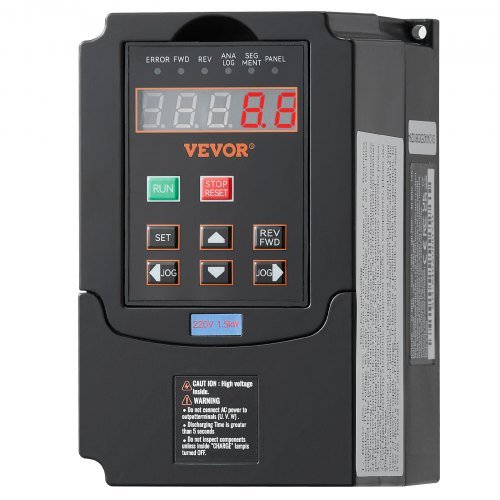
VEVOR VFD 2HP
VEVOR VFD 2HP, 1.5KW, 7.5A, 1 or 3 Phase 220V Input to 3 Phase 220V Output Variable Frequency Drive, 40-60Hz Input, 0-400Hz Output VFD for Spindle Motor CNC Speed ControlVariable …
Overview
The VEVOR VFD 2HP (1.5kW, 7.5A) is a compact variable frequency drive designed for spindle motor speed control on CNC machines and similar small to medium workshop applications. It accepts either single-phase or three-phase 220V input and delivers a three-phase 220V output with an adjustable frequency range up to 0–400Hz. The unit promotes a user-friendly operation, a detachable control panel, and built-in protection features while packing a small footprint and lightweight ABS housing.
It’s clearly aimed at buyers who need a straightforward, affordable way to control spindle speed without the bulk or cost of larger industrial VFDs. That makes it an obvious candidate for hobbyists, small workshop owners and anyone retrofitting a router or spindle where 1.5kW is an appropriate power level.
Who is this best for?
This VFD is most suitable for:
- Hobbyist and prosumer CNC users who run small to medium spindles (up to around 1.5kW).
- Workshop makers and light fabricators who need simple variable speed control for a 220V three-phase spindle but only have single-phase mains available.
- Anyone doing a spindle upgrade or conversion who wants a compact, low-cost VFD with a detachable control panel for easier mounting and operation.
It is less suitable for heavy industrial use or high-duty-cycle applications where higher continuous current, rugged metal enclosures and advanced industrial features are required. If you plan to run large spindles, heavy cutting for long hours, or install the VFD in a harsh environment, you’ll likely want a more robust, higher-rated unit.
Key features
From the supplied specification, the main features of the VEVOR 2HP VFD are:
- Power and current: 1.5kW (2HP) rated power with 7.5A output current.
- Input and output: 220V input (single-phase or three-phase accepted) to 220V three-phase output.
- Frequency range: Input frequency 40–60Hz; output adjustable from 0–400Hz for wide-speed control.
- Detachable control panel: Remote panel can be unplugged from the main unit for convenient mounting and operation.
- User-friendly operation: Basic controls and parameter settings intended for straightforward setup.
- Built-in protection system: Protections (as described by the manufacturer) against common faults to help prevent motor and VFD damage.
- Cooling and noise: Designed for efficient cooling with relatively low noise in operation.
- Compact size and light weight: Small footprint (approx. 138 x 82 x 114 mm) and around 0.86 kg net weight, with a flame-retardant ABS housing.
Practical evaluation
What the spec sheet tells us is useful, but in practical terms what matters most is how the VFD will fit into your workshop and your spindle setup. The flexibility to accept single- or three-phase 220V input is a major convenience — many home and small-shop power supplies are single-phase, and this allows you to use a three-phase spindle without re-wiring your mains.
The 0–400Hz output range gives a lot of scope for speed control. That’s especially handy with ER-collet spindles and small air- or water-cooled motors where you want to fine-tune RPM for tooling and materials. Remember that motor speed at a given frequency depends on motor pole count: confirm your spindle’s rated frequency and speed relationship before pushing the VFD to extremes.
Component-wise, the detachable panel is a practical plus. It simplifies installation and day-to-day operation if you want the keypad within reach while the main inverter sits inside a cabinet. The small dimensions mean it can be mounted in tighter control boxes, which is helpful on small machines. The ABS housing keeps weight down but be mindful that it’s less impact- and heat-resistant than a metal enclosure in heavy-duty settings.
Built-in protections are a welcome inclusion on a budget drive — typically these cover overcurrent, overvoltage, undervoltage, overload and short-circuit conditions. Those features reduce the risk of accidental damage, but don’t substitute for a sensible external safety setup: isolators, appropriate fusing or breakers, an emergency stop, and properly rated cabling are all essential.
Installation and setup tips
Even a straightforward VFD needs careful installation. A few practical tips:
- Match motor and drive: Ensure the spindle motor’s rated current is at or below the VFD’s 7.5A rating. Running a motor that needs more current than the VFD can supply will cause nuisance trips and likely shorten the life of the drive.
- Wiring and earthing: Use appropriately sized and insulated cables for motor output. Keep power and control cables separate to reduce electrical noise. A good earth (ground) connection is essential for safety and EMI control.
- Cooling and mounting: Mount the VFD where it can get airflow; the compact size helps, but close-packed installations restrict cooling. Avoid mounting it next to heat sources, and allow vertical clearance if the manufacturer gives any orientation requirements.
- Shielding and EMI suppression: If you have sensitive electronics or long motor cables, consider shielded motor cables and an EMC filter. High-frequency switching can inject noise into nearby systems if not managed.
- Parameter adjustment: Read the manual carefully before changing parameters. Typical initial steps include setting the motor rated current, rated voltage (if required), frequency limits and acceleration/deceleration ramps. Start with conservative acceleration and deceleration times to reduce torque spikes and mechanical stress.
- Safety devices: Use external contactors, fuses/MCBs, and an emergency stop switch. If you need dynamic braking or rapid sinking of spindle speed, evaluate whether a braking resistor is required (budget drives don’t always include the same dynamic braking capacity as higher-end drives).
Strengths
There are several clear advantages to the VEVOR 2HP VFD:
- Affordability and value: For those on a budget, the drive offers a solid feature set for the price point, combining phase flexibility with a useful frequency range for spindle control.
- Phase flexibility: The ability to accept single- or three-phase 220V input is a practical trait for home workshops and retrofit projects.
- Compact and lightweight: Its small footprint makes it easy to fit into limited control spaces and to integrate into retrofit projects where space is at a premium.
- Detachable panel: A remote keypad simplifies user interaction and allows tidy installation of the main inverter unit away from the operator’s control panel.
- Built-in protection and user-friendly controls: The inclusion of common protection features and an accessible control interface helps reduce setup time and makes it more forgiving for less experienced users.
Limitations
No product is perfect; here are the important limitations to bear in mind:
- Power ceiling: With a 1.5kW/7.5A rating, this VFD is aimed at small spindles. It’s not suitable for larger machines or high-duty industrial use where continuous high current is needed.
- ABS housing: While lightweight, the plastic enclosure is less rugged than metal and may not be ideal in dusty, damp or heavy industrial environments unless the unit is fitted inside a suitable cabinet.
- Cooling constraints: Its compact size restricts heat dissipation compared with larger drives. In high ambient temperatures or continuous heavy loading, thermal limitations could become an issue.
- Support and documentation: Budget drives sometimes come with minimal documentation or limited manufacturer support—confirm what is supplied and be comfortable with basic VFD setup before purchase.
- Limited advanced features: Higher-end VFDs offer advanced motor control, better harmonic mitigation, and more detailed diagnostics. If you need these features, this unit may be too basic.
Pricing and value
The VEVOR VFD is positioned as a budget-friendly option for small spindle control. A guide price of around USD 66.90 has been noted, but prices and stock can vary between retailers. For a drive with phase-conversion capability, a detachable keypad and a broad frequency range, it represents good value provided your motor and application fall within its rating.
When judging value, also factor in the cost of installation items—proper cables, an EMC filter if required, an isolator, fusing and possibly a small enclosure. If you need extra accessories (contactor, braking resistor, kit for mounting the panel), these will add to the total cost. Compare the final installed cost and features with alternatives from other manufacturers before deciding.
Note: offers and prices change frequently, so check the retailer page for current pricing and availability before you buy.
Alternatives to consider
If you like the feature set but want different trade-offs, consider these general alternatives:
- Higher-rated VFDs: If you plan to run a larger spindle or expect heavy continuous use, look for drives with higher current ratings and metal enclosures designed for industrial environments.
- Drives with stronger cooling and protection: Some models include better thermal management, built-in EMC filters, and more comprehensive diagnostic displays—handy for workshops with sensitive electronics or longer cable runs.
- Full-featured brands: If you want extensive documentation and local support, consider VFDs from vendors with established service networks. They often cost more but can save time and frustration on installation and troubleshooting.
Choosing an alternative should be guided by the motor current requirement, duty cycle, ambient conditions and how much value you place on support and advanced features.
Final verdict
The VEVOR VFD 2HP (1.5kW, 7.5A) is a compact, inexpensive and flexible drive aimed squarely at hobbyists and small-shop CNC builders who need a simple way to convert 220V single-phase mains to a three-phase output for spindle speed control. Its detachable panel, wide output frequency range and built-in protections make it a sensible choice for retrofits and light-duty installations.
However, it’s important to pick this drive for the right job. It excels in cost-conscious, low-to-moderate-duty applications but isn’t a substitute for a heavier-duty industrial VFD when you need sustained high current or ruggedness. Pay attention to matching the motor’s rated current to the drive, provide adequate cooling and protective wiring, and consider any extra accessories you may need for safe operation.
If your needs align with the power and feature set on offer — and you’re comfortable with the basic electrical and setup requirements of a VFD — this VEVOR unit is a practical, budget-friendly option. If you need greater robustness, more current headroom or extensive technical support, look at higher-end models or drives from manufacturers with an established service presence.
Remember to check the retailer page for the latest price and availability before making a purchase; offers and stock do change.
Also featured in
This product also appears on these price comparison pages:
Return to the saved price comparison
Go back to the saved comparison page to see this product alongside the other saved search results and current deal options.