
Overview
MPPT (Maximum Power Point Tracking) controllers are the most efficient option for extracting energy from solar panels. The main practical difference between the two units here is the maximum charging current: 20A versus 50A. That affects the size of the solar array and battery bank each controller can support without overloading.
Both Vevor models are compatible with 12V and 24V battery systems, offer MPPT control efficiencies of ≥98% and include multiple charging stages (fast, balance and float). They share similar operating temperature ranges and protection features but differ in rated input power, supported current and remote monitoring options.
Choosing between them comes down to matching the controller’s current capability to your array’s likely output and leaving headroom for efficiency losses and future expansion. Equally important are correct wire sizing, fusing and mounting location to keep the installation safe and reliable.
Below we break down the two products, list practical pros and cons, and offer guidance on sizing and installation so you can pick the right controller for a small off‑grid set‑up, camper van, boat or garage system.
Recommended
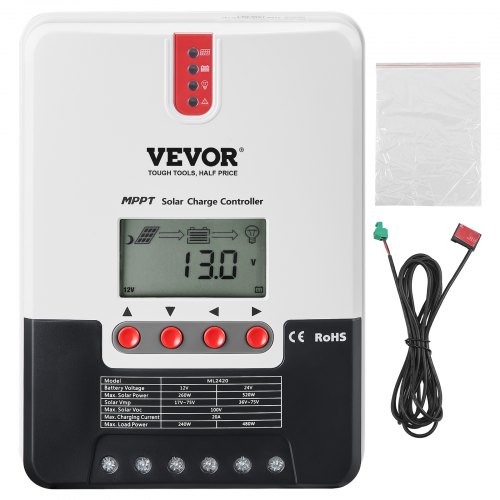
VEVOR 20A MPPT Solar Charge Controller, 12V / 24V Auto DC Input, Solar Panel Regulator Charger with LCD Display Temperature Sensor Cable, for Sealed(AGM), Gel, Flooded and Lithium Battery Charging
Small off‑grid systems, camper vans or boats with modest panel arrays
20A MPPT controller suitable for 12V/24V systems; LCD display, temperature sensor cable and MPPT efficiency ≥98%. Good value for small arrays.
Pros
- Compact and lightweight for small installations
- Good MPPT efficiency for energy capture
- Includes temperature sensor cable for better charging accuracy
- LCD makes status and settings easy to read on site
- Compatible with multiple battery chemistries
- Lower guide price suitable for budget builds
Cons
- Limited to 20A — not suitable for larger arrays
- Bluetooth monitoring requires optional module (not built‑in)
- Rated input power restricts expansion on 12V systems
- ABS+PC housing may be less robust in harsh marine use
- Exact warranty and included accessories vary by retailer
- Some installers prefer controllers with higher‑grade connectors
/10
Overall score
Guide price: USD 57.90. Check current price and availability before buying.

VEVOR 50A MPPT Solar Charge Controller, 12V / 24V Auto DC Input, Solar Panel Regulator Charger with Bluetooth Module, 98% Charging Efficiency for Sealed(AGM), Gel, Flooded and Lithium Battery Charging
Larger off‑grid arrays, bigger battery banks or systems planned for future expansion
50A MPPT controller with built‑in Bluetooth, high efficiency and higher rated input power — suited to larger 12V/24V installations.
Pros
- Higher current rating for larger arrays and batteries
- Built‑in Bluetooth makes monitoring and settings easier
- Supports up to 24V systems with substantial input power
- Same high MPPT efficiency as the 20A model
- External temperature sensor supported for better charging
- Physical size still compact for the capacity offered
Cons
- Higher guide price — check if you need the extra capacity
- May require heavier gauge cabling and larger fuses
- ABS+PC housing material may need additional protection outdoors
- Bluetooth app feature depends on continued app support
- Warranty, shipping and included accessories can vary by seller
- Over‑specifying controller increases upfront cost if not used
/10
Overall score
Guide price: USD 127.90. Often priced higher than small units; check latest offers and compatibility before buying.
Comparison table
| Rank | Product | Best for | Price/value | Rating | CTA |
|---|---|---|---|---|---|
| #1 | VEVOR 20A MPPT Solar Charge Controller, 12V / 24V Auto DC Input, Solar Panel Regulator Charger with LCD Display Temperature Sensor Cable, for Sealed(AGM), Gel, Flooded and Lithium Battery Charging | Small off‑grid systems, camper vans or boats with modest panel arrays | Guide price: USD 57.90. Check current price and availability before buying. | 9.6 | Check latest price |
| #2 | VEVOR 50A MPPT Solar Charge Controller, 12V / 24V Auto DC Input, Solar Panel Regulator Charger with Bluetooth Module, 98% Charging Efficiency for Sealed(AGM), Gel, Flooded and Lithium Battery Charging | Larger off‑grid arrays, bigger battery banks or systems planned for future expansion | Guide price: USD 127.90. Often priced higher than small units; check latest offers and compatibility before buying. | 9.1 | Check latest price |
Detailed reviews
#1 VEVOR 20A MPPT Solar Charge Controller, 12V / 24V Auto DC Input, Solar Panel Regulator Charger with LCD Display Temperature Sensor Cable, for Sealed(AGM), Gel, Flooded and Lithium Battery Charging
The VEVOR 20A MPPT controller is a compact regulator designed for 12V and 24V battery systems. It offers high MPPT conversion efficiency (≥98%), multi‑stage charging (fast, balance, float) and basic remote monitoring via optional external Bluetooth module. The unit supports common battery chemistries including sealed, gel, flooded and lithium, and accepts panel open‑circuit voltages up to 100V DC. With modest physical size and a supplied temperature sensor cable, it’s aimed at DIYers and small installations where a cost‑effective MPPT solution is needed. As with any controller, correct wiring, fusing and placement in a ventilated position will help performance and longevity.
Key features
- Max charging current: 20A
- Auto 12V / 24V battery detection
- MPPT efficiency ≥98%
- Rated input power: 12V/260W, 24V/520W
- LCD display and temperature sensor cable included
- Max solar panel open‑circuit voltage: 100V DC
#2 VEVOR 50A MPPT Solar Charge Controller, 12V / 24V Auto DC Input, Solar Panel Regulator Charger with Bluetooth Module, 98% Charging Efficiency for Sealed(AGM), Gel, Flooded and Lithium Battery Charging
The VEVOR 50A MPPT controller steps up the current capacity for users with larger solar arrays or those who want headroom for system growth. It supports 12V and 24V batteries, delivers MPPT efficiency of ≥98% and includes a built‑in Bluetooth module for remote monitoring via a dedicated app. With higher rated input power (12V/660W; 24V/1320W) and support for an external temperature sensor, this unit is aimed at larger domestic or mobile installs. Like the 20A model it offers multiple charging modes and standard protection features; correct installation, appropriate cabling and fusing are important to make full use of its higher current capability.
Key features
- Max charging current: 50A
- Built‑in Bluetooth module for remote monitoring
- Auto 12V / 24V battery detection
- Rated input power: 12V/660W, 24V/1320W
- MPPT efficiency ≥98% and supports external temp sensor
- Max solar panel open‑circuit voltage: 100V DC
Buying guide
Match the controller’s maximum charging current to the expected output of your solar array after real‑world losses. For a 12V battery, a 20A controller safely handles roughly up to a 260W array (manufacturer rated input), while a 50A unit suits larger arrays and up to 1320W on 24V systems per the supplied specs. Always calculate maximum panel open‑circuit voltage (must be below the controller’s max input) and size DC cabling and fuses to the controller’s current and distance to avoid voltage drop and overheating. Place the controller in a ventilated, dry location, away from direct sun and corrosive environments. If you plan future expansion, choose a controller with capacity to match larger array or battery additions. Check whether you need Bluetooth or remote monitoring for convenience and whether an external temperature sensor is supported for accurate charge compensation. Finally, confirm the retailer’s details for warranty, returns and included accessories before buying.
FAQs
How do I decide between a 20A and 50A MPPT controller?
Estimate the maximum current your panels can produce at the system voltage, add a safety margin and choose a controller rated above that figure. Consider future expansion: if you may increase array size or battery capacity, the higher‑current option is safer.
Can these controllers be used with lithium batteries?
Both products list compatibility with sealed (AGM), gel, flooded and lithium batteries, but ensure the chosen charging profile and voltage settings match the manufacturer recommendations for your specific battery chemistry and model.
Our recommended choice
For most small off‑grid systems and vehicle installs the 20A model is a sensible, lower‑cost pick. If you plan a larger panel array, a bigger battery bank or future expansion, the 50A model offers the extra headroom and built‑in Bluetooth for easier monitoring.